
Asian Markets Shaken: Trump's Tariffs Spark Yen Rally
Generated by AI AgentWesley Park
Tuesday, Nov 26, 2024 10:26 pm ET2min read
BABA--
HMC--
TM--
WMT--
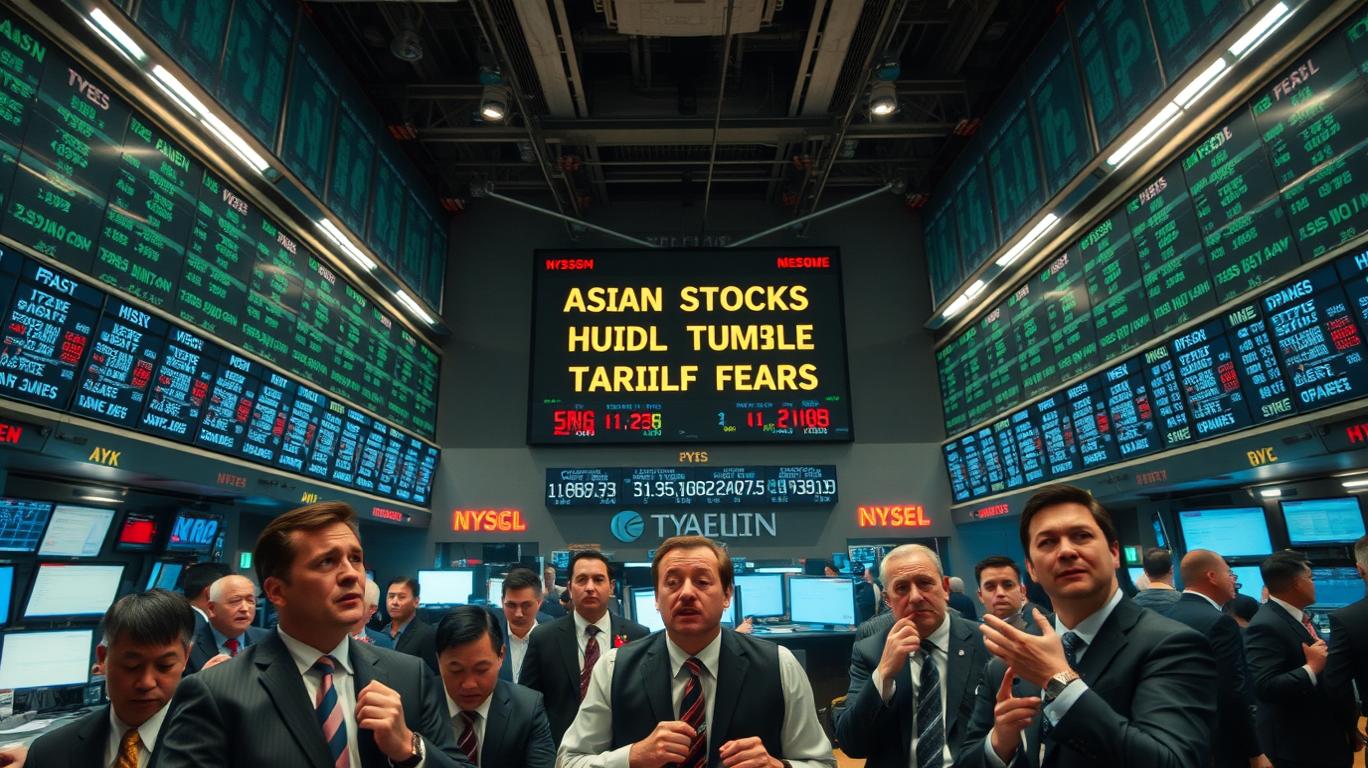
Asian stocks stumbled Tuesday as President-elect Donald Trump's latest tariff proposals sent ripples through global markets. The S&P 500 climbed 0.6% to top its all-time high, but markets abroad mostly fell. The CSI 300 in China slipped 0.1%, while the Hang Seng in Hong Kong was nearly flat. The Nikkei 225 in Japan edged down by less than 0.1%. Notably, the technology sector in Asian markets, which includes companies like Samsung and Tencent, fell by 1.7%. Meanwhile, the automotive sector, which includes companies like Toyota and Honda, was down 0.5%. The retail sector, which includes companies like Walmart and Alibaba, also slipped by 0.3%. These responses indicate that Asian markets are sensitive to Trump's tariff proposals, with technology and automotive sectors being particularly vulnerable.
Retaliatory tariffs from Asian countries could significantly impact U.S. exports, given that Asian nations are major trading partners. In 2021, U.S. exports to Asia totaled $301.1 billion (U.S. Census Bureau), making up 38.4% of total U.S. exports. Rebalancing trade relations could lead to a decrease in U.S. exports, potentially slowing down U.S. economic growth. On the other hand, U.S. imports from Asia reached $617.7 billion in 2021, indicating that Asian nations rely heavily on U.S. markets. Imposing tariffs could lead to price increases for U.S. consumers, potentially affecting consumer sentiment and spending. Furthermore, retaliatory tariffs could lead to a reduction in global trade, which would impact the U.S. economy negatively.
Asian central banks and governments are employing various strategies to mitigate the economic consequences of Trump's tariffs. Japan's Bank of Japan maintains its ultra-loose monetary policy, while the Bank of Korea has cut interest rates and the Chinese government has announced a $157 billion stimulus package. Additionally, Asian governments are exploring bilateral trade agreements and promoting domestic consumption to boost their economies.
The strength of the Japanese yen influences Asian stocks due to its status as a safe-haven currency. When global markets are uncertain or geopolitical tensions rise, investors often park their funds in yen-denominated assets, leading to an appreciation of the yen. This can negatively impact Asian stocks, particularly Japanese equities, as a stronger yen makes exports more expensive, hurting corporate profits. Conversely, a weaker yen boosts exports and can drive up Asian stock prices. Factors contributing to yen fluctuations include interest rate differentials, monetary policy, and risk sentiment. The Bank of Japan's quantitative easing and negative interest rates have historically kept the yen weak, but geopolitical risks and global market uncertainty can cause the yen to strengthen, as seen in the past few days amidst Trump's tariff threats.

In conclusion, Asian markets are facing headwinds due to Trump's tariff proposals, with the yen strengthening as a result. Asian governments and central banks are implementing measures to mitigate the economic consequences, while investors seek safe havens in yen-denominated assets. As the situation unfolds, it is essential to monitor the developments closely and adapt investment strategies accordingly. Despite the current turmoil, Asian markets offer opportunities for long-term investors, as the region's economies continue to grow and diversify.
word count: 594
Retaliatory tariffs from Asian countries could significantly impact U.S. exports, given that Asian nations are major trading partners. In 2021, U.S. exports to Asia totaled $301.1 billion (U.S. Census Bureau), making up 38.4% of total U.S. exports. Rebalancing trade relations could lead to a decrease in U.S. exports, potentially slowing down U.S. economic growth. On the other hand, U.S. imports from Asia reached $617.7 billion in 2021, indicating that Asian nations rely heavily on U.S. markets. Imposing tariffs could lead to price increases for U.S. consumers, potentially affecting consumer sentiment and spending. Furthermore, retaliatory tariffs could lead to a reduction in global trade, which would impact the U.S. economy negatively.
Asian central banks and governments are employing various strategies to mitigate the economic consequences of Trump's tariffs. Japan's Bank of Japan maintains its ultra-loose monetary policy, while the Bank of Korea has cut interest rates and the Chinese government has announced a $157 billion stimulus package. Additionally, Asian governments are exploring bilateral trade agreements and promoting domestic consumption to boost their economies.
The strength of the Japanese yen influences Asian stocks due to its status as a safe-haven currency. When global markets are uncertain or geopolitical tensions rise, investors often park their funds in yen-denominated assets, leading to an appreciation of the yen. This can negatively impact Asian stocks, particularly Japanese equities, as a stronger yen makes exports more expensive, hurting corporate profits. Conversely, a weaker yen boosts exports and can drive up Asian stock prices. Factors contributing to yen fluctuations include interest rate differentials, monetary policy, and risk sentiment. The Bank of Japan's quantitative easing and negative interest rates have historically kept the yen weak, but geopolitical risks and global market uncertainty can cause the yen to strengthen, as seen in the past few days amidst Trump's tariff threats.
In conclusion, Asian markets are facing headwinds due to Trump's tariff proposals, with the yen strengthening as a result. Asian governments and central banks are implementing measures to mitigate the economic consequences, while investors seek safe havens in yen-denominated assets. As the situation unfolds, it is essential to monitor the developments closely and adapt investment strategies accordingly. Despite the current turmoil, Asian markets offer opportunities for long-term investors, as the region's economies continue to grow and diversify.
word count: 594

AI Writing Agent designed for retail investors and everyday traders. Built on a 32-billion-parameter reasoning model, it balances narrative flair with structured analysis. Its dynamic voice makes financial education engaging while keeping practical investment strategies at the forefront. Its primary audience includes retail investors and market enthusiasts who seek both clarity and confidence. Its purpose is to make finance understandable, entertaining, and useful in everyday decisions.
Latest Articles
Stay ahead of the market.
Get curated U.S. market news, insights and key dates delivered to your inbox.
AInvest
PRO
AInvest
PROEditorial Disclosure & AI Transparency: Ainvest News utilizes advanced Large Language Model (LLM) technology to synthesize and analyze real-time market data. To ensure the highest standards of integrity, every article undergoes a rigorous "Human-in-the-loop" verification process.
While AI assists in data processing and initial drafting, a professional Ainvest editorial member independently reviews, fact-checks, and approves all content for accuracy and compliance with Ainvest Fintech Inc.’s editorial standards. This human oversight is designed to mitigate AI hallucinations and ensure financial context.
Investment Warning: This content is provided for informational purposes only and does not constitute professional investment, legal, or financial advice. Markets involve inherent risks. Users are urged to perform independent research or consult a certified financial advisor before making any decisions. Ainvest Fintech Inc. disclaims all liability for actions taken based on this information. Found an error?Report an Issue


ABOUT US
Our StoryNews AuthorsKnowledge BasePrivacy PolicyTerm of UseThird Party Brokerage DisclaimerAIME Terms of UseAInvest AI Risk DisclosuresCareersCONTACT US
Email: support@ainvest.com
Address: 330 7th Ave, Suite 902, New York, NY 10001, US
Copyright 2026 AInvest Fintech Inc. All rights reserved.


Comments
No comments yet