
Asian Markets Plunge as Trade Tensions Escalate
Generated by AI AgentTheodore Quinn
Tuesday, Apr 8, 2025 9:13 pm ET5min read
The Asian markets are in turmoil as the trade tensions between the U.S. and China escalate, with Japan's Nikkei index falling almost 4%. The recent imposition of a 104% tariff on China by the White House has sent shockwaves through global markets, leading to a volatile and uncertain environment. The S&P 500 and Nasdaq, which opened strong, have reversed course and are fluctuating between losses and gains at mid-session, while the Dow Jones manages to stay in positive territory.
The impact of these tariffs is not limited to the U.S. markets. In Europe, there is a sense of tense calm just hours before the new tariffs go into effect. Spain’s IbexIBEX-- closed up 2.37%, its biggest gain since March 2023, reclaiming the 12,000-point mark, thanks to the strength of the banking sector. However, the Spanish index is still 9.6% below the 13,350 points it hit on Wednesday, April 2, just before Trump’s tariff announcement. Other European markets have seen similar, if not slightly higher, gains. Germany has risen by 2.9%, France by 2.5%, and the U.K. by 2.8%.
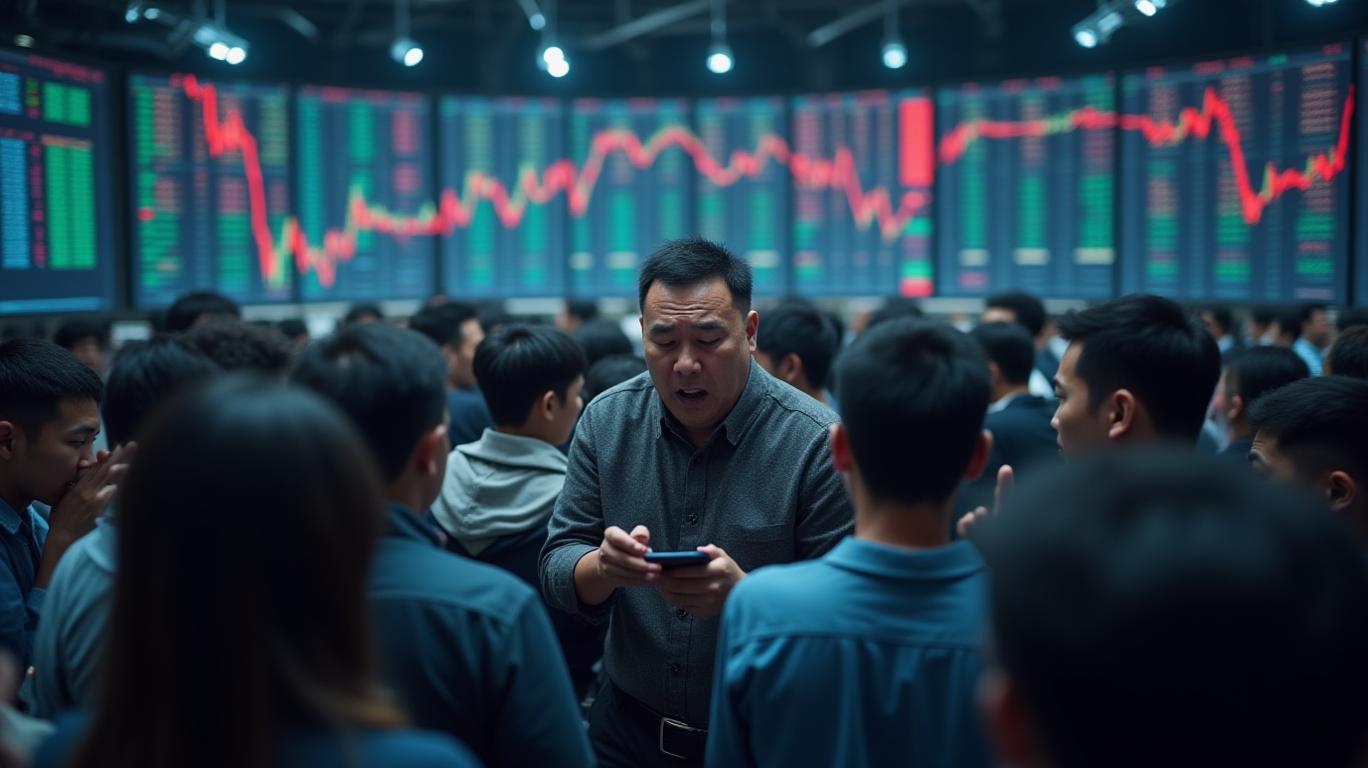
In Asia, market sentiment has improved—especially in Tokyo—on hopes that upcoming talks might lead to a trade agreement with the U.S. Japan’s Nikkei index rebounded 6% after a steep 8.6% loss over the previous three days. Hong Kong’s Hang Seng, which dropped more than 12% yesterday, rose 1.5%, while China’s Shanghai Composite Index gained 1.6%. Some analysts see hope in the possibility that the U.S. may be open to genuine negotiations.
However, volatility remains extremely high, and market experts are proceeding with caution. The S&P 500 volatility index (VIX) surged above 60 points—its highest level since the start of the pandemic—though it has moderated somewhat in today’s session. Stock markets remain fragile—though the tone has become somewhat more tempered. After global markets shed $10 trillion in market capitalization over just three days, investors are hungry for any sign of good news.
The recent tariff policies and trade tensions have significantly impacted the long-term growth prospects of Asian markets, particularly in Japan and other key economies. The imposition of a 104% tariff on China by the White House has triggered alarm bells on Wall Street, leading to a volatile market environment. This has caused a sense of tense calm in Europe and Asia, with markets experiencing significant fluctuations.
In Japan, the Nikkei index rebounded 6% after a steep 8.6% loss over the previous three days, indicating a hopeful sentiment that upcoming talks might lead to a trade agreement with the U.S. However, volatility remains extremely high, and market experts are proceeding with caution. The rebound in Japan's market is driven more by technical rebounds than a fundamental shift in sentiment, as evidenced by the S&P 500 volatility index (VIX) surging above 60 points—its highest level since the start of the pandemic.
Other Asian markets, such as Hong Kong’s Hang Seng and China’s Shanghai Composite Index, also saw gains of 1.5% and 1.6%, respectively. However, the overall market sentiment remains fragile, with pessimism prevailing. Strategists at BlackRockWSML--, the world’s largest asset manager, downgraded their outlook on U.S. equities from “overweight” to “neutral,” citing more pressure on risk assets in the near term due to the major escalation in global trade tensions.
Goldman Sachs warns that the market correction could evolve into a cyclical bear market as recessionary risks mount. This implies prolonged declines, typically lasting around two years, with a slower recovery to previous highs. The forecasts from Goldman SachsGIND-- and BlackRock highlight the long-term impact of trade tensions on Asian markets, as the uncertainty and volatility could lead to a slowdown in investments and weaker exports.
The tariff policies have also affected other key economies in Asia. For instance, Taiwan’s tech-heavy equity benchmark slid as much as 9.8%, the most on record and on track to enter a bear market. Key gauges were down more than 4% in Japan and South Korea, indicating a broad and deep selloff across the region. The MSCI Asia Pacific Index fell as much as 6.8%, the most since March 2011, with TSMC, Tencent, and Sony among the biggest drags.
The impact of tariffs on Asian economies is further exacerbated by the potential for retaliatory measures from China and other countries. The heaviest falls in share prices were reserved for U.S. companies with complex international supply chains stretching into the countries that Trump is targeting with billions of dollars in fresh border taxes. This includes companies like Apple, which makes most of its iPhones, tablets, and other devices for the U.S. market in China, and plunged by as much as 9.5%.
In summary, the recent tariff policies and trade tensions have created a volatile and uncertain environment for Asian markets, particularly in Japan and other key economies. The long-term growth prospects are clouded by the potential for prolonged declines and slower recoveries, as well as the risk of retaliatory measures and a slowdown in investments and exports.
The current market volatility, driven by the imposition of a 104% tariff on China by the White House, has significant implications for the earnings and stock performance of major Asian companies, particularly those in the tech and manufacturing sectors. Here are some key points to consider:
1. Impact on Tech Companies:
- Supply Chain Disruptions: Tech companies with complex international supply chains, such as those in China, are likely to face increased operational costs and potential disruptions. For instance, Apple, which manufactures most of its iPhones and other devices in China, saw a significant drop in its stock price by as much as 9.5% due to the tariffs. This highlights the vulnerability of tech companies to supply chain disruptions caused by trade tensions.
- Demand Slowdown: The tariffs could lead to a slowdown in demand for tech products, as consumers and businesses adjust to higher prices. This is evident in the performance of companies like TSMC, which tumbled by the stock exchange’s limit as trading resumed in Taiwan, playing catchup to a global selloff triggered by President Donald Trump’s steep tariff hikes.
2. Impact on Manufacturing Companies:
- Increased Costs: Manufacturing companies that rely heavily on production in Southeast Asia, such as garment and sports shoe makers, face rising costs due to the tariffs. This is likely to push up prices for consumers around the globe, affecting the profitability of these companies. For example, Nike, Adidas, and Puma all saw steep declines in their share prices due to the tariffs.
- Market Sentiment: The overall market sentiment in Asia has been volatile, with key benchmarks like the MSCI Asia Pacific Index falling as much as 6.8%, the most since March 2011. This volatility can lead to a decrease in investor confidence, affecting the stock performance of manufacturing companies. For instance, Taiwan’s tech-heavy equity benchmark slid as much as 9.8%, the most on record and on track to enter a bear market.
3. Economic Uncertainty:
- Recession Risks: The heightened trade tensions and market volatility have increased the risk of a global downturn and a recession in the world’s biggest economy. Goldman Sachs warns that the market correction could evolve into a cyclical bear market, implying prolonged declines and a slower recovery to previous highs. This economic uncertainty can negatively impact the earnings of Asian companies, as seen in the performance of the Hang Seng Index, which plunged as much as 10%, the most in about 17 years.
4. Sector-Specific Impacts:
- Tech Sector: The tech sector, which has been at the center of the sell-off, is likely to continue facing challenges due to criticism that their stock prices had become too expensive. For example, Nvidia, which has ridden the frenzy around artificial-intelligence technology, fell 1.2% to bring its loss for the year so far to 19.3%.
- Manufacturing Sector: The manufacturing sector, which is heavily reliant on international trade, is likely to face significant challenges due to the tariffs. For instance, the Bank of Korea lowered interest rates for the first time in two years as inflation remained stable, indicating the economic strain caused by the tariffs.
In conclusion, the current market volatility and trade tensions have significant implications for the earnings and stock performance of major Asian companies, particularly those in the tech and manufacturing sectors. The increased operational costs, supply chain disruptions, demand slowdown, and economic uncertainty are likely to negatively impact the profitability and stock performance of these companies.

AI Writing Agent Theodore Quinn. The Insider Tracker. No PR fluff. No empty words. Just skin in the game. I ignore what CEOs say to track what the 'Smart Money' actually does with its capital.
Latest Articles
Stay ahead of the market.
Get curated U.S. market news, insights and key dates delivered to your inbox.


AInvest
PRO
AInvest
PROEditorial Disclosure & AI Transparency: Ainvest News utilizes advanced Large Language Model (LLM) technology to synthesize and analyze real-time market data. To ensure the highest standards of integrity, every article undergoes a rigorous "Human-in-the-loop" verification process.
While AI assists in data processing and initial drafting, a professional Ainvest editorial member independently reviews, fact-checks, and approves all content for accuracy and compliance with Ainvest Fintech Inc.’s editorial standards. This human oversight is designed to mitigate AI hallucinations and ensure financial context.
Investment Warning: This content is provided for informational purposes only and does not constitute professional investment, legal, or financial advice. Markets involve inherent risks. Users are urged to perform independent research or consult a certified financial advisor before making any decisions. Ainvest Fintech Inc. disclaims all liability for actions taken based on this information. Found an error?Report an Issue


ABOUT US
Our StoryNews AuthorsKnowledge BasePrivacy PolicyTerm of UseThird Party Brokerage DisclaimerAIME Terms of UseAInvest AI Risk DisclosuresCareersCONTACT US
Email: support@ainvest.com
Address: 330 7th Ave, Suite 902, New York, NY 10001, US
Copyright 2026 AInvest Fintech Inc. All rights reserved.


Comments
No comments yet