
Asian Development Bank Cuts Asia Growth Forecast to 4.3% Due to Trump Tariffs
 Aime Summary
The Asian Development Bank has revised its growth outlook for Asia, citing the impact of tariffs imposed by the Trump administration and geopolitical risks. The bank has lowered its growth forecast for the East Asia region from 4.4% to 4.3% for the current year, with a significant reduction in the growth projection for South Korea's GDP. The growth outlook for Southeast Asia has also been adjusted downward, from 4.7% to 4.2%. Analysts in the report released on Wednesday noted that this revision is due to "higher-than-expected U.S. tariffs and trade uncertainty, which could worsen the region's growth prospects."
The tariffs and geopolitical uncertainties have created a challenging environment for Asian economies, which are heavily reliant on global trade. The Asian Development Bank's revision reflects concerns about the potential disruption to supply chains and the increased costs for businesses operating in the region. The bank's report highlights the need for Asian countries to diversify their trade partners and reduce their dependence on any single market.
The Trump administration's tariffs have been a contentious issue, with critics arguing that they could lead to a trade war and harm global economic growth. However, supporters of the tariffs argue that they are necessary to protect American jobs and industries from unfair competition. The Asian Development Bank's revision underscores the complex interplay between trade policy and economic growth, and the need for countries to adapt to changing global dynamics.
The impact of the tariffs is not limited to Asia. The U.S. has also imposed tariffs on goods from other countries, including China and the European Union. These tariffs have led to retaliatory measures from affected countries, further complicating the global trade landscape. The Asian Development Bank's revision serves as a reminder of the interconnected nature of the global economy and the potential consequences of unilateral trade actions.
In response to the tariffs, many Asian countries have begun to explore alternative trade partners and diversify their economies. This includes efforts to strengthen regional trade agreements and promote intra-regional trade. The Asian Development Bank's revision highlights the importance of these efforts in mitigating the impact of the tariffs and ensuring sustainable economic growth in the region.
The Asian Development Bank's decision to revise its growth outlook for Asia is a significant development, reflecting the broader economic and political challenges facing the region. As the global trade landscape continues to evolve, it will be crucial for Asian countries to adapt and innovate in order to maintain their economic competitiveness and resilience. 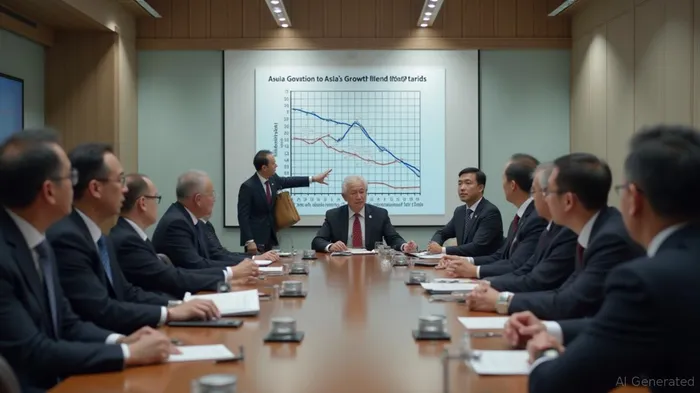

Stay ahead of the market.
Get curated U.S. market news, insights and key dates delivered to your inbox.






Comments
No comments yet