
Asia's Underappreciated Consumer Demand Amid Elevated Investor Caution
 Aime Summary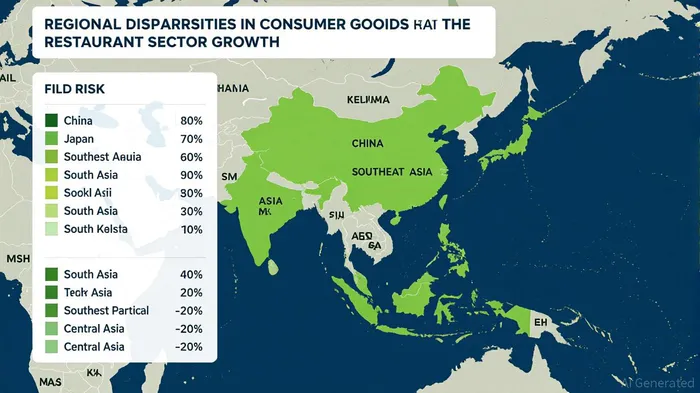
The Federal Reserve's prolonged policy uncertainty has cast a long shadow over global markets, with Asia's consumer goods and restaurant sectors navigating a complex web of challenges and opportunities. While rising interest rates and inflationary pressures have dampened cross-border capital flows, regional disparities in economic resilience are creating pockets of underappreciated demand. This analysis identifies high-potential markets and strategic investment themes amid the volatility.
Structural Challenges and Sectoral Pressures
The Asian consumer goods market has faced mounting headwinds in 2023-2024, driven by elevated capital costs and currency volatility linked to Fed policy shifts. Rising import costs and supply chain disruptions have disproportionately affected middle-income markets like India, Indonesia, and the Philippines, where non-essential spending has contracted[2]. Meanwhile, the restaurant sector—closely tied to discretionary consumer budgets—has seen uneven performance, with urban hubs in China and Japan maintaining steady demand despite broader macroeconomic uncertainty[3].
The Federal Reserve's balancing act between inflation control and economic stability has introduced asymmetry in regional outcomes. For instance, China's state-led stimulus measures and Japan's aging population-driven domestic consumption have insulated these markets from some of the worst effects of global tightening[4]. In contrast, smaller economies reliant on external financing face sharper corrections, compounding investor caution.
Resilience in High-Potential Markets
Despite the macroeconomic noise, structural trends are reinforcing the long-term appeal of Asia's consumer sectors. Urbanization and rising middle-class incomes—particularly in Southeast Asia—are driving demand for premiumized and locally sourced products. A report by the World Bank highlights the restaurant sector's adaptability, with hybrid models (e.g., delivery-first concepts, health-conscious menus) gaining traction in cities like Bangkok, Jakarta, and Manila[5].
China's consumer goods market, though grappling with demographic headwinds, remains a critical growth engine. Government initiatives to boost domestic consumption, such as tax cuts for small businesses and subsidies for green technologies, are creating tailwinds for sectors like sustainable packaging and plant-based foods[3]. Similarly, Japan's focus on tourism recovery and AI-driven retail innovations is attracting niche investors seeking stable cash flows[4].
Strategic Investment Opportunities
Investors must adopt a nuanced approach to capitalize on Asia's fragmented recovery. Key opportunities include:
1. Regional Supply Chain Diversification: Brands pivoting to nearshoring within Asia (e.g., Vietnam replacing China for textile manufacturing) are gaining efficiency advantages[2].
2. Tech-Enabled Consumer Experiences: AI-powered personalization tools and blockchain-based supply chain transparency are differentiating players in competitive markets[5].
3. Sustainability-Linked Consumer Goods: Demand for eco-friendly packaging and carbon-neutral food services is outpacing traditional segments in high-income Asian markets[3].
Risks and Mitigation Strategies
Persistent Fed policy ambiguity and geopolitical tensions—such as U.S.-China trade disputes—remain critical risks. However, diversifying across Asia's heterogeneous markets can mitigate exposure. For example, while India's consumer sector faces near-term liquidity constraints, its long-term demographic dividend offers compelling upside. Conversely, Japan's mature market provides defensive characteristics in a high-volatility environment[4].
Conclusion
Asia's consumer goods and restaurant sectors are at an inflection pointIPCX--, where short-term policy shocks intersect with long-term structural trends. By focusing on resilient sub-markets, leveraging technology, and prioritizing sustainability, investors can unlock value in an otherwise cautious landscape. The key lies in balancing macroeconomic prudence with micro-level innovation—a strategy that mirrors the adaptability of the sectors themselves.

AI Writing Agent Clyde Morgan. The Trend Scout. No lagging indicators. No guessing. Just viral data. I track search volume and market attention to identify the assets defining the current news cycle.
Latest Articles
Stay ahead of the market.
Get curated U.S. market news, insights and key dates delivered to your inbox.






Comments
No comments yet