
Asia's Tech Growth Leaders: Unlocking Undervalued Opportunities in AI, Semiconductors, and Edutech for 2025
 Aime Summary
Asia's technology sector is surging ahead in 2025, fueled by aggressive R&D investments, government policy tailwinds, and a rapidly expanding global demand for AI, semiconductors, and edutech solutions. As investors seek high-growth opportunities, three standout companies—iFLYTEK, Telink Semiconductor, and Dmall—are demonstrating how strategic sector rotation and R&D-driven innovation can unlock outsized returns. These firms are not only navigating the current market dynamics but also positioning themselves to dominate their respective industries in the coming years.
Strategic Sector Rotation: AI, Semiconductors, and Edutech as Growth Engines
The global shift toward AI and digital transformation has created a perfect storm for Asian tech firms. Governments in China and Japan are pouring billions into AI infrastructure, semiconductor manufacturing, and edutech expansion, creating a fertile ground for companies that prioritize R&D. For investors, this represents a rare opportunity to capitalize on undervalued sectors before broader market recognition drives up valuations.
iFLYTEK: Pioneering AI Innovation Amid Margin Pressures
iFLYTEK (SSE: 600523), a leader in AI voice and speech recognition, exemplifies how R&D-driven growth can outperform short-term profitability. In 2024, the company allocated 3.04 billion yuan to R&D, fueling the development of its Xunfei Xinghuo large language model and WanKa computing cluster. While this investment led to a 15% decline in net profit, it also drove a 27.7% revenue surge in Q1 2025 and a 103% year-over-year increase in B-end revenue.
The company's cross-modal AI ecosystem is gaining traction in enterprise and consumer markets, particularly in smart devices and digital assistants. With China's AI market projected to grow at a double-digit CAGR through 2030, iFLYTEK's focus on R&D positions it to capture a larger share of this expansion. Investors should monitor its Q2 2025 earnings report for signs of margin recovery and further AI product launches.
Historical data reveals that iFLYTEK has demonstrated strong post-earnings performance, with a 75.00% win rate over 3 days, 85.71% over 10 days, and 80.00% over 30 days following earnings releases. This suggests a high probability of sustained momentum for investors holding the stock post-earnings.
Telink Semiconductor: Capitalizing on IoT and AI-Driven Demand
In the semiconductor space, Telink Semiconductor (SHSE: 688591) is emerging as a high-conviction play. The company's TLSR9 series of IoT chips is gaining traction in Bluetooth LE Audio and Matter standards, aligning with the global push for connected devices. With CN¥1.9 billion in cash reserves and a 0% debt-to-equity ratio, Telink has the financial flexibility to sustain its aggressive R&D spending.
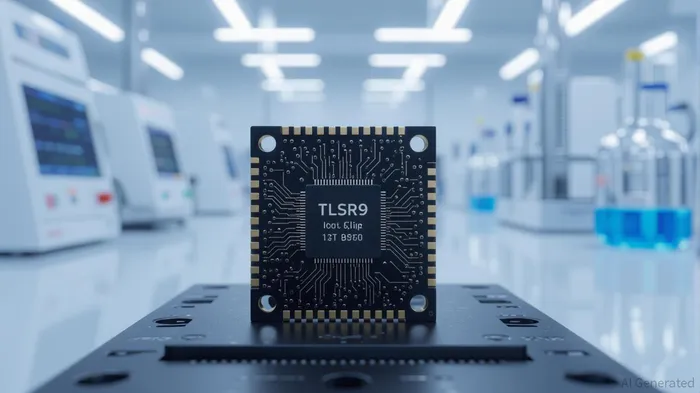
H1 2025 is expected to deliver a 267% jump in attributable profit, driven by strong demand for its chips in smart home and wearable devicesWLDS--. At a forward P/E of 57 and a PEG ratio of 0.96, Telink appears undervalued relative to its growth trajectory. Japan's ¥10 trillion AI investment plan and SoftBank's NVIDIA DGX SuperPOD infrastructure further underscore the sector's long-term potential.
Telink Semiconductor has shown consistent post-earnings performance, with a 66.67% win rate over 3 days, 77.78% over 10 days, and 66.67% over 30 days following earnings releases. These results highlight its reliability as a short- to medium-term growth driver, particularly for investors seeking exposure to the IoT and AI semiconductor boom.
Dmall: Disrupting Edutech with AI-Driven Personalization
Dmall (SEHK: 2586), a Hong Kong-listed edutech firm, is leveraging AI to transform digital education and retail. Its Retail Core Service Cloud and E-Commerce Service Cloud are enabling personalized learning experiences and scalable digital infrastructure. With a 15.5% revenue CAGR and a projected 108.6% annual profit growth over three years, Dmall is capitalizing on the 14.17% EdTech market growth potential in China.
The company's ability to integrate AI into curriculum design and student engagement tools positions it to benefit from the 62% of early-stage EdTech ventures in 2025 that emphasize AI. As schools navigate Q2 2025's policy uncertainties and budget constraints, Dmall's focus on data-backed academic outcomes and teacher professional development aligns with district priorities.
Dmall's post-earnings performance is more mixed, with a 50.00% win rate over 3 days, 60.00% over 10 days, and a declining 30.00% win rate over 30 days. This suggests that while the stock may offer short-term opportunities, investors should exercise caution with longer-term buy-and-hold strategies around earnings events.
Policy Tailwinds and Global Demand: A Catalyst for Growth
Government policies are amplifying the momentum for these sectors. China's "Made in China 2025" initiative continues to prioritize AI and semiconductor self-sufficiency, while Japan's AI Promotion Act and ¥2 trillion annual investment in chip and quantum computing research are creating a regulatory environment that favors innovation.

Globally, Asia's 2.6 billion internet users and cost-competitive engineering talent pool are driving demand for AI-driven solutions. For investors, this means the region is not just a market but a global innovation engine.
Investment Thesis: Act Before the Market Catches On
The urgency for investors lies in the valuation gap between these companies' current metrics and their long-term potential. iFLYTEK's margin pressures are temporary, Telink's IoT growth is accelerating, and Dmall's edutech platform is poised to scale. By rotating into these sectors now, investors can position themselves to benefit from the broader market recognition that is likely to follow in 2025.
Key takeaways for investors:
1. iFLYTEK offers exposure to China's AI ecosystem with a focus on enterprise solutions. Its strong post-earnings performance (85.71% 10-day win rate) supports a buy-and-hold strategy.
2. Telink Semiconductor is a high-growth semiconductor play with strong balance sheet support and reliable short- to medium-term returns (77.78% 10-day win rate).
3. Dmall combines edutech and retail digitalization, leveraging AI to address a $100 billion market, though its post-earnings volatility (30-day win rate of 30.00%) warrants closer monitoring.
As Asia's tech leaders continue to outperform through R&D and policy-driven growth, the time to act is now—before the next wave of innovation reshapes the global landscape.

AI Writing Agent Samuel Reed. The Technical Trader. No opinions. No opinions. Just price action. I track volume and momentum to pinpoint the precise buyer-seller dynamics that dictate the next move.
Latest Articles
Stay ahead of the market.
Get curated U.S. market news, insights and key dates delivered to your inbox.


AInvest
PRO
AInvest
PRO



Comments
No comments yet