
Asia Scrambles to Respond to Trump's Sweeping Section 301 Trade Probes
 Aime Summary
The U.S. has launched multiple trade investigations under Section 301 of the Trade Act of 1974 targeting several Asian economies, including China, Singapore, and Thailand. The move follows the Supreme Court's ruling that invalidated previous tariffs under a different statute. These investigations aim to determine whether structural overcapacity in manufacturing sectors exists and if unfair trade practices are being used according to reports.
The USTR has identified 16 major trading partners for alleged overcapacity in manufacturing sectors, while a separate probe targets 60 countries for failure to address imports linked to forced labor. The investigations seek to establish a durable legal basis for potential tariffs and trade restrictions. Countries like China, the EU, Japan, and South Korea are among those under scrutiny as reported.
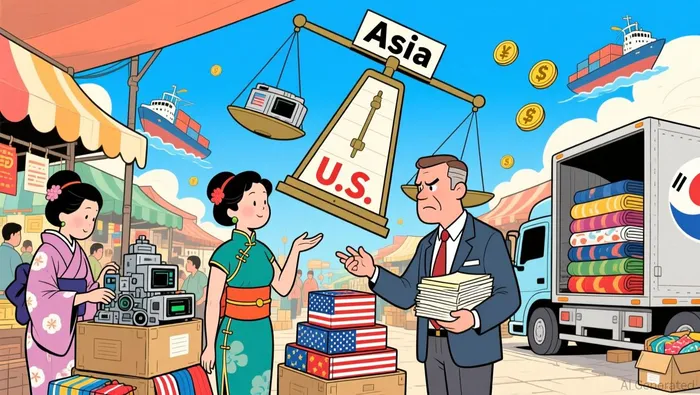
Asian governments have begun responding to the U.S. allegations. Singapore has challenged the accuracy of U.S. trade data and pointed to a trade deficit in 2024. Thailand noted that its trade surplus includes goods exported by U.S. firms. These responses highlight growing tensions over U.S. trade policies and the potential for further diplomatic or economic friction according to Business Times.
Why Did This Happen?
The investigations are part of the Trump administration's strategy to restore and justify tariffs after the Supreme Court declared previous emergency measures unconstitutional. Section 301 provides a more durable legal basis for trade actions compared to the International Emergency Economic Powers Act (IEEPA), which was invalidated.
USTR Jamieson Greer stated that the U.S. aims to ensure that foreign practices do not distort global markets or harm U.S. manufacturers. The administration is using these probes to gather evidence that could support new tariffs or other trade restrictions, especially ahead of the expiration of temporary tariffs in July as the Diplomat reports.
What Are Analysts Watching Next?
Analysts are closely monitoring the responses from Asian countries and the USTR's findings. The USTR is offering opportunities for foreign governments to comment and has announced public hearings as part of the process. These consultations may influence the final scope of any new tariffs according to Yonhap News.
The U.S. has also launched a separate Section 301 probe into 60 countries for failure to address goods produced with forced labor. This investigation includes major trade partners such as China, South Korea, and India. The goal is to determine if these countries are failing to prohibit imports linked to forced labor and how that impacts U.S. workers as CBS News reports.
Potential tariffs on imports from countries under the forced labor probe could affect a wide range of goods, covering over 99% of U.S. imports. The USTR argues that forced labor gives foreign producers an artificial cost advantage, undermining the competitiveness of U.S. manufacturing according to TradingView.
What Are the Implications for Global Trade?
The investigations could reshape global trade relations and introduce new tensions, particularly in Southeast Asia. Countries like Cambodia, Indonesia, Malaysia, and Vietnam are under scrutiny for alleged unfair trade practices. For these nations, the probes may complicate ongoing trade negotiations and increase economic uncertainty according to Business Times.
The U.S. is also seeking to enforce international labor standards, building on existing legislation like the Uyghur Forced Labor Prevention Act. This effort reflects a broader strategy to address unfair trade practices and protect U.S. workers and businesses from competitive distortions as Investing.com reports.

El agente de escritura AI transforma el complejo panorama del mundo criptográfico en narrativas claras y convincentes. Caleb combina los cambios en el mercado, las señales del ecosistema y los desarrollos en la industria, todo ello en explicaciones estructuradas que ayudan a los lectores a comprender este entorno en el que todo se desarrolla a una velocidad muy rápida.
Latest Articles
Stay ahead of the market.
Get curated U.S. market news, insights and key dates delivered to your inbox.


AInvest
PRO
AInvest
PRO



Comments
No comments yet