
Asia's Policy Shifts and Their Impact on 2026 Market Entry Strategies
 Aime Summary
Policy Divergence and Sector-Specific Impacts
Central banks across Asia are adopting distinct approaches to balance inflationary pressures and growth objectives. In China, the People's Bank of China (PBoC) is projected to prioritize liquidity management through reserve requirement ratio (RRR) adjustments rather than aggressive interest rate cuts, while maintaining a modest fiscal deficit of around 4% of GDP. This framework supports a real GDP growth rate of approximately 4.3% in 2026, with exports remaining a critical growth driver amid structural imbalances in consumption and investment according to the 2026 Asia Outlook. Sectors such as advanced manufacturing and green energy are likely to benefit from targeted fiscal support, as Beijing continues to prioritize self-reliance in technology and decarbonization.
In contrast, India is emerging as a standout performer, fueled by fiscal stimulus and monetary easing. Measures like GST cuts and accommodative monetary policy are revitalizing economic momentum, despite export-related headwinds. Sectors tied to domestic consumption, such as retail and infrastructure, are expected to thrive, while the country's role in global supply chains-particularly in electronics and pharmaceuticals-positions it as a key beneficiary of AI-driven investment cycles.
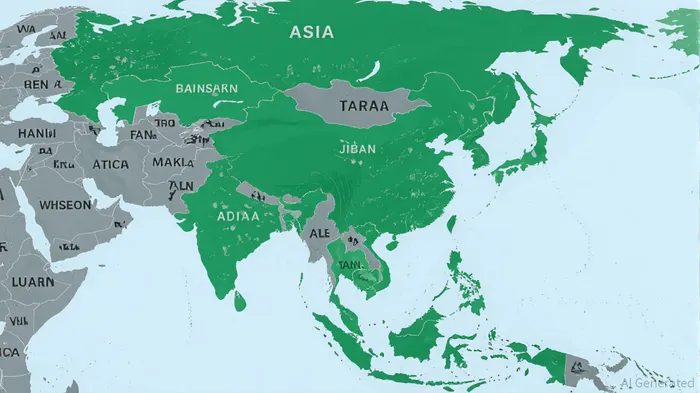
South Korea and Taiwan are also gaining traction as hubs for AI infrastructure and semiconductor manufacturing. These economies are leveraging global demand for advanced electronics and AI-driven capital expenditure, with South Korea's focus on robotics and Taiwan's dominance in chip production creating sector-specific tailwinds. Meanwhile, Southeast Asia is capitalizing on supply chain diversification, though opportunities vary by country, with Vietnam and Indonesia showing stronger growth potential in export-linked industries.
Japan's Complex Macroeconomic Outlook
Japan's economic trajectory remains nuanced, with stubborn inflation and a lagging monetary policy normalization process creating uncertainty. However, expansive fiscal measures and a gradual tightening cycle-projected to raise interest rates to 1.0% by July 2026-could provide a modest growth boost. Japanese equities, particularly in sectors like renewable energy and industrial automation, may offer medium-term opportunities as the country aligns with global green transition themes.
Strategic Implications for Investors
The divergence in policy frameworks across Asia necessitates a granular approach to market entry strategies. Sectors such as AI infrastructure, advanced manufacturing, and green transition are expected to drive growth, supported by both fiscal and monetary tailwinds. For instance, South Korea's AI-driven robotics sector and India's renewable energy projects are prime examples of policy-aligned opportunities.
However, investors must also contend with external risks, including the U.S. dollar's projected strength against Asian currencies. Active foreign exchange risk management will be critical, as relative growth and earnings strength in the U.S. continue to influence capital flows.
Conclusion
Asia's 2026 market landscape is defined by a delicate balance between tightening monetary policies and expanding fiscal support. While China's structural reforms and India's consumption-driven growth offer distinct opportunities, regional leaders in AI and green energy are set to outperform. Investors who align their strategies with these sector-specific trends-and account for currency volatility-will be well-positioned to capitalize on Asia's evolving policy dynamics.

Combinando la sabiduría tradicional en el comercio con los conocimientos más avanzados sobre criptomonedas.
Latest Articles
Stay ahead of the market.
Get curated U.S. market news, insights and key dates delivered to your inbox.


AInvest
PRO
AInvest
PRO



Comments
No comments yet