
Asia-Pacific Tech Sector Resilience Amid Global Macroeconomic Uncertainty: Earnings-Driven Valuations and Long-Term Investment Implications
 Aime Summary
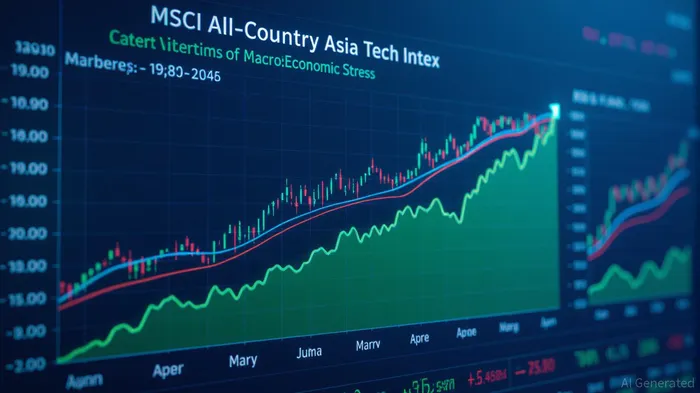
The Asia-Pacific technology sector has demonstrated remarkable resilience in the face of global macroeconomic headwinds, with strong corporate earnings serving as a critical pillar for valuation stability. Despite persistent high-interest rate environments and geopolitical tensions, the sector's ability to generate robust revenue growth and adapt to shifting investor sentiment has positioned it as a key driver of global equity markets. For long-term investors, understanding the interplay between earnings performance, valuation dynamics, and macroeconomic forces is essential to navigating this complex landscape.
Earnings Growth and Valuation Divergence
The Q2 2025 earnings report for the Asia-Pacific tech sector underscores a stark contrast between revenue expansion and profit margins. The Information Technology sector has posted a 22% year-over-year revenue growth rate, far outpacing the S&P 500's 6.3% and the 4.8% average for the 2014–2025 period. This growth, however, is heavily concentrated in the so-called Magnificent 7—Alphabet, AmazonAMZN--, AppleAAPL--, MetaMETA--, MicrosoftMSFT--, NVIDIANVDA--, and Tesla—whose collective earnings have slowed due to difficult year-over-year comparisons but still outperform the broader market.
While the sector's market capitalization has surged to over 32% of the S&P 500, its share of total net income has risen only marginally to 23%. This widening gap between market cap and earnings has raised concerns about overvaluation. Bloomberg Intelligence analysts note that the sector's current valuations imply future earnings growth that is unlikely to materialize, given macroeconomic constraints and regulatory pressures. For investors, this suggests a need for caution: while earnings growth is propping up valuations, the sustainability of these multiples depends on the sector's ability to deliver on long-term innovation and profitability.
AI and Innovation as Catalysts
The launch of DeepSeek in January 2025 marked a turning point for the Asia-Pacific tech sector. This AI breakthrough, which significantly reduced costs for large language models, initially triggered a 20% de-rating in semiconductor valuations. The MSCIMSCI-- All-Country Asia Semiconductors and Semiconductor Equipment Index saw its forward P/E ratio drop to 13.6x, 21% below its five-year average. However, the long-term demand for AI infrastructure remains robust, with hyperscalers like Amazon, Alphabet, Meta, and Microsoft planning to spend over $320 billion on AI-related capital expenditures in the next 12 months.

This duality—short-term valuation corrections and long-term demand resilience—highlights the sector's adaptability. For investors, the key lies in distinguishing between companies with durable competitive advantages in AI and those exposed to cyclical demand shifts. The MSCI China Top 10 Tech Innovators index, for instance, surged 28% post-DeepSeek, reflecting selective optimism for firms with clear AI-driven value propositions.
High-Interest Rate Environments: A Double-Edged Sword
High-interest rates, which have persisted since 2023, initially weighed on tech valuations by increasing the cost of capital and reducing the present value of future earnings. However, the sector's recovery in 2025 has been fueled by structural growth drivers such as AI adoption, digital transformation, and policy support in key markets like India and Japan.
In Japan, the Bank of Japan's gradual normalization of interest rates has introduced upward pressure on capital costs, yet corporate governance reforms and strong wage growth have insulated the tech sector from a full de-rating. Similarly, India's monetary easing in mid-2025 has supported tech valuations, particularly in AI and digital infrastructure, as structural growth drivers like urbanization and manufacturing expansion gain momentum.
Strategic Implications for Long-Term Investors
For long-term investors, the Asia-Pacific tech sector offers both opportunities and risks. The sector's resilience is underpinned by its ability to generate strong earnings and leverage technological innovation, but valuations remain stretched in many subsectors. Investors should prioritize companies with:
1. Durable Earnings Models: Firms with recurring revenue streams or defensible market positions in high-growth areas like AI and cloud computing.
2. Operational Efficiency: Companies demonstrating cost discipline and margin expansion, which can offset macroeconomic pressures.
3. Geopolitical Resilience: Businesses with diversified supply chains and regulatory agility, particularly in markets like China and India.
Diversification across subsectors and geographies is also critical. While the Magnificent 7 and AI-focused firms dominate headlines, opportunities exist in undervalued areas such as communication equipment, cybersecurity, and industrial automation.
Conclusion
The Asia-Pacific tech sector's resilience amid macroeconomic uncertainty underscores its role as a cornerstone of global innovation. Strong earnings growth, coupled with AI-driven transformation, has propped up valuations despite high-interest rate environments. However, investors must remain vigilant about overvaluation risks and macroeconomic headwinds. For those with a long-term horizon, a disciplined approach focused on fundamentals, diversification, and patience will be key to capturing the sector's potential while mitigating its inherent volatility.

Stay ahead of the market.
Get curated U.S. market news, insights and key dates delivered to your inbox.
AInvest
PRO
AInvest
PRO



Comments
No comments yet