
Asia-Pacific Stocks Plunge 4.1% as Trump's 10% Tariffs Hit Japan Hard
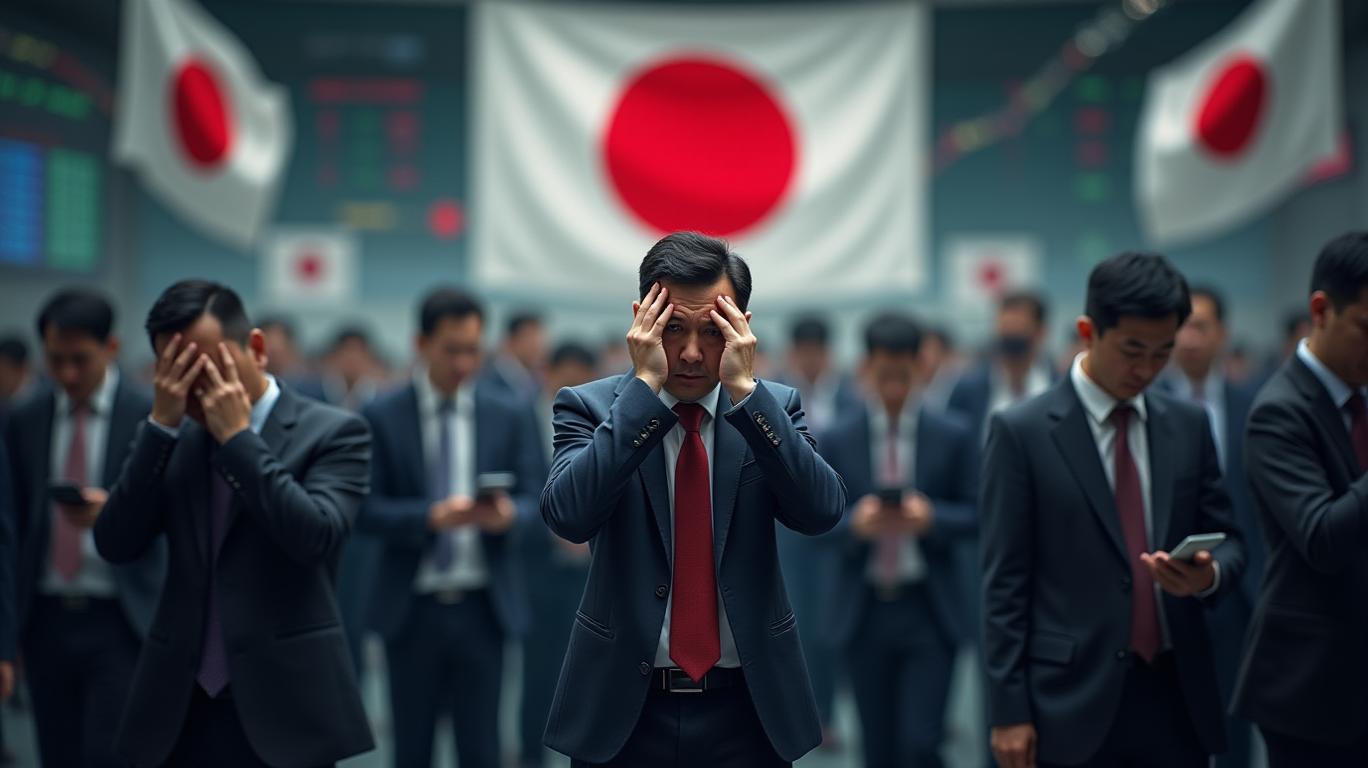
Asia-Pacific stocks experienced a significant decline on Thursday, with Japan's market being particularly hard hit. The downturn followed President Trump's announcement of extensive import tariffs, which included a 10% levy on a wide range of goods. The Nikkei share average in Japan dropped to an eight-month low, reflecting the market's reaction to the new tariffs. The decline was widespread, with nearly every index member, including shippers, banks, and insurers, experiencing losses. The Nikkei 225 index plunged more than 4.1%, while South Korea's Kospi stock average fell more than 2.5%. Australia's ASX 200 also dipped about 2%.
The tariffs, which included a 24% levy on Japanese imports, were part of a broader set of reciprocal tariffs announced by Trump. These tariffs were higher for some Asian countries, with China facing a 34% levy, Vietnam a 46% levy, and Thailand a 36% levy. The announcement led to a record low for Vietnam's dong and a significant drop in its stock market. In contrast, India's Sensex and Nifty showed minimal declines, indicating a relative resilience to the tariff shock. The market reaction underscored the global impact of Trump's tariff policies, which have been a source of uncertainty and volatility for investors. The decline in Asia-Pacific stocks highlighted the interconnected nature of global markets and the potential for trade policies to have far-reaching effects.
President Trump on Wednesday announced a comprehensive overhaul of U.S. trade policy, instituting a universal 10% tariff on a wide range of goods. This move was part of a broader strategy to address trade imbalances and protect domestic industries. The announcement sent shockwaves through global markets, with investors scrambling to assess the potential impact on their portfolios. The tariffs were designed to be reciprocal, meaning that countries imposing tariffs on U.S. goods would face higher duties on their own exports to the U.S. This approach aimed to level the playing field and encourage fair trade practices. However, the immediate effect was a wave of uncertainty and market turbulence, as investors grappled with the potential consequences of the new tariffs.
The widespread decline in Asia-Pacific stocks reflected the region's vulnerability to global trade policies. Japan, in particular, was hit hard by the 24% levy on its imports, leading to a significant drop in the Nikkei 225 index. The impact was not limited to Japan, as other Asian markets also experienced declines. South Korea's Kospi stock average fell more than 2.5%, while Australia's ASX 200 dipped about 2%. The tariffs on specific nations, including China, Vietnam, and Thailand, further exacerbated the market downturn. The record low for Vietnam's dong and the significant drop in its stock market highlighted the severe impact of the tariffs on the region's economies. In contrast, India's Sensex and Nifty showed minimal declines, suggesting that the country's market was relatively resilient to the tariff shock. The market reaction underscored the interconnected nature of global markets and the potential for trade policies to have far-reaching effects. The decline in Asia-Pacific stocks highlighted the region's vulnerability to global trade policies and the need for countries to adapt to the changing trade landscape.

Stay ahead of the market.
Get curated U.S. market news, insights and key dates delivered to your inbox.


AInvest
PRO
AInvest
PRO



Comments
No comments yet