
Asia-Pacific Markets Face Energy Shock as Oil Prices Surge
 Aime Summary
Asian equity markets are under pressure as energy prices spike due to the escalating Iran war.
- Surging oil prices and disruptions in oil and LNG supply routes are disproportionately affecting net energy-importing economies in the Asia-Pacific region.
- Governments are implementing energy conservation measures and exploring alternative energy solutions to mitigate the impact of rising costs.
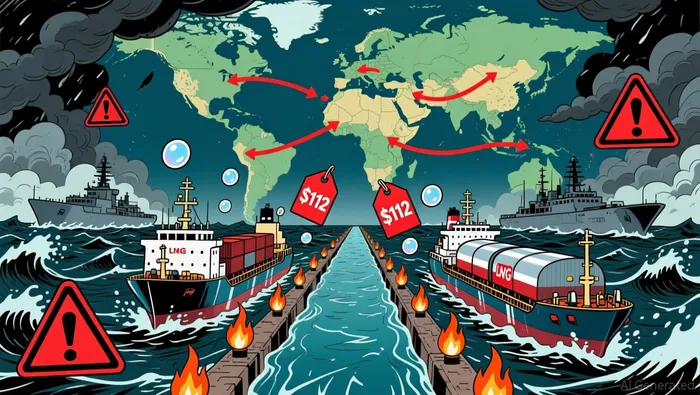 The Asia-Pacific is facing one of the most severe energy shocks in recent years as the Iran war disrupts global oil supply and sends prices soaring. Countries like Japan and South Korea, with larger oil reserves, are relatively better positioned to manage the crisis, but smaller economies such as Indonesia and the Philippines are struggling with inflationary pressure and economic strain according to Morgan Stanley. Analysts warn that prolonged high oil prices could trigger a $500 billion hit to the global economy, with energy-dependent emerging markets bearing the brunt of the impact as research shows.
Why Is Asia-Pacific Vulnerable to the Energy Shock From the Iran War?
Asia-Pacific nations rely heavily on oil and liquefied natural gas (LNG) imports from the Middle East, and the conflict has disrupted key supply routes, including the . With Brent crude prices climbing to over $112 per barrel, countries with smaller oil buffers—such as Indonesia, the Philippines, and Thailand—are especially vulnerable according to China Daily. Japan and South Korea, by contrast, , which provide some cushion against immediate supply shocks as reported. Still, all countries in the region are facing inflationary pressures and supply chain disruptions, which are spilling over into manufacturing and food distribution. Governments are responding with emergency oil releases, fuel price caps, and energy conservation campaigns like energy holidays and reduced energy use mandates.
What Are the Market Implications for Asian Equities in the Current Energy Crisis?
Morgan Stanley has advised investors to sell into the recent Asian equity rally, warning that the market could face a deeper downturn if energy prices remain elevated according to Bloomberg. The firm notes that Asian economies are more exposed to energy price shocks due to their high import dependency, . In addition to oil, disruptions in other key commodities like , , and sulfur are raising concerns about the stability of agricultural and industrial production in the region. Meanwhile, central banks are being forced to recalibrate monetary policies as inflationary pressures build, potentially slowing economic growth and dampening corporate investment. For now, however, most emerging markets in the APAC region are expected to absorb the blow if the conflict resolves quickly as Business Standard reports.
How Is the Asia-Pacific Responding to the Energy Crisis and Geopolitical Uncertainty?
Business leaders in the Asia-Pacific are pivoting to regional trade and shorter supply chains to reduce their exposure to global geopolitical risks according to Vietnam News. This shift is not only driven by the energy crisis but also by broader concerns over supply chain resilience and sustainability. Companies are also investing in AI and automation to enhance operational efficiency in a volatile environment. At the same time, governments are pushing for greater energy diversification, with some countries prioritizing nuclear and renewable energy while others increase coal use. The European Union, for example, is exploring carbon emissions permit availability to ease energy prices, while countries like Bangladesh and Sri Lanka are implementing energy rationing measures. The long-term solution, many experts argue, is a faster transition to renewable energy to reduce dependence on volatile fossil fuel markets as China Daily notes.

Stay ahead of the market.
Get curated U.S. market news, insights and key dates delivered to your inbox.
AInvest
PRO
AInvest
PRO



Comments
No comments yet