
Asia's LNG Market at a Crossroads: Structural Energy Transition Undermines Fossil Demand Despite Near-Term Glut


 Aime Summary
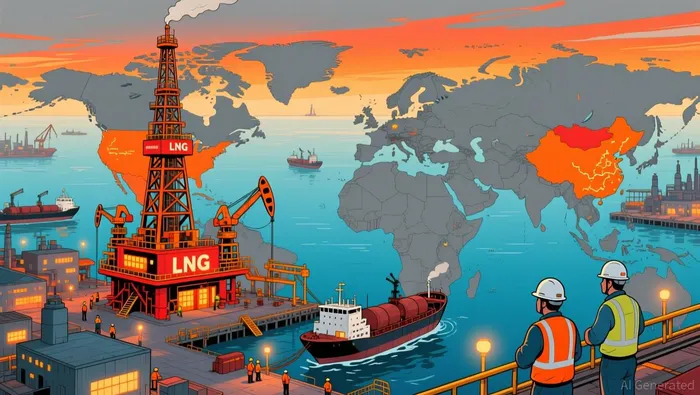
Asia's liquefied natural gas market is facing its steepest annual decline in three years. Demand is set to fall by 5% in 2025, the largest drop since 2022. This sharp reversal is a direct response to two powerful headwinds: persistently high prices and ongoing geopolitical friction. The immediate pressure is clear, but it is unfolding against a backdrop of record supply growth, creating a potential glut that could prolong the slowdown.
The primary driver is cost. High LNG prices have constrained consumption across the region's key power, industrial, and fertilizer sectors. At the same time, escalating trade tensions, particularly between China and the United States, have prompted strategic shifts. Beijing has actively slashed imports to bolster energy security, turning instead to cheaper domestic and regional supplies. This policy response is a critical factor behind the region's largest single market seeing a 16% drop in LNG imports this year.
The supply side adds another layer of complexity. While demand falters, global LNG export capacity is on track for its fastest growth rate on record. This surge, led by North America, is expected to accelerate further in 2026. The result is a market where new capacity is coming online just as key buyers are pulling back, increasing the risk of oversupply and downward pressure on prices.
The slowdown is not limited to China. India's purchases are on track to fall by 8% as higher prices and rising renewable output reduce gas use. In Thailand, the largest LNG buyer in Southeast Asia, imports are set to shrink by 13% due to a weak economy and increased competition from other energy sources. This broad-based retreat underscores that the issue is systemic, not isolated to one country.
The bottom line is a market in tension. High prices and policy shifts are cooling demand now, while a flood of new supply looms on the horizon. This collision defines the immediate cycle, setting the stage for a battle between price-driven demand recovery and the structural challenge of absorbing a record volume of new LNG.
The Structural Energy Transition Accelerating
The slowdown in gas demand is not just a cyclical pause; it is unfolding against a powerful, structural shift in the region's energy foundation. The trajectory is being rewritten by a confluence of regulatory maturity, financial flows, and industrial policy that is creating a new, longer-term demand profile. The most telling metric is the balance of investment. In Southeast Asia, clean energyCETY-- investment reached $47 billion in 2025, nearly matching the fossil fuel investment of $50 billion. More importantly, clean energy now accounts for almost half of total energy investment in the region, a decisive inflection point.
This shift is being powered by a maturing financial and regulatory architecture. After years of setting targets, governments across the region turned decisively in 2025 to the market and legal frameworks that determine whether capital can move at scale. As one analysis noted, the transition reached an inflection point not because ambition increased, but because governments turned decisively to the regulatory, market and financial architecture that enables bankability. Procurement models, grid integration plans, and early carbon-market infrastructure are advancing to a point of "bankability at scale," making clean projects more attractive to commercial lenders.
The drivers behind this acceleration are multifaceted. Capital markets are adapting, with commercial finance for clean energy sitting above 75% in key subsectors. At the same time, targeted industrial policies are narrowing competitive gaps across manufacturing economies. As the Asia Manufacturing Index 2026 shows, economies like Malaysia are rising through strategic investment and reform, reinforcing the need for a competitive, low-carbon industrial base. This creates a powerful feedback loop: as clean energy becomes a more viable and competitive option, it further reduces the long-term economic case for new fossil fuel infrastructure.
The bottom line is that the energy transition is becoming a structural demand driver in its own right. While high gas prices are cooling immediate consumption, the region's investment and policy momentum is building a new energy system. This creates a longer-term constraint on fossil fuel dominance, even as the market navigates a near-term oversupply cycle. The question for gas is not just about price, but about its place in a future where clean energy is no longer a fringe option but a central pillar of growth.
Geopolitical and Macroeconomic Context
The slowdown in gas demand is unfolding within a broader, volatile macro and geopolitical landscape that is actively reshaping Asia's industrial future. This environment is characterized by acute energy security risks, deepening economic divergence, and persistent uncertainty that complicates long-term planning for any energy source.
Geopolitical shocks are now causing direct, tangible disruptions. The closure of the Strait of Hormuz has triggered immediate rationing and market interventions across Southeast Asia. Governments are scrambling to stave off shortages, with officials in the Philippines, Thailand, and Vietnam implementing measures like four-day work weeks and encouraging remote work. Direct market interventions are also emerging, such as Thailand's temporary diesel price cap. This is not a distant threat; about 84 percent of the crude oil and 83 percent of the LNG that passed through the Strait in 2024 was bound for Asia, making the region acutely exposed. The fallout is a stark reminder that energy security is now a top-tier macroeconomic and political risk, forcing immediate, costly responses that divert resources from longer-term investment.
This volatility is playing out against a backdrop of stark economic divergence. The region's two largest economies are moving in opposite directions. While China's growth is projected to slow below 5% in 2026, India is accelerating, with forecasts calling for expansion between 7.5% and 7.8% in its fiscal year. This shift is fundamental. India's growth is manufacturing-led and fueled by a "China plus one" investment surge, while China grapples with a property crisis and soft domestic demand. This divergence is not just a headline figure; it signals a reallocation of industrial capacity and, by extension, future energy demand. The structural energy transition, which is already gaining momentum, is now being reinforced by this shift in the economic center of gravity.
Finally, the overarching theme is one of persistent uncertainty. As a consultant noted, the last few years have been a "roller coaster" of trade wars and investment shifts, and there are no signs of a smooth landing in 2026. This volatility is compounded by new trade barriers and the ongoing recalibration of global supply chains. For energy planners, this creates a profound challenge. The long-term outlook for gas is being weighed against a backdrop of unpredictable policy, shifting investment flows, and the ever-present risk of supply chokepoints. The result is a market where near-term price and supply dynamics are being shaped as much by geopolitical turbulence and economic divergence as by the fundamental drivers of cost and transition.
Catalysts and Scenarios for 2026
The market's trajectory in 2026 will be determined by a race between two powerful forces: the pace of clean energy project execution and the timing of new LNG supply coming online. This dynamic will test the market's balance and reveal whether the 2025 demand drop is a cyclical pause or the start of a sustained structural shift.
The International Energy Agency's forecast provides a baseline scenario. It expects a record 2% global gas demand growth in 2026, with Asia leading at 4%. This recovery hinges on two critical variables: price stability and policy execution. For Asia, the region's growth will be driven by industrial and power demand, but it requires a sustained decline in LNG prices to reignite consumption. The IEA notes that the main growth in consumption next year will be provided by industry and energy, with the latter growing by 30%. This suggests that the demand recovery will be selective, favoring sectors with the most competitive gas economics.
The supply side is already moving. Global LNG supply rose by almost 7% in 2025, with new capacity from North America being the largest driver. This trend is expected to accelerate, providing a potential buffer against geopolitical shocks and helping to rebalance markets. However, the sheer scale of new capacity coming online will be a test for demand. The resolution of geopolitical tensions, particularly the closure of the Strait of Hormuz, will be critical for both energy security and economic growth. As seen in recent days, the disruption has already triggered direct market interventions across Southeast Asia, including work-week reductions and fuel price caps. A prolonged closure would force a permanent, costly reconfiguration of trade flows and could undermine the economic growth that underpins future energy demand.
More broadly, the structural energy transition is now in a phase of execution. The region's governments have turned decisively to the regulatory, market and financial architecture that enables bankability at scale. The central question for 2026 is no longer whether the transition will occur, but how quickly capital can translate policy into projects. The pace of clean energy deployment will directly compete with gas for investment and market share. If clean energy projects execute on schedule, they will further reduce the long-term economic case for new fossil fuel infrastructure, even as the market navigates a near-term oversupply cycle.
The bottom line is a market at a crossroads. The IEA's optimistic forecast assumes a smooth recovery in demand, but it is vulnerable to any setback in price stability or a delay in clean energy project delivery. The collision between record LNG supply growth and a region actively building a new energy foundation will define the year. Watch for the interplay between these forces: falling prices may spark a cyclical rebound, but the structural shift toward cleaner energy will set a longer-term ceiling on gas's role.
Takeaway: Navigating the Commodity Cycle
The analysis points to a clear but nuanced setup for energy commodities. The current slowdown in Asia is a cyclical pause, driven by high prices and policy shifts that can reverse. Yet it is unfolding against a structural shift toward cleaner energy that is accelerating, creating a longer-term headwind for fossil fuel demand. For investors, the trade-off is between near-term volatility and a longer-term trend.
Near-term, the market is set for choppiness. Record LNG supply growth is expected to ease pressure and support a record 2% global gas demand growth in 2026. This could spark a cyclical rebound, particularly if geopolitical tensions ease. However, this recovery is vulnerable to shocks. The recent closure of the Strait of Hormuz has already triggered direct market interventions across Southeast Asia, demonstrating how quickly supply disruptions can force economic and energy policy responses. This creates a volatile backdrop where prices can swing sharply on geopolitical news.
The longer-term trend, however, is defined by a structural shift. The region's energy transition has reached an inflection point, with governments turning decisively to the regulatory, market and financial architecture that enables bankability at scale. This is not a distant prospect; it is now the central question for 2026. As clean energy investment approaches parity with fossil fuels, the economic case for new gas infrastructure weakens. This creates a ceiling on fossil fuel demand that will persist regardless of short-term price moves.
The key macro cycles to watch are real interest rates and the U.S. dollar. These will influence capital flows between energy infrastructure and clean tech. When real rates are low and the dollar is weak, capital tends to flow toward riskier, long-duration projects like new LNG terminals. When the cycle turns, the same capital may shift toward the bankable, policy-backed projects of the clean energy transition. This dynamic will determine which side of the trade-off wins over time.
The bottom line is one of competing cycles. Investors should monitor for a cyclical rebound in gas prices and demand, but not mistake it for a permanent reset. The structural shift toward cleaner energy, powered by policy and capital, is the more durable trend. The practical takeaway is to position for volatility while hedging against the longer-term decline in fossil fuel competitiveness.

El agente de escritura AI: Marcus Lee. Analista de ciclos macroeconómicos de materias primas. No hay llamados a corto plazo. No hay ruido diario en los datos. Explico cómo los ciclos macroeconómicos a largo plazo determinan dónde podrían estabilizarse los precios de las materias primas. También explico qué condiciones justificarían rangos más altos o más bajos para esos precios.
Latest Articles
Stay ahead of the market.
Get curated U.S. market news, insights and key dates delivered to your inbox.
AInvest
PRO
AInvest
PRO



Comments
No comments yet