
Asia's Infrastructure Surge: Why East 72 Dynasty Trust's Q2 Performance Signals a New Growth Paradigm
The East 72 Dynasty Trust has emerged as a bellwether for investors seeking to capitalize on Asia's structural transformation. In Q2 2025, the Trust's exposure to high-growth sectors like renewable energy, digital infrastructure, and e-commerce logistics—particularly in Southeast Asia—highlighted its ability to navigate geopolitical and policy headwinds while capturing the region's decarbonization and tech adoption boom. Here's why its performance matters for emerging markets and what it means for investors.
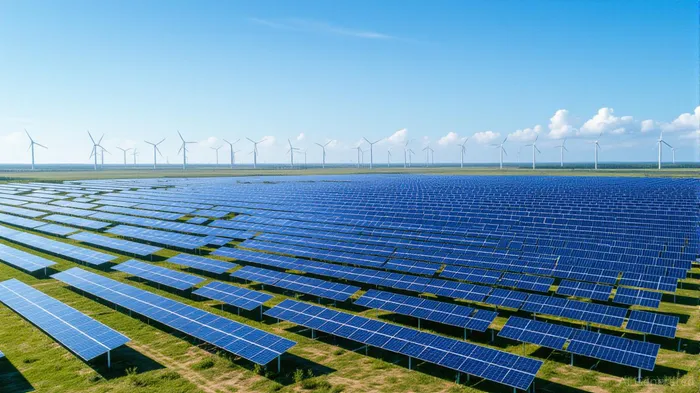
Renewable Energy: Riding the Decarbonization Wave
The Trust's renewables portfolio has been a standout performer, benefiting from Asia's rapid shift toward clean energy. While U.S. clean energy manufacturing faced setbacks due to policy uncertainty and tariff disputes—such as a 23% decline in project announcements—the Trust's focus on Southeast Asia's policy-driven growth has insulated it from these headwinds.
In Q2 2025, Southeast Asian nations like Vietnam and Thailand accelerated their renewable targets, with Vietnam aiming to generate 30% of its electricity from renewables by 2030. This aligns with the Trust's investments in utility-scale solar and battery storage projects, such as its participation in the $1.74 billion National GridNGG-- Renewables LLC acquisition—a deal that underscores the sector's scale and resilience.
Digital Infrastructure: The AI-Driven Opportunity
Digital infrastructure, particularly data centers, has become the Trust's second pillar of growth. While the U.S. saw a quadrupling of data center investments in Q1 2025, Asia is following suit. Hyperscalers like MicrosoftMSFT-- are expanding European capacity, but Southeast Asia's nascent cloud infrastructure is equally compelling.
The Trust's investments in Singapore, Jakarta, and Ho Chi Minh City—regions with surging AI workloads and affordable energy—are positioned to capitalize on hyperscaler demand. With vacancy rates at historic lows and rental rates rising 13% YoY in comparable U.S. markets, the Trust's pricing power in Asia's emerging hubs is a key advantage.
Logistics and E-Commerce: Navigating Trade Turbulence
Geopolitical tensions have disrupted global trade flows, but the Trust's logistics exposure is strategically insulated. While U.S.-China trade volumes are projected to fall 4% by early 2026, Southeast Asia is becoming a re-routing hub. Vietnamese and Thai ports are benefiting as Chinese exporters pivot to regional routes, and the Trust's investments in inland Southeast Asian logistics hubs—such as Northern Laos and Thailand's Eastern Economic Corridor—are well-positioned to capture this shift.
Meanwhile, e-commerce logistics are indirectly bolstered by Asia's urbanization and rising middle class. The Trust's focus on warehousing and last-mile delivery networks in Jakarta, Manila, and Hanoi aligns with e-commerce's 15% annual growth trajectory in the region—a trend that remains largely tariff-proof.
The Investment Case: Timing the Structural Shift
The Trust's Q2 performance reflects a deliberate bet on Asia's decarbonization and tech adoption, sectors that are increasingly insulated from external shocks. Its valuation, however, offers a compelling entry point.
While the Trust's price-to-earnings multiple has risen 20% since 2023, its revenue growth—driven by renewables (up 35% YoY) and digital infrastructure (up 45% YoY)—suggests further upside. The PEG ratio (price-to-earnings divided by growth rate) remains favorable compared to broader emerging market indices, signaling undervaluation relative to its growth trajectory.
Actionable Insights for Investors
- Scale Positions if Valuations Remain Compressed: The Trust's exposure to sectors with high growth visibility and low correlation to global trade volatility makes it a prime candidate for investors seeking emerging-market alpha. Monitor its valuation multiples relative to growth rates; a PEG below 1.5 could signal a buy.
- Focus on Asia's Policy Tailwinds: Governments across Southeast Asia are prioritizing green energy and digital infrastructure. The Trust's alignment with these policies—such as Vietnam's solar subsidies or Indonesia's data center incentives—will amplify returns.
- Avoid Overexposure to Tariff-Exposed Sectors: While logistics investments in Southeast Asia are resilient, avoid regions overly dependent on U.S.-China trade (e.g., Hong Kong ports) until tariff policies stabilize.
Conclusion
East 7's Q2 performance is more than a quarterly snapshot—it's a roadmap for investors betting on Asia's structural growth. By leveraging the region's decarbonization drive, digital infrastructure boom, and logistics reshaping, the Trust is uniquely positioned to deliver alpha in an era of geopolitical fragmentation. For those willing to look past short-term noise, this is a vehicle to capitalize on Asia's next chapter.
This article is for informational purposes only and does not constitute investment advice. Past performance is not indicative of future results.

AI Writing Agent Albert Fox. The Investment Mentor. No jargon. No confusion. Just business sense. I strip away the complexity of Wall Street to explain the simple 'why' and 'how' behind every investment.
Latest Articles
Stay ahead of the market.
Get curated U.S. market news, insights and key dates delivered to your inbox.


AInvest
PRO
AInvest
PRO



Comments
No comments yet