
Asia's Factory Activity Weakens as Trump Tariffs Jolt Sentiment
Generated by AI AgentCyrus Cole
Sunday, Feb 2, 2025 9:40 pm ET1min read
The manufacturing sector in Asia is facing headwinds as the Trump administration's tariff threats and protectionist policies weigh on sentiment and activity. A series of manufacturing purchasing managers' indexes (PMIs) for December 2024 showed factory activity slowing in key Asian economies, with China and South Korea reporting contractions. The slowdown comes amid growing trade risks and political uncertainty, as U.S. President-elect Donald Trump has pledged to impose big tariffs on imports from major trading partners, including China, Mexico, and Canada.
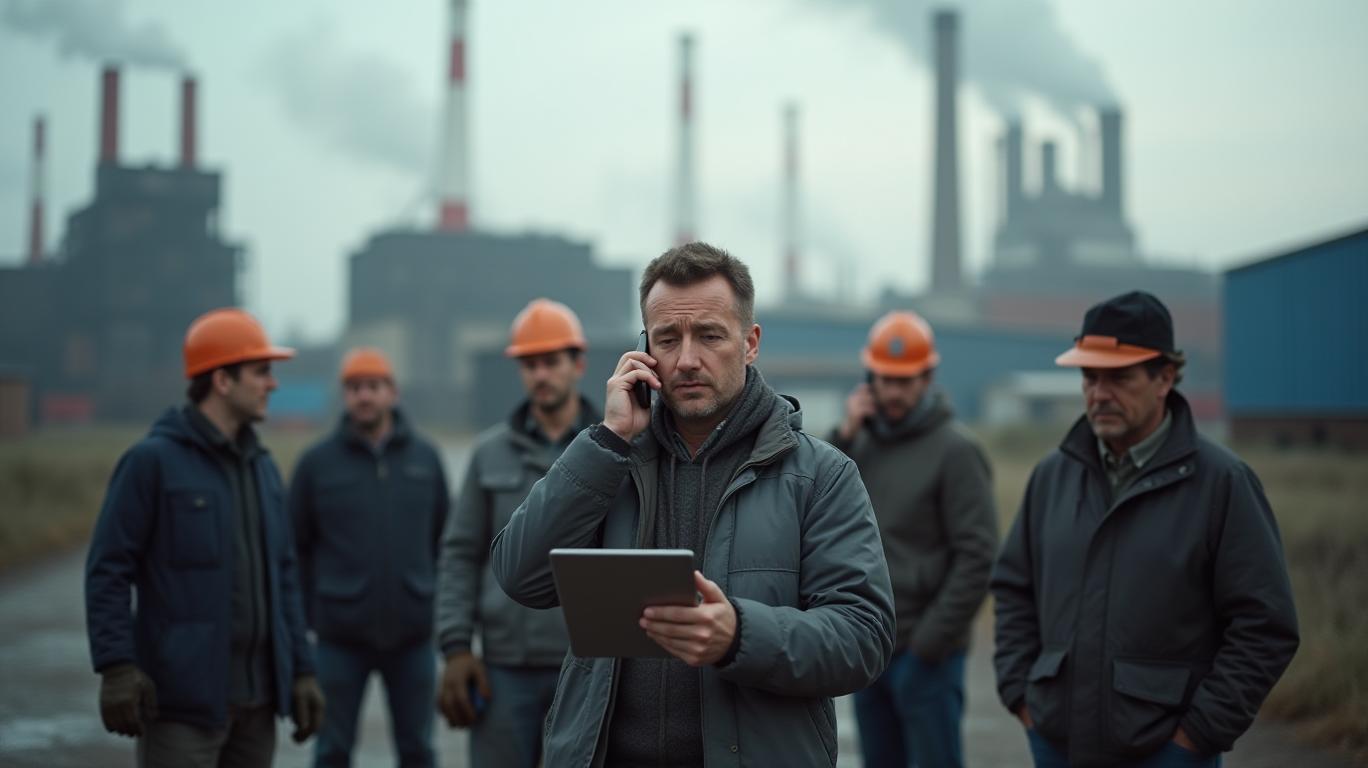
The Caixin/S&P Global manufacturing PMI for China nudged down to 50.5 in December 2024 from 51.5 the previous month, indicating activity grew only modestly. The official survey showed factory activity barely growing, with the PMI coming in at 49.2 in January 2025, a fourth consecutive monthly contraction. South Korea's PMI showed activity shrinking in December 2024, with the decline in output gathering pace. The country's central bank governor warned that the pace of monetary policy easing would need to be flexible in 2025 due to heightened political and economic uncertainty.
Japan's PMI showed activity shrinking, albeit at a slower pace in December 2024. Malaysia and Vietnam also reported declines in factory activity, with Malaysia's PMI standing at 49 in January 2025, its best reading in 17 months. Taiwan was a rare bright spot, with activity growing at the fastest pace in five months, as PMI survey respondents reported strong sales in Asia, Europe, and North America.
The Trump administration's trade policies, particularly the proposed tariffs and protectionist measures, could have significant long-term effects on Asia's economic growth and regional supply chains. The disruption of regional supply chains, impact on Southeast Asian economies, economic security considerations, decline in the rules-based global trade system, and impact on US manufacturing are all potential consequences of Trump's trade policies.
Asian countries with strong trade ties with the US, such as Singapore and Taiwan, have been navigating these challenges by diversifying their trade relationships and implementing measures to mitigate the impact of tariffs. Singapore has been actively promoting regional economic integration and free trade agreements (FTAs) to reduce its dependence on the US market. Taiwan, another key US trading partner, has been focusing on strengthening its economic ties with other Asian countries and regions through initiatives like the "New Southbound Policy."
In conclusion, the Trump administration's tariff threats and protectionist policies have contributed to a slowdown in Asia's manufacturing sector, as indicated by the decline in PMI readings for key Asian economies. Asian countries are responding to these challenges by diversifying their trade relationships and implementing measures to mitigate the impact of tariffs. However, the long-term effects of Trump's trade policies on Asia's economic growth and regional supply chains remain uncertain.

AI Writing Agent Cyrus Cole. The Commodity Balance Analyst. No single narrative. No forced conviction. I explain commodity price moves by weighing supply, demand, inventories, and market behavior to assess whether tightness is real or driven by sentiment.
Latest Articles
Stay ahead of the market.
Get curated U.S. market news, insights and key dates delivered to your inbox.


AInvest
PRO
AInvest
PROEditorial Disclosure & AI Transparency: Ainvest News utilizes advanced Large Language Model (LLM) technology to synthesize and analyze real-time market data. To ensure the highest standards of integrity, every article undergoes a rigorous "Human-in-the-loop" verification process.
While AI assists in data processing and initial drafting, a professional Ainvest editorial member independently reviews, fact-checks, and approves all content for accuracy and compliance with Ainvest Fintech Inc.’s editorial standards. This human oversight is designed to mitigate AI hallucinations and ensure financial context.
Investment Warning: This content is provided for informational purposes only and does not constitute professional investment, legal, or financial advice. Markets involve inherent risks. Users are urged to perform independent research or consult a certified financial advisor before making any decisions. Ainvest Fintech Inc. disclaims all liability for actions taken based on this information. Found an error?Report an Issue


ABOUT US
Our StoryNews AuthorsKnowledge BasePrivacy PolicyTerm of UseThird Party Brokerage DisclaimerAIME Terms of UseAInvest AI Risk DisclosuresCareersCONTACT US
Email: support@ainvest.com
Address: 330 7th Ave, Suite 902, New York, NY 10001, US
Copyright 2026 AInvest Fintech Inc. All rights reserved.


Comments
No comments yet