
Asia's Equity Crossroads: Navigating Policy Divergence and Energy Volatility
The Federal Reserve's decision to maintain its federal funds rate at 4.25%–4.50% since early 2025, underscored by Chair Powell's congressional testimony, has reshaped risk premiums across global markets. For Asian equities, this prolonged rate stability now intersects with two critical dynamics: policy divergence between the Fed and regional central banks, and energy market volatility driven by geopolitical tensions. Together, these forces are redefining sector opportunities and risks.
Policy Divergence: A Dual-Track World
While the Fed remains hawkish, signaling no cuts until late 2025 despite cooling inflation (headline CPI at 2.4% as of June 2025), many Asian central banks have shifted to a more dovish stance. For instance, the Bank of Japan and the Reserve Bank of India have hinted at easing cycles to support growth, even as inflation remains subdued. This divergence creates a yield gap, with U.S. rates staying elevated while Asian rates fall.

This environment rewards investors who can distinguish between rate-sensitive sectors and those insulated from policy shifts. The reveals this dichotomy: financials have lagged due to flatter yield curves, while consumer staples— buffered by stable demand—have outperformed.
Energy Market Volatility: A Double-Edged Sword
Oil prices surged in June 2025 to a six-month high of $74/barrel following Israel's strikes on Iranian nuclear facilities, which risked disrupting Hormuz Strait traffic. This spike highlights the vulnerability of Asian economies, which import 80% of their crude oil. Yet, for energy-linked industrials—such as petrochemicals and refining—this creates a tailwind.
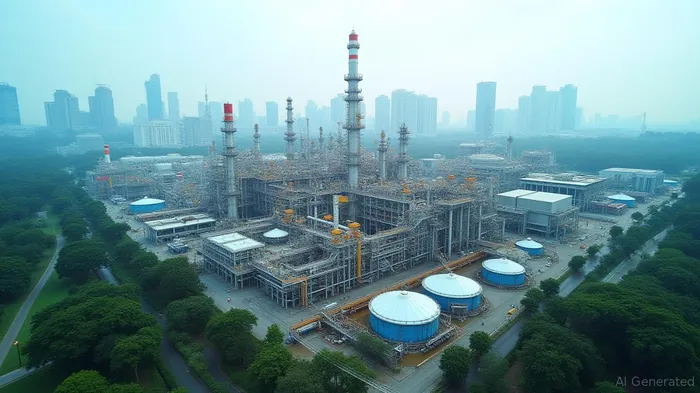
The shows a strong correlation: when oil prices rise, energy stocks outperform. However, the risk remains that prolonged geopolitical instability could push prices higher, squeezing consumer spending power and corporate margins.
Sector Strategies: Where to Bet?
- Energy-Linked Industrials
- Petrochemicals: Companies exposed to ethane and naphtha (e.g., Formosa Plastics, Samsung C&T) benefit from rising oil prices, though U.S. export restrictions to China add complexity.
Renewables: A long-term hedge against fossil fuel volatility. Asian solar and wind firms (e.g., JinkoSolarJKS--, Inox Wind) are poised to grow as governments push decarbonization.
Rate-Resilient Consumer Plays
- Utilities: Regulated monopolies like Hong Kong Electric or Tokyo Electric Power offer stable dividends amid rate uncertainty.
- Necessity Consumer Goods: Food and beverage giants (e.g., Nestlé, Unilever) in Asia are less sensitive to inflation-driven spending cuts.
The Risks: Tariffs, Inventories, and Inflation
Powell's caution stems partly from new tariff-driven inflation risks, which could reignite pricing pressures. Meanwhile, global oil inventories have risen for three consecutive months, suggesting oversupply could eventually cap prices. Investors must monitor the to gauge downside risks.
Investment Advice: Selective and Strategic
- Overweight Energy Industrials: If oil prices remain elevated, sectors like petrochemicals and renewables will outperform.
- Underweight Rate-Sensitive Financials: Until Asian central banks cut rates aggressively, these stocks face headwinds.
- Hedge with Defensive Equities: Consumer staples and utilities provide ballast in volatile markets.
Conclusion
Asia's equity markets are at a crossroads. The Fed's “higher-for-longer” stance and regional policy divergence are reshaping capital flows, while energy volatility adds both risk and reward. Investors who focus on energy-linked industrials and rate-resilient consumer sectors—while hedging against inflation surprises—will be best positioned to navigate this complex landscape.
As geopolitical storms and central bank crosswinds persist, the mantra remains: selectivity is survival.

Stay ahead of the market.
Get curated U.S. market news, insights and key dates delivered to your inbox.






Comments
No comments yet