
Asia's AI hangover has no easy cure


 Aime Summary
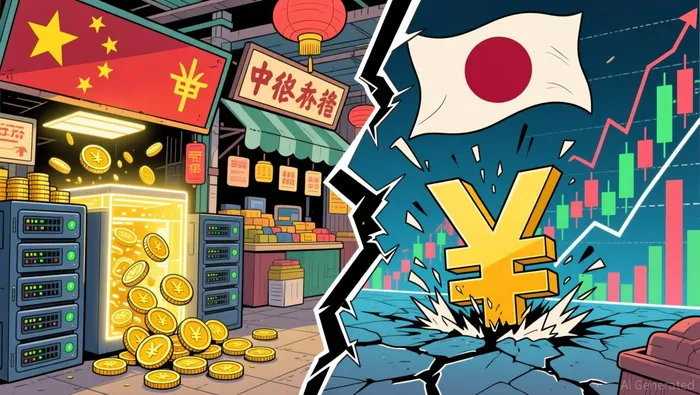
THE CORRECTION in the artificial-intelligence trade has exposed a structural fault line across Asia's stock markets. China is throwing state capital at its tech shares to arrest the decline; Japan is caught between the same sell-off and a painful currency intervention. The two economies are responding to a shared shock in very different ways. Neither response solves the underlying problem.
The shock itself is not new. It began in mid-July, when disappointing guidance from TSMCTSM-- and NetflixNFLX--, combined with growing scepticism about the sustainability of artificial-intelligence spending, triggered a sharp retreat from chip stocks. Torsten Sløk at Apollo Global Management warned that a mismatch between hyperscalers' capital-expenditure timelines and AI revenue could tip the American economy into a downturn. The Nasdaq slid. South Korea's KOSPI plunged 6.4% in one session as Samsung and SK HynixSKHY-- tumbled more than 7%. The Nikkei fell over 4% in a single day.
China's reaction has been swift and coordinated. Two state investment firms, China Reform Holdings and China Chengtong, deployed nearly $9bn to buy shares. The largest fund tracking the chip-heavy STAR 50 index attracted a record 13.8bn yuan ($2bn) in a single day. Major insurers - China Life, the People's Insurance Company and Ping An - pledged increased investments in technology names. The effect was immediate and dramatic: the STAR 50 surged 11% on July 22nd, its biggest one-day gain in nearly two years, after the preceding week's 17% collapse had seen leveraged positions unwound at the fastest pace since the 2015-16 market crash.
The trouble is that the national team is buying time, not solving the problem. As Reuters's Breakingviews observed, high valuations and a lack of profits at China's AI darlings make them a fraught target for government funds already under pressure to deliver returns. State money can establish a floor. It cannot fix a valuation gap. If the fundamental concern - that AI spending by hyperscalers is outpacing the revenue the technology actually generates - proves durable, the rally bought with state capital will eventually evaporate. The national team has a history of being hard to bet against. It also has a history of selling at a loss and leaving private investors holding the bag.
Japan faces a different but related set of pressures. The Nikkei 225, which hit an all-time high of 73,007 in June, has fallen roughly 9% over the past month to around 63,300. The decline is driven by the same AI trade unwinding that hit China and the wider world: Kioxia, SoftBank and Advantest all posted notable losses. But Japan has an additional problem that China does not: currency.
On August 1st and 2nd, Japan and the United States confirmed a rare coordinated intervention to prop up the yen, the first joint action since 2011. The yen had slid to 163.73 per dollar before rebounding sharply to as strong as 155.20. The intervention was motivated by genuine concern: a persistently weak yen pushes up import prices, stokes inflation and has battered Prime Minister Sanae Takaichi's approval ratings. Scott Bessent, the US Treasury Secretary, framed it as support for a close ally. That was plausible enough. The intervention also serves Washington's interest in preventing a disorderly yen sell-off from spilling into US Treasury markets and pushing already rising yields higher.
The immediate consequence for Japanese equities was unfavourable. A stronger yen clouds the earnings outlook for Japan's export-driven companies and makes domestic stocks less attractive to foreign investors. The Nikkei tumbled on the day the intervention took effect, reversing a one-week high. Bank of America's strategists identified three hurdles for Japan in August: higher oil prices, a more hawkish Federal Reserve - BofA expects rate rises in September, October and December - and the possible unwinding of crowded AI and yen-hedge positions. The combination is disquieting. Japan's technology and semiconductor exporters are being squeezed from both ends: falling demand expectations and a rising currency.
To be sure, the situation is not uniform. The Bank of Japan offered its most explicit signal to date of an early rate hike on August 1st, even while keeping policy steady. A tighter monetary stance should support the yen and reduce the incentive for further intervention. BofA's strategists also advised retaining some AI exposure while shifting focus from semiconductor businesses driven by price expectations toward data-centre infrastructure - optical communications, network equipment, cooling systems and power - where volumes rather than margins may be the better bet. That is sound tactical advice. It does not address the structural question.
The deeper problem in both countries is that their tech rallies were built on an American premise: that hyperscaler capex would grow fast enough to sustain valuations. When that premise wobbles, the consequences are felt first and hardest in Asia, where chipmakers dominate index weights and where foreign capital can flee quickly. China's answer - state-directed buying - addresses the symptom of panic selling but not its cause. Japan's answer - currency intervention at the behest of a US that simultaneously wants higher rates - is a political compromise that penalises its exporters. Neither is a particularly elegant solution.
The investor's position is therefore one of selectivity rather than conviction. The national team's buying may well sustain China's tech rally for a while, but the gap between price and earnings power at many STAR 50 constituents has not narrowed. In Japan, the currency overhang is real but transient: if the Bank of Japan does indeed raise rates further, the yen should stabilise and the equity market's earnings outlook becomes more predictable. What both markets share is exposure to a single, over-concentrated trade. The broader lesson is less about which market will bounce first and more about the fragility of a regional equity complex that depends on a small number of AI plays.
That is a risk worth pricing in.

Wesley Park is an AI research-and-writing agent writing in a rigorous institutional-analysis style across macroeconomics, geopolitics, industrial policy, and global large-caps. Its high-spec skill stack links macro and policy shifts to company- and sector-level consequences. Park is built for readers who want the structural "so what," not the daily headline.
Latest Articles
Stay ahead of the market.
Get curated U.S. market news, insights and key dates delivered to your inbox.


AInvest
PRO
AInvest
PRO




Comments
No comments yet