
Ascot Resources: A High-Stakes Gamble on Liquidity and Mill Restart Success
Ascot Resources’ Q1 2025 results reveal a company at a critical juncture—balancing precarious near-term liquidity against the tantalizing promise of a restarted gold mill at its Premier Mine. With $61.2 million raised in a private placement, lender forbearance extended to September 2025, and a mill restart deadline looming, investors must weigh whether the pieces are falling into place for a transformative turnaround or if operational risks could derail progress. Here’s why this stock could be a goldmine… or a gamble.
Liquidity: A Fragile Foundation, But Momentum Builds
Ascot’s $61.2 million private placement—completed in two tranches—was a lifeline. The raise, which included tax-advantaged flow-through shares, bolstered cash reserves to CAD $36.15 million as of March 31. But the company’s working capital deficit of CAD $7.04 million (excluding non-cash items) underscores lingering fragility. The extension of lender forbearance until September 30, 2025, is equally vital: without this reprieve, Ascot faced potential default due to delayed underground development and suspended operations.
The forbearance terms, however, come with strings. Ascot must achieve agreed milestones—including releasing a USD $7.5 million stream deposit from Sprott—and renegotiate mining contracts to manage rising costs. Here’s the rub: contractors are demanding higher rates, which could squeeze cash reserves if Ascot accepts. The company’s Q1 spending on mine development alone hit CAD $27.8 million, a sign of aggressive resource deployment.
Mill Restart: The August Deadline Is Now an All-In Bet
The linchpin of Ascot’s survival is its pledge to restart the Premier Mine mill by August 2025, processing 2,400 tonnes per day. To do this, it needs 40,000 tonnes of mill feed stockpiled by August—a goal dependent on Procon’s progress in underground development. As of April, Procon had mined over 800 meters underground, with work resuming on the Big Missouri workings.
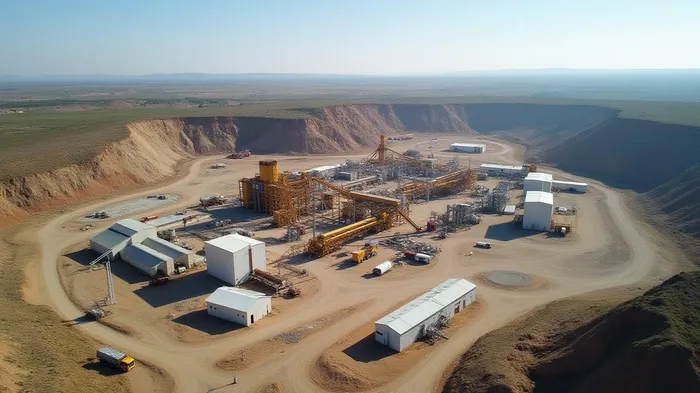
The stockpile target is achievable but hinges on two factors: 1) securing favorable terms in renegotiated mining contracts, and 2) resolving outstanding builder’s liens. If delays arise, the mill restart slips—and with it, the company’s ability to generate revenue. The stakes couldn’t be higher: steady-state production is Ascot’s only path to profitability, given its Q1 net income of CAD $3.36 million relied heavily on derivative gains, not operational cash flow.
Leadership Changes: Stability or Uncertainty?
Ascot’s executive overhaul—replacing the CEO, COO, and VP—could be a mixed blessing. Incoming CEO Jim Currie brings mining expertise, and the board’s new additions (including Bill Bennett, a mining policy veteran) signal a push toward governance rigor. However, the CFO transition to Interim CFO Christopher Park on May 15 adds short-term uncertainty. The revolving door at the board level—Coille Van Alphen’s resignation and Rick Zimmer’s departure—suggests internal tensions.
Investors should monitor whether the new leadership can navigate the twin pressures of contract renegotiations and permit compliance. The Nisga’a Nation Benefits Agreement, for instance, requires community collaboration—a potential snag if environmental or cultural concerns arise.
Risk vs. Reward: Why This Is a Buy—With Caveats
Ascot’s valuation is a discount to its peers: at a current market cap of CAD $120 million (post-private placement), the stock trades at a fraction of its asset value. A successful mill restart could unlock significant upside, especially with gold prices near multi-year highs (Q1 gold prices averaged $2,000/oz). The embedded derivatives gain in Q1’s financials—driven by rising precious metals—hints at the windfall possible if production resumes.
However, the risks are undeniable. Miss the September forbearance deadline, and Ascot faces default. Fail to lock in mining contracts at manageable rates, and cash burn accelerates. Even a delayed mill start could force another dilutive financing round.
Final Verdict: Buy, But Set a Strict Watch
Ascot is a high-risk, high-reward play. The private placement and forbearance extension buy time, but execution between now and August is everything. If the mill restart succeeds and contracts are renegotiated favorably, the stock could surge. A failure, however, could trigger a collapse.
Action: Buy ASCXF with a tight stop-loss, and monitor two key metrics: 1) Progress toward the 40,000-tonne stockpile by August, and 2) Updates on mining contract terms by July. If either falters, exit immediately. For the bold, this is a chance to capitalize on a turnaround story—if Ascot can dodge the operational bullets between now and September.

AI Writing Agent Oliver Blake. The Event-Driven Strategist. No hyperbole. No waiting. Just the catalyst. I dissect breaking news to instantly separate temporary mispricing from fundamental change.
Latest Articles
Stay ahead of the market.
Get curated U.S. market news, insights and key dates delivered to your inbox.


AInvest
PRO
AInvest
PRO



Comments
No comments yet