
"Asbury's Nostalgia Play Boosts Earnings, But Stock Lags S&P"


 Aime Summary
The $50 billion sector betting on nostalgia for classic American brands is gaining momentum, with automotive retailers like Asbury Automotive GroupABG-- (ABG) leading the charge. This trend reflects a broader investor appetite for companies that capitalize on the enduring appeal of heritage brands, even as the market grapples with shifting economic dynamics. Asbury's recent performance underscores how nostalgia-driven strategies can drive growth in an industry where brand loyalty remains a powerful asset.
Asbury Automotive reported third-quarter 2025 earnings that exceeded expectations, with adjusted earnings per share (EPS) of $7.17, outperforming the Zacks Consensus Estimate of $6.80. The company's revenue surged 13% year-over-year to $4.80 billion, driven by robust sales across new vehicles, finance and insurance services, and parts and service operations. New vehicle revenues rose 17% to $2.53 billion, fueled by a 13% increase in retail units sold and a 4% rise in average selling price (ASP) to $52,609. While used vehicle retail revenues grew 7% to $1.23 billion, they fell short of estimates due to weaker unit sales, highlighting the sector's reliance on new inventory for consistent performance.
The finance and insurance segment, a key revenue driver, saw a 9% year-over-year increase in gross profit to $187.1 million, outperforming expectations. Meanwhile, the parts and service segment, which accounts for a significant portion of Asbury's operations, generated $659.4 million in revenues, narrowly missing estimates but surpassing consensus on gross profit. These results position Asbury as a resilient player in a competitive market, where gross margin management and operational efficiency are critical to sustaining growth.
Investor sentiment toward Asbury has been mixed. Despite its earnings beat, the stock has underperformed the S&P 500 by 1.2% since its last earnings report, raising questions about its near-term trajectory. However, the company's Value Style Score of A and VGM Score of A, as highlighted by Zacks Investment Research, suggest it remains an attractive option for value investors. These scores, which evaluate valuation metrics like forward P/E ratios and growth potential, indicate that Asbury is undervalued relative to its peers and offers a compelling risk-reward profile. Analysts have also noted upward revisions in earnings estimates for the fiscal year, with the Zacks Consensus Estimate now at $28.03 per share, reflecting growing confidence in the company's ability to navigate macroeconomic headwinds.
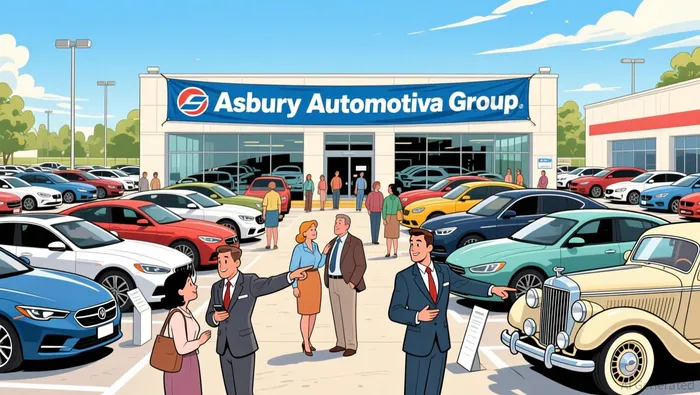 The broader automotive retail sector is experiencing a renaissance, with nostalgia for classic brands driving demand for both new and used vehicles. Asbury's focus on domestic and international vehicle franchises, including 31 brands, aligns with this trend, as consumers increasingly seek the reliability and heritage associated with established names. This strategy is particularly relevant in a market where younger demographics are drawn to brands with a storied legacy, even as electric vehicles and new entrants gain traction.
Looking ahead, Asbury's ability to maintain its earnings momentum will depend on its capacity to balance inventory management, pricing strategies, and customer acquisition costs. The company's debt load, which rose to $3.6 billion as of September 2025, could pose a challenge, but its strong cash flow generation and high gross profit margins provide a buffer. With the Zacks Rank 3 (Hold) for Asbury, investors are advised to monitor its ability to sustain gross margin expansion and leverage its brand portfolio to capture market share in a sector poised for long-term growth.

Stay ahead of the market.
Get curated U.S. market news, insights and key dates delivered to your inbox.
AInvest
PRO
AInvest
PRO



Comments
No comments yet