
Artificial Superintelligence Alliance FET Rallies Amid Broader Market Fear
 Aime Summary
AI-focused cryptocurrency tokens, including the Artificial Superintelligence Alliance (FET), posted substantial gains in March and April 2026 despite a broader market gripped by extreme fear. While the general altcoin market saw its capitalization decline sharply, the AI sector surged, with FET rising approximately 24% over a strong week. This divergence highlights a unique market dynamic where specific sector catalysts are driving value independent of general macro sentiment. The rally is underpinned by tangible on-chain activity and the strategic consolidation of decentralized AI infrastructure.
The Artificial Superintelligence Alliance, formed by the merger of Fetch.ai, SingularityNET, and Ocean Protocol, represents a consolidated effort to build decentralized artificial intelligence infrastructure. This unified entity leverages autonomous economic agents to perform complex tasks, negotiate, and execute transactions without human intervention. Current market positioning places the FET token within the top 100 cryptocurrencies, serving as a primary utility asset for payments, staking, and governance. Key use cases include autonomous supply chain optimization by logistics companies and smart grid management by energy providers.
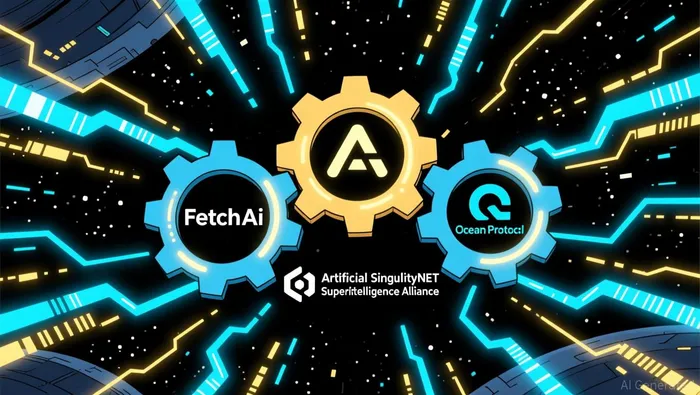
Analysts identify several factors influencing long-term valuation, including the pace of institutional adoption and the evolving regulatory landscape. The alliance's first-mover advantage and consolidated resources provide competitive strengths against specialized competitors and centralized AI providers. However, the 2026 outlook remains heavily dependent on technological milestones scheduled for late 2025, with scenarios ranging from moderate growth to rapid enterprise adoption. Risks remain significant, including technological execution failure and the threat of technological obsolescence in a rapidly evolving field.
Why are AI tokens outperforming the broader crypto market?
In a market characterized by contradictory realities, AI tokens emerged as the only sector posting real returns while other assets struggled. BittensorTAO-- (TAO) gained 67.5% over 30 days, while FET rose 44% and Render increased 21% during the same period. This performance is underpinned by actual on-chain activity rather than just narrative speculation. For instance, Solana's DEX volume nearly doubled between August 2025 and late March 2026, rising from $40.5 billion to $87.8 billion weekly. The AI sector's market capitalization increased by 10.67% in a single day, reaching $19.48 billion.
This rally contrasted sharply with the broader altcoin market, which saw a decline in market cap from $1.19 trillion in late 2024 to $719 billion. The divergence suggests that investors are rotating capital into sectors with demonstrable utility and growth potential. Additionally, the Ethereum network is preparing for the 'Glamsterdam' upgrade scheduled for June, which historical patterns suggest could drive a 20-40% pre-event rally. These structural developments provide a bullish counterpoint to the prevailing bearish sentiment driven by geopolitical risks and inflation concerns.
What are the primary risks and constraints for FET in 2026?
Despite the positive momentum, the alliance faces significant hurdles regarding regulatory clarity and technological execution. Price projections for 2026 through 2030 rely on multiple analytical frameworks, including technical patterns and network usage metrics. The success of planned upgrades to enhance scalability and interoperability is critical for maintaining the alliance's competitive edge. Any failure to deliver on these technical milestones could severely impact the token's valuation and investor confidence.
Furthermore, the threat of technological obsolescence remains a constant concern in the rapidly evolving AI sector. Competitors may introduce superior models or infrastructure that could render current solutions less valuable. The alliance must also navigate an uncertain regulatory environment for both crypto and AI sectors, which could impose new constraints on operations. While the strategic merger aims to enhance market reach, the transition from development to commercialization presents its own set of challenges.
How does the broader tech landscape influence FET's trajectory?
Major technology companies are also pivoting toward AI commercialization, which impacts the decentralized sector. Meta has officially released its first major AI model in a year, shifting focus from development to the critical challenge of commercialization. The company's immediate strategic focus is on determining how to effectively monetize the new model and integrate it into its existing ecosystem. This transition from research and development to market application represents a critical phase for Meta's AI division.
Analysts suggest that Meta's acquisition of Scale AI for $14.3 billion was a strategic move to acquire infrastructure for total surveillance commerce. This perspective frames the acquisition as a fundamental shift in data control, prioritizing the technological stack over human capital. Such moves by centralized giants highlight the intense competition and the high stakes involved in the AI space. For decentralized projects like the Artificial Superintelligence Alliance, this environment underscores the need for clear differentiation and robust utility.

Blending traditional trading wisdom with cutting-edge cryptocurrency insights.
Latest Articles
Stay ahead of the market.
Get curated U.S. market news, insights and key dates delivered to your inbox.


AInvest
PRO
AInvest
PRO



Comments
No comments yet