
Artificial Intelligence in Biomedical Research and Its Investment Implications


 Aime Summary
AI as a Catalyst for Drug Discovery
Traditional drug development is a decade-long, billion-dollar endeavor plagued by high attrition rates. AI is compressing timelines and reducing costs by automating tasks once reliant on human intuition and trial-and-error. For instance, Insilico Medicine leveraged AI to design a drug for idiopathic pulmonary fibrosis (IPF), advancing from target identification to Phase I trials in just 18 months-a process that typically takes 4–5 years. Similarly, Exscientia's AI-driven workflows reduced in silico design cycles by 70% and cut the number of synthesized compounds needed by 10×, enabling its candidate DSP-1181 to enter Phase I trials for obsessive-compulsive disorder in 12 months.
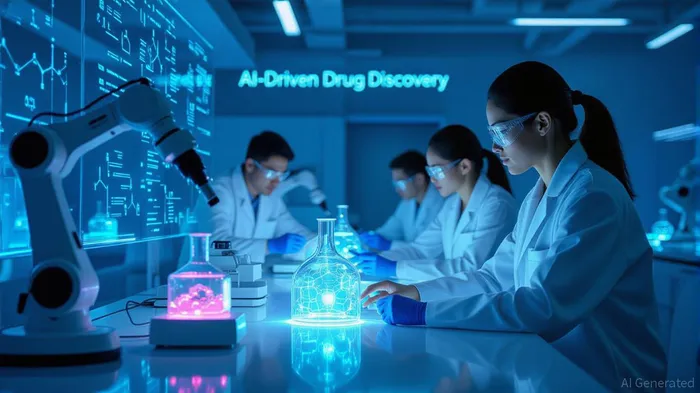 These advancements are not isolated. BenevolentAI used AI to predict novel targets in glioblastoma by integrating transcriptomic and clinical data according to research, while Recursion Pharmaceuticals' platform identified REC-2282, a drug candidate now in Phase II/III trials for meningiomas according to reports. The common thread? AI's ability to process vast datasets, identify patterns, and simulate biological interactions far beyond human capacity.
Financial and Strategic Implications
The financial stakes are enormous. One pharmaceutical project saved an estimated $42 million through AI-driven reductions in research timelines, and the broader market is projected to generate $350–410 billion annually by 2025 according to market analysis. For investors, this represents a dual opportunity:
1. Direct investment in AI-native biotechs (e.g., Insilico, Exscientia, BenevolentAI) that are building end-to-end AI platforms.
2. Indirect exposure to AI infrastructure providers (e.g., cloud computing firms, SaaS platforms) enabling these innovations.
However, the path is not without risks. Regulatory agencies like the FDA and EMA are grappling with how to evaluate AI-designed drugs, raising questions about transparency and model interpretability. Moreover, while AI accelerates discovery, it has yet to deliver an approved drug. Critics argue that AI may simply speed up failures rather than improve success rates.
The Role of ICPICP-- Caffeine AI and Decentralized Computing
While platforms like ICP Caffeine AI are primarily associated with decentralized finance (DeFi) applications, their underlying infrastructure-such as decentralized computing and generative models-could theoretically contribute to drug discovery. For example, distributed computing networks could democratize access to high-performance computing resources, enabling smaller biotechs to run complex simulations. However, as of 2025, there is no direct evidence of ICP Caffeine AI being applied to pharmaceutical R&D. This highlights a critical distinction: while the broader AI ecosystem is transformative, specific platforms must demonstrate tangible integration into drug development pipelines to attract investment.
Investment Strategy: Balancing Innovation and Caution
For investors, the key is to differentiate between hype and actionable innovation. Early-stage AI biotechs face regulatory and technical hurdles, but those with proven clinical candidates such as Exscientia's EXS-21546 in solid tumors or partnerships with major pharma firms are better positioned to navigate these challenges. Additionally, the rise of SaaS/cloud-based AI platforms is lowering barriers to entry, allowing even small biotechs to leverage cutting-edge tools without massive upfront costs.
The Asia-Pacific region, with its growing biotech ecosystem and cost-effective AI adoption, is also emerging as a high-growth area. Meanwhile, generative AI's role in designing novel molecules and biologics is expected to grow at the fastest compound annual growth rate (CAGR) according to industry projections.
Conclusion
AI is not a silver bullet for drug discovery, but it is a game-changer. By reducing costs, accelerating timelines, and uncovering novel targets, AI is reshaping the pharmaceutical landscape. For investors, the opportunity lies in backing platforms that demonstrate clinical progress and regulatory alignment. While tools like ICP Caffeine AI may not yet have a direct role in drug discovery, the broader AI revolution in biotech is undeniable-and those who act now stand to reap significant rewards.

Blending traditional trading wisdom with cutting-edge cryptocurrency insights.
Latest Articles
Stay ahead of the market.
Get curated U.S. market news, insights and key dates delivered to your inbox.




Comments
No comments yet