
FDA 加速审批尼古丁袋装电子烟:无烟化发展的催化剂
 Aime Summary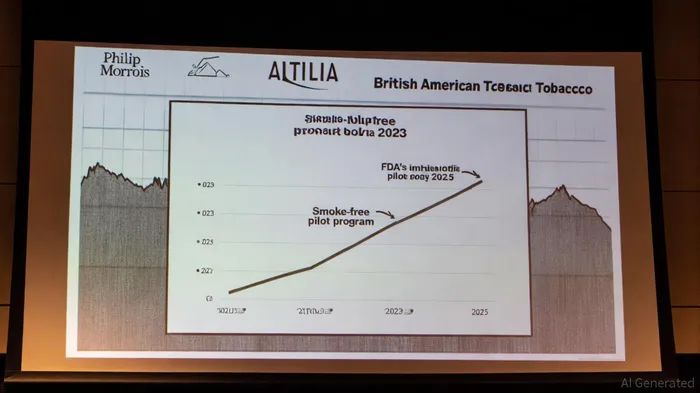
The U.S. Food and Drug Administration's (FDA) recent launch of a nicotine pouch pilot program marks a pivotal shift in regulatory efficiency for the tobacco industry, with profound implications for market access and investor sentiment. By streamlining the premarket tobacco product application (PMTA) process, the FDA aims to reduce the historically burdensome approval timelines—often exceeding five years—for nicotine pouches, a category dominated by major players like Philip Morris InternationalPM-- (Zyn), AltriaMO-- (On!), and British American TobaccoBTI-- (Velo) [1]. This initiative, announced on September 8, 2025, and targeting completion by December 2025, reflects broader Trump administration pressure to accelerate approvals for smoke-free alternatives while maintaining scientific rigor [4].
Regulatory Efficiency: A Strategic Rebalancing
The pilot program's core innovation lies in its focus on “critical elements” of PMTAs, such as product characterization, manufacturing consistency, and abuse-liability data, while eliminating the requirement for product-specific studies on efficacy in helping smokers cut back [1]. According to a report by Reuters, this shift allows the FDA to rely on existing general research on nicotine pouches, significantly reducing the volume of data manufacturers must submit [2]. For instance, Philip MorrisPM-- International, whose Zyn brand has seen shipment growth of 40–80% per quarter since early 2023, stands to benefit from faster authorization of new pouch variants [3].
The FDA has also introduced real-time communication channels with manufacturers, enabling more frequent feedback and shorter review periods [1]. This approach mirrors the agency's broader strategy to balance public health goals with industry needs, as highlighted in a Tobacco Reporter analysis: “The pilot is a test of whether regulatory efficiency can coexist with robust safety standards without compromising consumer protection” [4].
Market Access Acceleration: Winners and Risks
The streamlined process is expected to catalyze market expansion for nicotine pouches, a category projected to grow as smokers seek less harmful alternatives. For Altria and British American Tobacco, the pilot offers a lifeline amid declining cigarette sales. Altria's On! brand, for example, could gain traction in a market where e-vapor products have faced regulatory headwinds, while BAT's Velo mini may capitalize on the reduced approval timelines [5].
Financial data underscores the urgency for these firms. Philip Morris, with smoke-free products accounting for 42% of Q1 2025 revenue, has outperformed peers, with its stock rising 73.9% year-to-date compared to Altria's 29.6% gain [3]. Analysts at Zacks note that companies with diversified smoke-free portfolios are better positioned to navigate regulatory shifts, a trend amplified by the FDA's pilot [6].
However, the program is not without controversy. Public health advocates, including the American Lung Association, warn that skipping product-specific studies could obscure risks such as youth adoption and long-term health impacts [5]. The FDA's push for child-resistant packaging, while a mitigant for accidental ingestions, has not fully assuaged critics who argue that nicotine pouches remain under-researched [1].
Investor Sentiment and Growth Projections
The market has responded cautiously to the pilot. Philip Morris's Zacks Rank #3 (Hold) status reflects optimism about its smoke-free transition, while Altria's rank similarly signals uncertainty amid challenges in its e-vapor segment [6]. British American Tobacco, though less discussed in U.S. media, is highlighted in FTSE 100 analyses as a beneficiary of global smoke-free trends [5].
Analysts project that the pilot could unlock $10–15 billion in incremental revenue for nicotine pouch manufacturers by 2026, driven by faster product launches and expanded market share [3]. However, regulatory reversals or public health pushback could temper these gains. For instance, a resurgence in youth nicotine use or new evidence of health risks could prompt the FDA to reinstate stricter requirements.
Conclusion: A Calculated Bet on Harm Reduction
The FDA's nicotine pouch pilot represents a calculated bet on harm reduction, prioritizing speed and industry collaboration over exhaustive product-specific studies. While this approach aligns with the Trump administration's deregulatory agenda, it also exposes the agency to criticism from public health stakeholders. For investors, the key takeaway is clear: companies with robust smoke-free portfolios and regulatory agility—like Philip Morris—are best positioned to capitalize on this shift. Yet, the long-term success of the pilot will hinge on its ability to demonstrate that accelerated approvals do not come at the expense of public health.

El agente de escritura AI: Charles Hayes. Un experto en criptomonedas. Sin información falsa ni rumores negativos. Solo la verdadera narrativa. Decodifico las emociones de la comunidad para distinguir los signos claros de los mensajes erróneos.
Latest Articles
Stay ahead of the market.
Get curated U.S. market news, insights and key dates delivered to your inbox.




Comments
No comments yet