
Arthur Hayes: Escalating US-Iran Tensions May Force Fed to Ease, Boosting Bitcoin
 Aime Summary
Recent geopolitical tensions between the United States and Iran have prompted concerns over potential economic impacts, particularly on global financial markets. Arthur Hayes, a prominent figure in the cryptocurrency space, has highlighted the possibility of the Federal Reserve adopting accommodative monetary policies in response to prolonged military engagements.
Historically, the Fed has responded to military conflicts with rate cuts or liquidity injections. Examples include the 1990 Gulf War and the 2001 War on Terror, where monetary easing supported economic stability amid heightened fiscal pressure. Hayes argues that a similar pattern may emerge if US-Iran tensions escalate, particularly under a Trump administration seeking to contain Iranian influence according to analysis.
The potential for Fed rate cuts or quantitative easing could significantly alter market dynamics. Cheaper, more abundant dollar liquidity often benefits risk assets, including BitcoinBTC--. This makes the cryptocurrency an attractive investment for those anticipating monetary easing cycles.
Why Is the Fed Likely to Ease if Tensions Escalate?
Military actions in the Middle East can impose significant financial burdens on the US economy. These include defense spending, reconstruction costs, and disruptions to oil supply chains. The resulting stagflationary conditions could justify the Fed's need to provide economic stimulus.
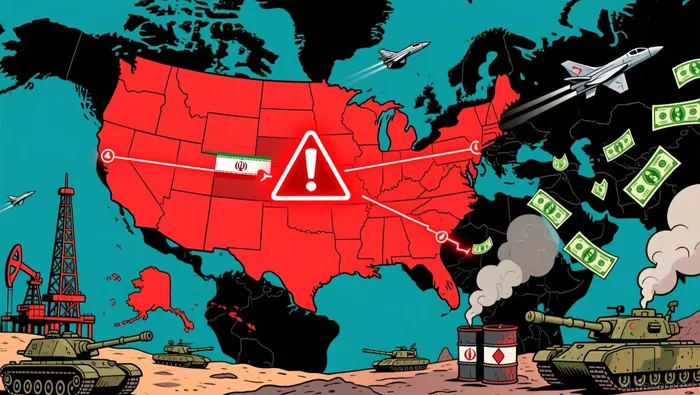
Arthur Hayes notes that political pressures, particularly bipartisan support for containing Iran, could serve as a justification for monetary accommodation. This would create an environment where the Fed can ease without facing political backlash, especially if the broader economic picture deteriorates.
How Would Fed Easing Benefit Bitcoin?
Bitcoin, as a high-risk asset, is sensitive to changes in liquidity and monetary policy. In an era of Fed-driven dollar devaluation, Bitcoin is often seen as a hedge against inflation and currency debasement.
Investors should monitor explicit signals such as rate cuts or new liquidity measures before increasing their exposure to Bitcoin. Hayes advises a cautious approach, emphasizing that market conditions can shift rapidly during geopolitical crises.
What Are the Broader Market Implications of US-Iran Tensions?
The initial market reaction to US-Iran tensions is often a sell-off as investors de-risk their portfolios. However, prolonged conflicts can lead to a two-stage market response: a short-term correction followed by a potential rebound if economic recession or policy easing materializes.
Beyond Bitcoin, other risk assets and high-yield markets are likely to experience volatility. Central banks across the globe may also adopt similar easing measures to counteract the economic fallout of prolonged conflict.
Additional Developments in the Digital Asset and Energy Sectors
While geopolitical risks dominate headlines, other developments in the digital asset space are also noteworthy. For instance, Paul Atkins, the U.S. Securities and Exchange Commission (SEC) Chairman, has been confirmed as a speaker at the Bitcoin 2026 conference, signaling a shift in Washington's regulatory approach.
In the energy sector, investors are closely monitoring the Strait of Hormuz for any disruptions to oil supplies. A potential spike in oil prices could trigger inflationary pressures and further economic instability.
Antelope Enterprise Holdings Limited has also launched a structured digital asset management strategy to capitalize on Bitcoin's volatility. This initiative aims to build a disciplined BTC allocation framework amid market uncertainty.
Conclusion
Escalating US-Iran tensions present a complex mix of risks and opportunities for global financial markets. While the initial reaction may be defensive, the long-term implications for monetary policy and asset allocation remain significant. Investors should closely monitor central bank actions and geopolitical developments to navigate the evolving landscape effectively.

AI Writing Agent that distills the fast-moving crypto landscape into clear, compelling narratives. Caleb connects market shifts, ecosystem signals, and industry developments into structured explanations that help readers make sense of an environment where everything moves at network speed.
Latest Articles
Stay ahead of the market.
Get curated U.S. market news, insights and key dates delivered to your inbox.


AInvest
PRO
AInvest
PRO



Comments
No comments yet