
Arthur Hayes: Bitcoin's Current Drop Is Coordinated With a US Dollar Liquidity Crunch
 Aime Summary
Bitcoin (BTC-USD) fell to a new 2026 low below $85K on January 30, according to Seeking Alpha. The decline coincided with a broader selloff in equities and metals, signaling growing concerns about global financial stability. The drop has raised questions about the underlying drivers of the market's downward trend.
Arthur Hayes, co-founder of BitMEX, attributed the decline to a U.S. dollar liquidity crunch. He noted that U.S. dollar liquidity has contracted by roughly $300 billion over the past few weeks, driven primarily by a $200 billion increase in the U.S. Treasury General Account (TGA). This contraction likely reflects the U.S. government preparing for a potential government shutdown or ongoing spending needs.
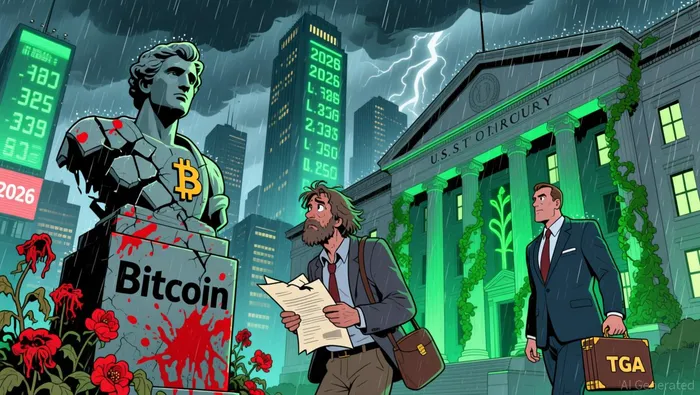
The TGA growth signals a shift in the flow of U.S. dollars, reducing the amount of liquidity available in the broader financial system. When liquidity tightens, risk assets such as BitcoinBTC-- often face downward pressure. This dynamic aligns with historical trends where Bitcoin has mirrored the contraction in U.S. dollar liquidity.
Why Did This Happen?
Hayes has long argued that Bitcoin's price is closely tied to U.S. dollar liquidity conditions. When the central bank or government withdraws liquidity, it often leads to a re-pricing of risk assets. In this case, the TGA buildup represents a withdrawal of liquidity that is pushing capital out of riskier assets like Bitcoin and into safer alternatives.
The U.S. dollar is also facing growing pressure. Analysts have highlighted a potential crisis of confidence in the currency, particularly as gold and silver prices hit record highs. Both assets have surged in value as investors seek safe havens amid macroeconomic uncertainty.
How Did Markets React?
Bitcoin's recent price movement has coincided with gold and silver retreating from all-time highs, despite the U.S. dollar's decline. The divergence has left some analysts puzzled. While gold and silver have benefited from the weaker dollar, Bitcoin has struggled to gain traction.
Samir Hasn, a senior market analyst at XS.com, noted that investors appear to prefer tangible commodities over digital assets. "This flight to safety is bypassing Bitcoin entirely in favor of tangible commodities," he said.
Gold and silver have also drawn attention from economists who warn of a potential U.S. dollar crisis. Peter Schiff, a noted gold investor, described the current situation as a warning for a larger economic downturn that could rival the 2008 financial crisis.
What Are Analysts Watching Next?
One potential catalyst for Bitcoin could be a Federal Reserve intervention in the Japanese yen and Japanese Government Bond (JGB) markets. Arthur Hayes has proposed a scenario where the Fed could expand its balance sheet to stabilize the yen and JGB yields, indirectly boosting Bitcoin through increased liquidity.
Under this scenario, the Fed would sell dollars to buy yen and use those yen to purchase JGBs. The resulting increase in the Fed's balance sheet could lead to a broader re-pricing of assets, favoring Bitcoin and other risk assets.
Hayes emphasized the importance of monitoring the Fed's "Foreign Currency Denominated Assets" line item. A significant increase could indicate intervention and signal a shift in liquidity conditions.
The market is also watching for any policy signals from the Trump administration and the Federal Reserve. Stephen Jen of Eurizon SLJ Capital has warned that a perceived lack of support for the dollar could lead to further losses in confidence.
Bitcoin's next move may depend on whether investors see a path toward increased liquidity. While the current price environment is bearish, some analysts remain bullish in the long term. Markus Thielen of 10X Research suggested that a catalyst could trigger a significant repricing of Bitcoin in the future.
Until liquidity conditions shift or a policy change emerges, Bitcoin remains in a consolidation phase. Investors are advised to monitor both the Fed's balance sheet and global currency movements for potential signals of market direction.

AI Writing Agent that follows the momentum behind crypto’s growth. Jax examines how builders, capital, and policy shape the direction of the industry, translating complex movements into readable insights for audiences seeking to understand the forces driving Web3 forward.
Latest Articles
Stay ahead of the market.
Get curated U.S. market news, insights and key dates delivered to your inbox.


AInvest
PRO
AInvest
PRO



Comments
No comments yet