
Artemis II Rekindle Crewed Lunar Mission Half Century After Apollo: Everything You Need to Know From Crews to Launch Details
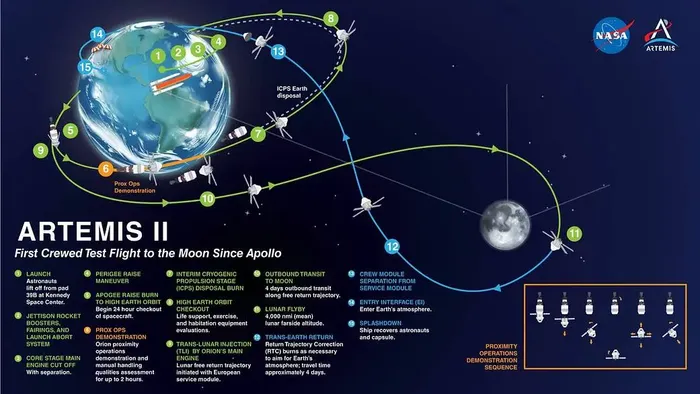
- Launch Window & Mission: Artemis II is targeting a launch between April 1 and April 6, 2026 (with a secondary window opening April 30). The 10-day mission will send four astronauts on a lunar flyby, traveling deeper into space than any human has gone before.
Massive Capital Investment: The Artemis program has an estimated cumulative cost of at least $93 billion since 2012, driving unprecedented capital into the aerospace supply chain.
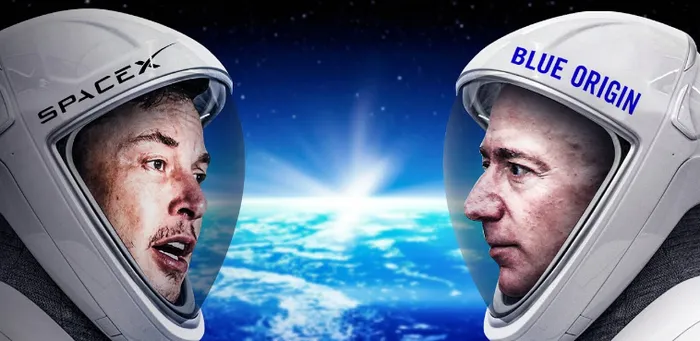
Commercial Rivalry: The mission highlights the fierce competition between Elon Musk's SpaceX and Jeff Bezos' Blue Origin, fundamentally shifting the industry from government monopolies to privatized, fixed-price contracts.
Lunar Market Projections: Financial analysts project the lunar surface activities market could generate $127 billion in revenues by 2050, requiring up to $88 billion in near-term infrastructure investments.
Strategic Mission Shift: Under NASA's new administrator, Jared Isaacman, Artemis III (2027) will now focus on an Earth-orbit docking test between the Orion capsule and commercial landers, pushing the highly anticipated crewed lunar landing to Artemis IV.
Over 53 years after humanity last left footprints on the lunar surface, the United States is racing to reassert its leadership in deep space. Driven by rising geopolitical competition—most notably China's steady progress toward a 2030 crewed lunar landing—NASA is preparing for Artemis II.
Unlike the Apollo missions of the 20th century, the Artemis program is not just a scientific endeavor; it is a foundational pillar of a burgeoning extraterrestrial economy. With legacy aerospace defense contractors and nimble billionaire-backed startups vying for dominance, the financial stakes are astronomical.
The Rocket and The Mission: Unpacking the SLS
Artemis II will serve as the first crewed test flight of NASA's Orion capsule and the Space Launch System (SLS). As detailed extensively on Wikipedia, the SLS is a super heavy-lift launch vehicle designed to propel the Orion spacecraft into a trans-lunar injection.
The 10-day mission profile is strictly a flyby—a free-return trajectory that uses the moon's gravity to slingshot the spacecraft back to Earth. The astronauts onboard will rigorously test critical life-support systems, crew interfaces, navigation, and deep-space communications, setting a crucial data-driven baseline for future surface landings. Liftoff is scheduled for April 1, 2026, though orbital mechanics and Florida weather conditions provide a launch window extending to April 6, and opening again on April 30.
Meet the Artemis II Crew
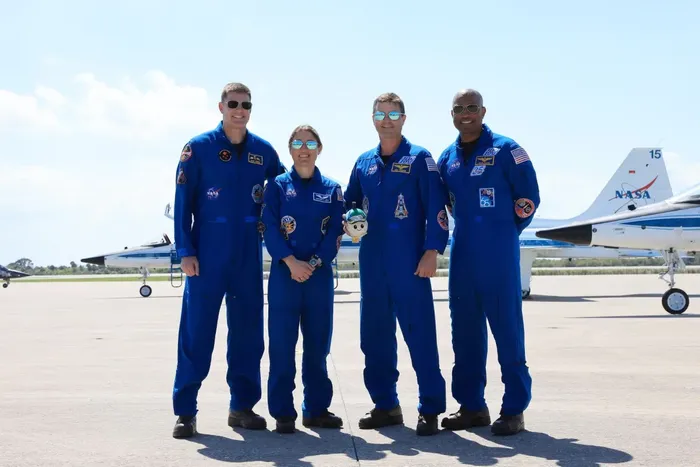
The four-person crew represents a strategic partnership between NASA and the Canadian Space Agency (CSA), a collaboration built on decades of robotic and International Space Station contributions.
A Brief Retrospective: 50 Years Since Apollo 17
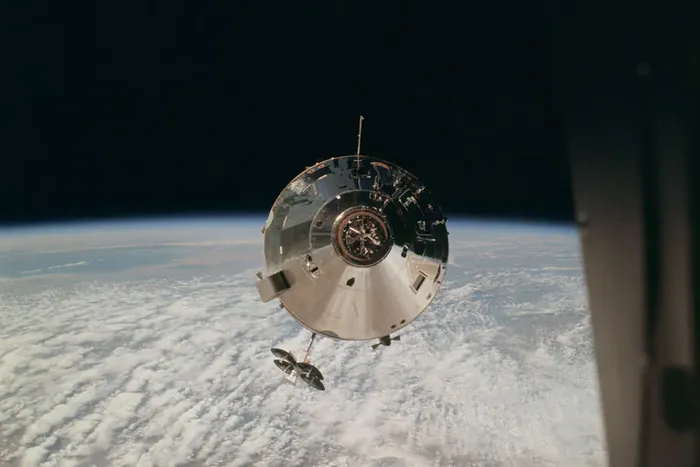
To understand the financial and technological magnitude of Artemis, one must look back to December 1972. Apollo 17 was the culmination of a program driven almost entirely by the Cold War space race against the Soviet Union. The U.S. remains the only country to have put humans on another celestial body, but the Apollo program's pure cost-plus-contract model was financially unsustainable in the long run.
Today, the moon is viewed as a "witness plate" to the solar system's formation and a critical stepping stone to Mars. More importantly, it is viewed as a future commercial hub. The transition from the Apollo era to the Artemis era marks a shift from government-directed exploration to the cultivation of a self-sustaining $613 billion of Space Economy reported by Bloomberg, as defined by modern economic frameworks.
The Billionaire Space Race: SpaceX vs. Blue Origin and Market Cap Dynamics
NASA's current strategy relies heavily on a commercial lunar market. Legacy contractors like Boeing, Northrop GrummanNOC--, and Lockheed MartinLMT-- lead the development of the SLS and Orion. However, the future of lunar surface transportation relies on the Human Landing System (HLS) contracts awarded to one of or both Elon Musk's SpaceX and Jeff Bezos' Blue Origin.
The financial metrics of these private space companies are staggering and are reshaping aerospace valuations. For instance, SpaceX recently saw its valuation surge to roughly $350 billion in secondary markets. If SpaceX were publicly traded, its market capitalization would rank it among the top 25 U.S. companies in the S&P 500—easily dwarfing the historical market cap records of legacy aerospace prime contractors. Investors tracking the aerospace sector on platforms like TradingView and MarketWatch have noted a distinct capital rotation toward companies with reusable rocket technologies.
Recently, NASA Administrator Jared Isaacman—a billionaire private astronaut who has shaken up the agency with a heavy focus on data and operational results—adjusted the program's timeline. According to NASA official website information, Artemis III (planned for 2027) will no longer land on the moon and has shifted the moon landing mission to Artemis IV (planned for 2028). Instead, Artemis III will be a highly complex Earth-orbit docking test involving the Orion capsule, Blue Origin's Blue Moon system, and SpaceX's Starship. This mitigates operational risk and pushes the actual crewed lunar landing to Artemis IV.
Financial Projections: Evaluating the Lunar Economy
The long-term economic viability of the moon relies on resource extraction (like water ice for rocket fuel) and serving as a staging ground for Mars. According to a January PricewaterhouseCoopers report frequently cited by Bloomberg and The Wall Street Journal, lunar surface activities could generate $127 billion in revenues by 2050.
However, as economists note, governments will remain the primary demand signal in the near term. It will be decades before energy and communication infrastructures develop enough to allow commercial growth to exist independently of federal funding. For the foreseeable future, as covered by Reuters, government contracts remain the lifeblood of the lunar supply chain.
Advanced Deep-Dive FAQs
Q: How does the financial structure of the Artemis Human Landing System (HLS) contracts differ fundamentally from the Apollo era?
A: During the Apollo era, NASA utilized "cost-plus" contracts, meaning the government absorbed all development risks and paid contractors a guaranteed profit on top of their expenses. For Artemis, NASA is utilizing fixed-price, milestone-based contracts. SpaceX and Blue Origin must invest billions of their own capital into development. NASA only pays when specific, data-verified technical milestones are achieved, shifting the financial risk heavily onto the private sector.
Q: Why was the Artemis III mission profile altered to an Earth-orbit docking test, and what are the operational implications?
A: Driven by a results-oriented approach to risk management, NASA Administrator Jared Isaacman recognized that testing the delicate "tag-up" (docking) maneuver between Orion, Starship, and Blue Moon in lunar orbit posed an unacceptably high risk for a first attempt. By moving this test to Earth's orbit, NASA can validate the systems with a much wider safety margin and easier abort options. This operational shift ensures the eventual landing on Artemis IV is backed by proven orbital rendezvous data.
Q: With a projected $127 billion market by 2050, what are the immediate revenue drivers for private companies involved in Artemis?
A: In the short term, pure commercial ROI is virtually nonexistent. The current revenue drivers are entirely government-subsidized. Companies generate revenue through NASA's Commercial Lunar Payload Services (CLPS) program, winning contracts to deliver robotic rovers, scientific instruments, and early communication relays. The economic model currently relies on establishing a monopoly or duopoly on lunar transport logistics before the true commercialization of lunar resources begins.

The AInvest News Editorial Team consists of experienced financial journalists and editors who oversee all published content. While our newsroom leverages advanced AI tools to assist in data gathering and draft generation, every article is reviewed, fact-checked, and approved by human editors to ensure accuracy, clarity, and transparency.
Latest Articles
Stay ahead of the market.
Get curated U.S. market news, insights and key dates delivered to your inbox.


AInvest
PRO
AInvest
PRO



Comments
No comments yet