
Artemis II Launch Readiness: NASA's Crewed Moon Mission Steps Closer to Liftoff
 Aime Summary
NASA’s Artemis II mission is the first crewed lunar flight since the Apollo program in 1972. The Space Launch System (SLS) rocket was recently transported to Kennedy Space Center’s Launch Pad 39B, marking a major milestone. A wet dress rehearsal will test fueling and countdown procedures, ensuring readiness for a planned February 2026 launch. Artemis II will test the Orion spacecraft in deep space, paving the way for future lunar landings and Mars missions. The mission involves a 10-day journey around the Moon and will not include a landing, but will provide crucial data for Artemis III and beyond.
NASA's Artemis II mission represents a major leap forward in human spaceflight. After decades of planning and development, the agency has recently moved the massive SLS rocket and Orion spacecraft to the launch pad, setting the stage for a crewed mission around the Moon. This event, which took 12 hours at a crawl of less than one mile per hour, is more than just a technical achievement—it’s a symbolic step toward rekindling America’s presence in deep space. For investors and space enthusiasts, it’s a reminder that NASA is accelerating its goals in lunar exploration and laying the groundwork for future Mars missions.
Did NASA Successfully Move the Artemis II Rocket to the Launch Pad?
Yes, NASA completed the move of the Artemis II rocket and Orion spacecraft from the Vehicle Assembly Building to Launch Pad 39B at Kennedy Space Center on January 17, 2026. The rocket, standing 322 feet tall and weighing 11 million pounds, was transported using a historic Apollo-era crawler-transporter. The journey, covering four miles, took 12 hours at a speed of less than one mile per hour, 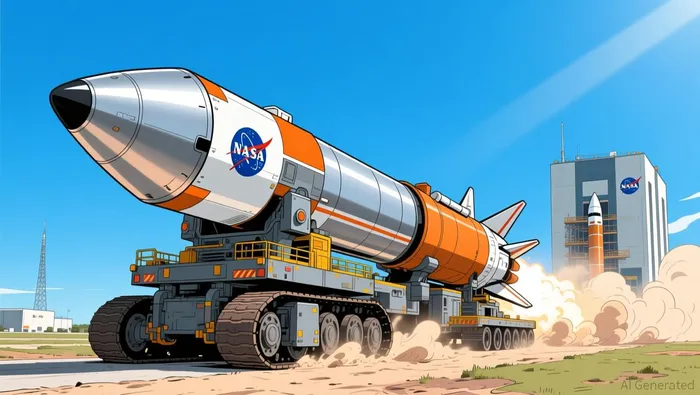 due to the precision and safety required for such a delicate operation.
This rollout is a critical step in the mission timeline. Once at the launch pad, NASA will begin a detailed list of final preparations, including connecting electrical lines, cryogenic propellant feeds, and environmental control systems. The crew will also conduct a final walkdown of the launch pad to ensure all systems are functioning as expected.
What Is the Significance of the Artemis II Mission for Future Lunar Exploration?
The Artemis II mission is more than just a symbolic return to the Moon—it’s a foundational step in NASA’s broader goals of establishing a long-term presence there and eventually sending humans to Mars. This mission will test the Orion spacecraft in both Earth orbit and deep space, with the crew traveling farther from Earth than any before them, allowing for detailed observations of the Moon’s far side.
While Artemis II will not land on the Moon, it will serve as a proving ground for Artemis III, which is expected to carry astronauts to the lunar surface by 2027 at the earliest. The data and insights gained from Artemis II will be crucial in refining spacecraft systems, life support, and mission procedures for future lunar landings.
Moreover, the European Service Module, which provides propulsion and life support for the Orion spacecraft, underscores the international collaboration central to this mission. Built by Airbus for the European Space Agency, the module is a vital component that supports long-duration missions and sets the stage for future international partnerships in deep space.
What Should Investors Watch for in the Coming Weeks and Months?
For investors and space watchers, the next few weeks will be crucial. A wet dress rehearsal, which simulates the full fueling and countdown process without launching, will take place in late January or early February 2026. The success of this rehearsal will determine whether the launch can proceed as scheduled or if additional tests and delays will be needed.
NASA will also closely monitor weather conditions, as even minor changes could affect the timeline. If needed, the agency may roll the rocket back to the Vehicle Assembly Building for additional testing or adjustments. The launch window opens as early as February 6, 2026, but the final date will depend on readiness assessments across the spacecraft, launch infrastructure, and crew.
Investors in aerospace companies supporting NASA—such as Boeing, Lockheed Martin, and Northrop Grumman—may see increased activity and attention as Artemis II moves closer to launch. The success of this mission could also influence funding and policy decisions related to future lunar and Mars missions, potentially opening new markets for space-related technologies and services.
Ultimately, Artemis II is a milestone that not only marks NASA’s return to the Moon but also sets the stage for a new era of human space exploration. As the rocket sits on the pad, the world is watching—and waiting—for the next giant leap.

Stay ahead of the market.
Get curated U.S. market news, insights and key dates delivered to your inbox.


AInvest
PRO
AInvest
PRO



Comments
No comments yet