
Artemis 2 Rocket Readies for Launch Pad Rollout in Historic Mission
 Aime Summary
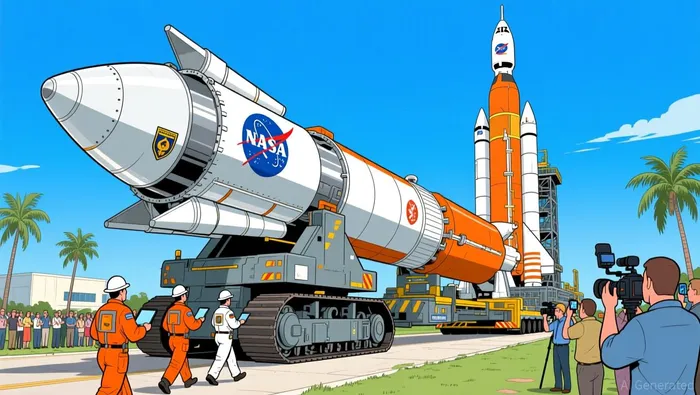
- NASA's Artemis II mission is in its final preparation phase, with the Space Launch System (SLS) rocket being rolled to Launch Pad 39B at Kennedy Space Center.
- The planned crewed lunar mission, the first in over 50 years, will test Orion systems and prepare for future moon landings, with a potential launch as early as February 6, 2026.
- The SLS is the only rocket currently capable of launching the Orion spacecraft for deep space missions, though it faces scrutiny for cost and reusability compared to private sector alternatives like SpaceX's Starship.
- Artemis II will not land on the moon but will orbit it, laying the groundwork for Artemis III, which aims for a 2028 lunar landing.
- The wet dress rehearsal and final flight readiness reviews will determine if the mission is cleared for launch, with NASA prioritizing crew safety and mission readiness.
NASA is getting closer to launching Artemis II, a landmark mission for U.S. space exploration. After decades of focusing on low Earth orbit missions, the agency is preparing to send four astronauts on a 10-day journey around the moon—a test of both technology and human endurance in deep space. The SLS rocket has already begun its slow, historic trek to the launch pad, and the next few weeks will determine whether the mission will lift off as soon as February 6. With a price tag of nearly $4.1 billion per launch, the mission is a high-stakes endeavor that underscores NASA’s long-term strategy for lunar and eventually interplanetary exploration.
What Is the Artemis 2 Launch Date and When Will It Happen?
The Artemis II mission is expected to launch as early as Friday, February 6, 2026, with a window that could extend into early April 2026, depending on test results and final readiness assessments. NASA will hold a wet dress rehearsal in the coming weeks to simulate fueling and launch countdown procedures. This practice will help engineers identify any issues before committing to the launch.
If the test run is successful, the mission management team will proceed with a final flight readiness review, after which a launch date will be selected. NASA’s timeline is tight: the rollout of the rocket has already begun, and the agency is working against the clock to meet its early-February target. For investors, the timeline is critical—any delays could signal broader systemic challenges with the SLS or Orion spacecraft, raising questions about the long-term viability of the Artemis program’s goals.
Why Is Artemis 2 a Turning Point for NASA’s Human Spaceflight Program?
Artemis II is not a landing mission, but it is a pivotal step toward future lunar missions. The spacecraft will orbit the moon and travel beyond the far side, reaching a distance of about 4,700 miles—farther from Earth than any human mission in decades. This extended journey will test the Orion spacecraft’s life support, communication systems, and re-entry procedures, including the performance of its heat shield. It will also carry the AVATAR system to monitor astronaut health in deep space, offering valuable data for longer missions ahead.
From an investor's standpoint, Artemis II is significant because it marks the first time in over 50 years that U.S. astronauts will travel beyond low Earth orbit. This mission will also establish NASA’s ability to conduct crewed deep space missions, setting the stage for Artemis III in 2027, which will attempt the first crewed lunar landing since the Apollo era. The success of Artemis II could have broader implications for the commercial space industry, potentially increasing demand for deep space infrastructure and technology.
What Should Investors Watch for in the Weeks Ahead?
The rollout of the SLS rocket is just the beginning. The next major event is the wet dress rehearsal, where the rocket will be fueled and the full countdown sequence will be conducted without launching. Engineers will look for any signs of leaks or system failures. If this test is successful, NASA will proceed with a final flight readiness review and, ultimately, launch.
Investors should also keep an eye on how NASA collaborates with international and private partners in the lead-up to the mission. The Artemis II crew includes Canadian astronaut Jeremy Hansen, reflecting the international nature of the program. Meanwhile, private companies like SpaceX and Blue Origin are also developing their own lunar and Mars-bound technologies, which could affect the long-term funding and direction of NASA’s human spaceflight program.
The Artemis II mission is more than a technological milestone—it's a statement of NASA’s ambition to return humans to the moon and eventually reach Mars. For investors, the coming weeks will reveal whether this mission will proceed as planned or face delays that could impact the broader Artemis timeline. Regardless of the outcome, Artemis II is shaping up to be a defining moment for the next era of space exploration.

Stay ahead of the market.
Get curated U.S. market news, insights and key dates delivered to your inbox.






Comments
No comments yet