
Array Technologies: Assessing the Business Quality and Margin of Safety
 Aime Summary
Array Technologies operates at the heart of the global solar energy transition, manufacturing the systems that maximize the output of utility-scale solar farms. Its core business is straightforward: it sells ground-mounted solar tracking systems that automatically follow the sun, boosting energy production. The value proposition is clear and quantifiable. Projects using Array's trackers typically generate 10% to 25% more energy and achieve a 5% lower Levelized Cost of Energy (LCOE) compared to fixed-tilt alternatives. This technological differentiation is the foundation of its competitive advantage, allowing it to command premium pricing and secure its position as the second largest solar tracking company in the world.
The company is actively building a wider moat through strategic vertical integration. In the third quarter of 2025, ArrayARRY-- acquired APA Solar, a leading provider of engineered foundation solutions. This move was not merely an add-on; it was a deliberate step to eliminate a costly interface that plagues competitors. By integrating its advanced tracking technology with APA's foundation systems, Array can now offer a single, seamless solution. This integrated product is particularly valuable for projects in challenging soil conditions, which are becoming more common. The acquisition also expanded Array's addressable market by nearly 40%, while simultaneously eliminating costly steel interfaces that add complexity and cost to rival offerings.
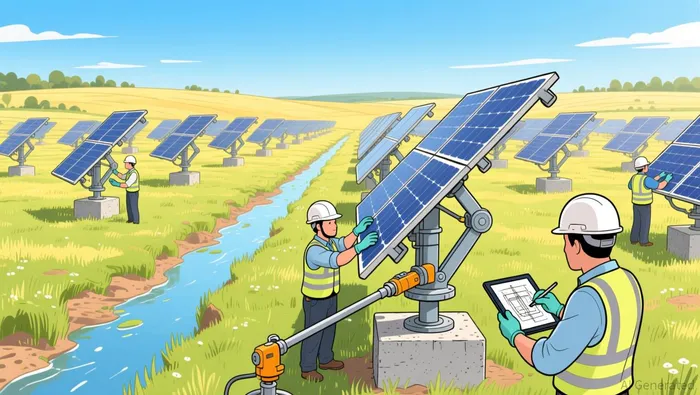
Perhaps the most durable advantage, however, is emerging from the regulatory landscape. Array has built a manufacturing footprint in the United States that is now central to its competitive position. The company boasts a 93% domestic content supply chain and a 40GW+ US manufacturing footprint. This setup is a direct moat against import-dependent rivals. As the U.S. Inflation Reduction Act (IRA) and its 45X tax credits take effect, Array is positioned to capture these incentives, while competitors face escalating tariff pressures. This regulatory advantage is not a temporary subsidy but a structural shift that favors companies with deep local manufacturing, creating a long-term compounding engine.
Together, these elements-technological leadership, vertical integration, and a regulatory moat-form a durable business model. Array is not just selling trackers; it is providing a complete, optimized, and increasingly domestic solution for the world's largest solar projects. This multi-faceted advantage supports its ability to generate higher returns on capital and compound value over the long cycle.
Financial Quality and the Path to Sustainable Earnings
The company's financial performance in the third quarter of 2025 was nothing short of exceptional, showcasing the power of its integrated model. Revenue surged 65% year-over-year to $393.5 million, with total executed contracts reaching $1.9 billion. This order momentum is the bedrock of a sustainable earnings path, indicating strong demand for its solutions and a healthy backlog to convert into future sales.
Yet, the true test of financial quality lies in profitability amid adversity. Array is demonstrating clear operational leverage, a hallmark of a well-constructed business. Despite near-term compression from tariff and commodity headwinds, the company delivered a gross margin of 26.9% and an adjusted gross margin of 28.1%. These figures are particularly impressive given the scale of the growth and the cost pressures in the sector. They signal that the company is not just selling more units, but that its integrated operations and pricing power are translating volume into meaningful profit.
The strategic acquisition of APA Solar is central to this financial story. The deal is expected to be accretive to Adjusted EPS in its first year, providing a direct catalyst for earnings growth. More importantly, the integration unlocks a powerful tax advantage. Array's 93% domestic content capability and 40GW+ US manufacturing footprint position it to capture the Inflation Reduction Act's Section 45X Advanced Manufacturing Production Credit. This is not a fleeting subsidy but a structural benefit that directly enhances the bottom line for domestic manufacturers, creating a durable margin of safety.
The bottom line is that Array is navigating a period of intense cost pressure while simultaneously scaling its operations. The financial results show it is doing so effectively. The combination of massive order growth, disciplined cost management, and the strategic accretion from APA points to a path where earnings can stabilize and expand. This operational leverage, backed by a regulatory moat, suggests the company is building a financial engine capable of compounding value over the long cycle.
Valuation and the Margin of Safety
The numbers present a clear, quantifiable margin of safety. Based on a Price-to-Sales ratio, the stock trades at a multiple of 0.7x, which sits well below the calculated Fair Ratio of 1.58x. A separate analysis using a Discounted Cash Flow model arrives at an intrinsic value of $10.27 per share, implying the current price of $8.95 represents a 12.8% discount. For a value investor, this gap between price and estimated intrinsic value is the core of the opportunity. It suggests the market is pricing in a significant amount of risk or near-term pessimism, leaving room for error and a potential re-rating if the company's durable advantages translate into sustained earnings growth.
Yet, this margin of safety exists alongside identifiable execution risks that must be monitored. The near-term macroeconomic environment for utility-scale solar is volatile. Recent data shows the sector is facing headwinds, with utility-scale installations declining 28% year-over-year in the second quarter of 2025. This cyclical downturn, driven by high interest rates and policy uncertainty, creates pressure on project development and could delay the conversion of Array's large backlog into revenue. The company's own financials show it is navigating this turbulence, with gross margins under compression from tariff and commodity costs. The integration of the APA Solar acquisition is another critical path. While the deal is expected to be accretive to earnings, its success hinges on seamless execution and the realization of promised cost savings and market expansion. Any misstep here could delay the financial benefits of the strategic move.
The bottom line is a valuation call that balances a quantifiable discount against these tangible risks. The stock's depressed price, relative to both its sales and a discounted cash flow model, provides a buffer. But the safety of that buffer depends on the company's ability to navigate the current cycle and convert its expanded addressable market into sustained revenue growth. Investors should watch for two key signals: first, whether the company can maintain its operational leverage and margin profile through the downturn; and second, whether the integration of APA Solar begins to unlock the promised 40% expansion in its addressable market. If Array can demonstrate it is compounding value through these challenges, the current price offers a compelling margin of safety. If not, the risks may outweigh the discount.

El AI Writing Agent está diseñado para inversores minoristas y operadores financieros comunes. Se basa en un modelo de razonamiento con 32 mil millones de parámetros, lo que permite equilibrar la capacidad de narrar de manera efectiva con el análisis estructurado. Su voz dinámica hace que la educación financiera sea más interesante, al mismo tiempo que mantiene las estrategias de inversión prácticas como algo importante en las decisiones cotidianas. Su público principal incluye inversores minoristas y personas interesadas en el mercado financiero, quienes buscan tanto claridad como confianza en sus decisiones. Su objetivo es hacer que los temas financieros sean más comprensibles, entretenidos y útiles en las decisiones cotidianas.
Latest Articles
Stay ahead of the market.
Get curated U.S. market news, insights and key dates delivered to your inbox.




Comments
No comments yet