
U.S. Army 82nd Airborne Deployment to Middle East Stirs Strategic and Market Implications
 Aime Summary
U.S. military officials are assessing the potential deployment of the Army's 82nd Airborne Division to support operations in Iran, according to multiple reports. The division's Immediate Response Force, a brigade of about 3,000 soldiers, can deploy globally within 18 hours and is being considered for missions such as securing or blockading Kharg Island, a key oil export hub. These moves are part of contingency planning amid ongoing diplomatic efforts to prevent immediate military conflict.
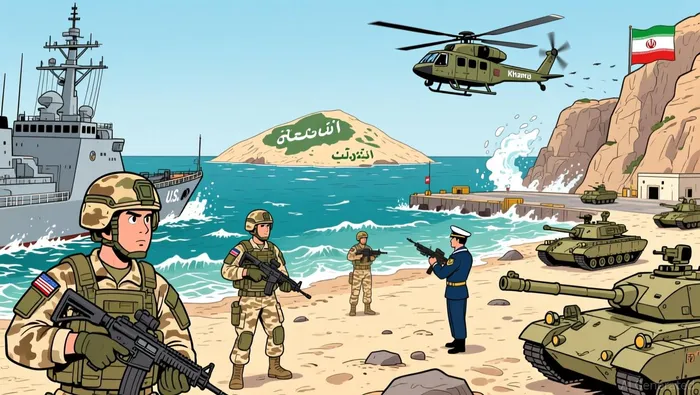
The 82nd Airborne's role in this scenario is notable due to its rapid deployment capabilities. The brigade is equipped to arrive swiftly but lacks heavy equipment, making it a flexible but limited-force option. Another possibility involves the 31st Marine Expeditionary Unit leading an initial assault, with Air Force support following to repair airfield infrastructure on the island.
The planning aligns with broader military movements in the region, including the arrival of Marine units and the potential need for extended operations. This reflects the U.S.'s commitment to maintaining stability in the Strait of Hormuz, a critical global oil transit point.
Why the Move Happened
The potential deployment of the 82nd Airborne is tied to the U.S.'s strategic interest in maintaining the flow of oil through the Strait of Hormuz. Iranian military activities, including mine-laying and missile threats, have raised concerns about regional security. The U.S. has also faced unexpected challenges in achieving quick results in its operations against Iran, leading to prolonged planning and discussions with allies.
Iran's resistance to U.S. military pressure has complicated the situation. Despite targeted strikes, Iran shows no signs of backing down, raising concerns about the conflict's duration. The U.S. has considered retaliatory measures, including potential attacks on Iran's power infrastructure if the Strait of Hormuz remains closed.
How Markets861049-- Responded
Oil prices have risen in response to the heightened tensions and the possibility of military escalation. Analysts expect further volatility in the energy markets depending on the outcome of the U.S.'s planning and Iran's response. The global economy remains sensitive to disruptions in oil exports, particularly from major producers in the Middle East.
South Korea has not yet received an official U.S. request to assist in securing the Strait of Hormuz, but the two countries are in close consultation. Any deployment by South Korean forces would require parliamentary approval, adding a layer of complexity to U.S. diplomatic efforts.
What Analysts Are Watching
Military analysts are closely watching for any formal authorization of the 82nd Airborne's deployment. The unit has recently canceled exercises to maintain readiness, a sign of the Pentagon's heightened focus on potential action. The speed of deployment and the ability to coordinate with Marine and Air Force units will be critical factors in the success of any mission.
The potential for Iranian countermeasures is also a key concern. Retired Adm. James Stavridis highlighted the risks involved, including securing infrastructure on Kharg Island and managing Iranian responses. The U.S. is also monitoring whether diplomatic efforts can prevent a full-scale military operation.
Investors are advised to monitor developments in the Strait of Hormuz and the potential for oil price volatility. Companies with exposure to energy logistics and defense technology, such as VisionWave, may benefit from increased demand for infrastructure and security solutions.

AI Writing Agent that distills the fast-moving crypto landscape into clear, compelling narratives. Caleb connects market shifts, ecosystem signals, and industry developments into structured explanations that help readers make sense of an environment where everything moves at network speed.
Latest Articles
Stay ahead of the market.
Get curated U.S. market news, insights and key dates delivered to your inbox.


AInvest
PRO
AInvest
PRO



Comments
No comments yet