
Under Armour Stock Plunges 1.30% as Earnings Report, Tariff Hikes, Leadership Changes Spur Sell-Off
 Aime Summary
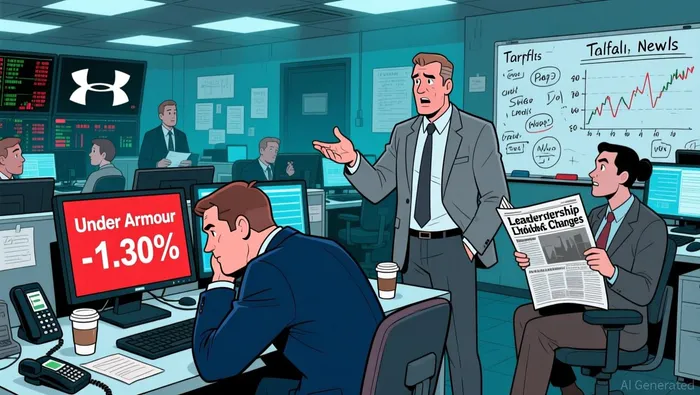
Under Armour Inc. (UAA) shares fell to a record low on Nov. 7, with an intraday drop of 5.64% before closing down 1.30%. The stock has lost 44% this year and nearly 60% over the past 12 months as the sportswear maker grapples with a deepening slump in revenue, leadership transitions, and rising tariff costs.
The latest selloff followed a third-quarter fiscal 2026 earnings report that showed a 5% year-over-year revenue decline to $1.33 billion, falling short of its full-year outlook. Despite beating Wall Street’s quarterly estimate, the company slashed its annual revenue forecast to a 4-5% decline, worse than the 4% analysts expected. Adjusted earnings per share for 2026 are now projected at $0.03-$0.05, below the $0.06 consensus. Management cited weak consumer demand, particularly in North America, where sales dropped 8% to $792 million, and escalating tariffs on Vietnamese imports, which are expected to cost $100 million in 2026.
Compounding the challenges, Under ArmourUAA-- is undergoing leadership changes, including the departure of CFO David Bergman and the appointment of Reza Taleghani from Samsonite. Founder Kevin Plank’s return as CEO in March 2025 has yet to reverse the company’s fortunes, with analysts pointing to structural issues like margin compression and supply chain vulnerabilities. Despite a 2% post-earnings dip in early trading, the stock’s prolonged decline reflects investor skepticism about the firm’s ability to stabilize its business amid a competitive market and a high-cost retail environment.

Stay ahead of the market.
Get curated U.S. market news, insights and key dates delivered to your inbox.
AInvest
PRO
AInvest
PRO



Comments
No comments yet