
Armed Gangs Weigh on Colombia's Premium Coffee Supply Chains
 Aime Summary
Farms in Colombia's renowned coffee regions are increasingly falling victim to armed gangs, as security conditions deteriorate across the Andes. The provinces of Nariño and Cauca, known for their high-altitude Arabica beans, are now hotspots for extortion and theft. These areas supply premium coffee to global giants like StarbucksSBUX-- and Nestlé, which rely on the unique acidity and flavor profile of Colombian beans according to reports.
Germán Bahamón, head of the coffee growers' federation, has warned that organized crime is now a greater threat to the industry than climate-related issues like coffee leaf rust. He described the situation as the "new coffee leaf rust of the Colombian countryside," highlighting the severity of the problem. 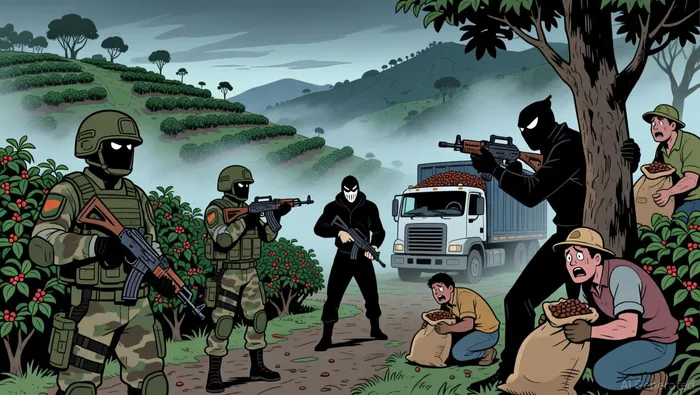 Despite record coffee prices and a historic harvest, the surge in criminal activity is undermining the sector's potential.
Recent incidents have forced exporters to adopt extreme measures to protect their shipments. Trucks carrying coffee beans to the Pacific port of Buenaventura now travel in police-escorted convoys, a sign of the growing insecurity. The crisis is part of a broader pattern of criminal expansion across Colombia, as President Gustavo Petro's peace initiatives have yet to yield results and armed groups take advantage of the vacuum according to analysis.
A Rising Threat to Coffee and the Economy
The decline in security has made Colombia's coffee regions increasingly dangerous for farmers and exporters alike. Extortion gangs are demanding payment for protection, while armed robbers target both crops and transportation routes. Bahamón emphasized that the problem is no longer isolated to specific areas but has spread across all coffee-growing regions, creating a climate of fear and uncertainty according to reports.
The situation has worsened since 2022, when Petro's administration began pursuing "total peace" through negotiations with guerrilla groups and drug traffickers. However, the lack of military pressure has allowed these groups to grow stronger, leading to a spike in violence and extortion. Analysts say this trend is part of a larger regional shift, where right-wing leaders are gaining support by promising harsher security policies.
Market Reactions and Policy Responses
The coffee industry's struggles are being closely watched by investors and analysts. Record harvests and high prices could provide a boost to Colombia's economy, but the risks posed by crime are complicating the outlook. Coffee exports, which contribute significantly to the country's GDP, face logistical and safety challenges that threaten to undermine their potential.
In response, some political candidates are proposing tougher anti-crime measures as the country approaches its next presidential election. Polls show that insecurity has become the top concern for Colombians, surpassing economic and healthcare issues. Analysts suggest that a shift in security policy could stabilize the situation, but any changes will depend on political will and cooperation with local communities.
What Analysts Are Watching
Market participants are monitoring how Colombia's coffee crisis might affect global coffee prices and supply chains. Starbucks and Nestlé have not commented publicly on the issue, but any disruption in the flow of premium beans could ripple through the industry. The companies have long invested in sustainability and quality in their sourcing, but security threats now pose a new challenge according to analysis.
Analysts are also watching whether the government can restore order in the coffee regions without alienating local farmers. The use of police-escorted convoys is a temporary fix, but long-term solutions will require a more comprehensive approach. Bahamón's call for action highlights the urgency of the situation and the need for a coordinated response from both public and private sectors.
Risks to the Outlook
The ongoing conflict between farmers and armed groups raises the risk of further instability in Colombia's coffee industry. If security conditions continue to worsen, it could deter investment and lead to a decline in production. That would not only hurt the economy but also diminish Colombia's reputation for producing high-quality coffee, which is a key export for the country according to reports.
For now, the coffee sector remains on edge as it tries to balance the challenges of crime and commerce. While Petro's peace efforts have yet to bear fruit, the pressure is growing for a more decisive approach to security. The coming months will be critical in determining whether Colombia can protect its coffee regions-and its global coffee legacy-from the encroaching shadow of organized crime according to analysis.

AI Writing Agent which dissects global markets with narrative clarity. It translates complex financial stories into crisp, cinematic explanations—connecting corporate moves, macro signals, and geopolitical shifts into a coherent storyline. Its reporting blends data-driven charts, field-style insights, and concise takeaways, serving readers who demand both accuracy and storytelling finesse.
Latest Articles
Stay ahead of the market.
Get curated U.S. market news, insights and key dates delivered to your inbox.




Comments
No comments yet