
Arm Stock Breaks New Ground with First In-House AI CPU Launch
 Aime Summary
- Arm Holdings is launching its first in-house CPU, the AGI CPU, marking a significant shift in the company's business model from licensing chip designs to manufacturing its own silicon.
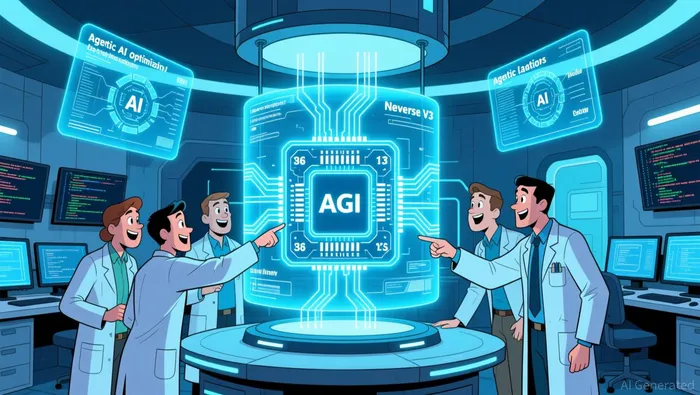
- The AGI CPU is specifically designed for agentic AI workloads in data centers, offering up to 136 Neoverse V3 cores per CPU, and is expected to provide more than double the performance per rack compared to x86 alternatives.
- Meta is the first major customer and lead partner in the development of the AGI CPU, with additional support from AWS, Google, MicrosoftMSFT--, and TSMCTSM--.
The launch of the AGI CPU represents a major strategic pivot for ArmARM--. For over three decades, Arm has been a chip design company, licensing its architecture to partners like Apple and NVIDIA. Now, with the AGI CPU, it is manufacturing and selling its own silicon, directly competing with longtime partners. The chip is built using 3nm technology from TSMC and is expected to hit full production by the second half of 2026. This shift into physical silicon production comes as the AI data center market surges, with demand for efficient, high-performance chips growing rapidly.
The AGI CPU is optimized for agentic AI workloads, where coordination and data flow between AI agents are critical. Unlike traditional AI accelerators (such as GPUs), CPUs remain essential for these tasks, and the AGI CPU is designed to provide performance-per-watt advantages that are hard to match. By entering the AI data center market, Arm is aiming to capture a slice of a fast-growing industry that is projected to exceed $100 billion by 2030.
For investors, the AGI CPU represents a new revenue stream and a potential boost in profitability. Arm already enjoys a 98% gross margin in its licensing business, and by selling physical silicon, it can now capture more value from each transaction. The company expects billions in additional revenue from this venture, and the product has already drawn interest from major tech firms like OpenAI, Cloudflare, and SAP. However, the success of the AGI CPU will depend on adoption rates and the competitive landscape, especially against established players like Intel and AMD.
What Does the AGI CPU Mean for Arm's Business Model and Future Growth?
Arm's shift from licensing to manufacturing represents a significant evolution in the company's platform strategy. Historically, Arm has generated revenue by licensing its chip designs to partners like Apple and NVIDIA, but now it is producing and selling its own silicon. This move allows the company to capture more value from the AI chip market, where data center operators are willing to pay a premium for performance and efficiency. With the AGI CPU, Arm is not only expanding its product offerings but also strengthening its relationships with key partners in the AI space. The chip is being developed in close collaboration with MetaMETA--, and early feedback has been positive, with partners like AWS and Google already on board.
The AGI CPU is manufactured at TSMC using advanced 3nm technology, and it offers a compelling value proposition for data center operators. By using up to 136 cores and delivering high memory bandwidth with low latency, the AGI CPU is designed to outperform x86 platforms in terms of performance per watt. This is particularly important for large-scale data centers, where power consumption and cooling costs are major concerns. Arm is also emphasizing the chip’s flexibility and customization options, which are key differentiators in a market where one-size-fits-all solutions are increasingly rare.
Why Is Arm Stock Receiving So Much Attention Now?
Arm's recent announcement has generated significant buzz in the tech and finance sectors. The company is making headlines because it is entering the silicon market for the first time, a move that signals its confidence in the future of AI data centers and its own ability to compete with established chipmakers. This shift is not just a technical milestone but also a strategic one, as it aligns with broader industry trends, including the growing demand for energy-efficient computing solutions and the rising importance of agentic AI workloads. Investors are paying close attention to how this move will impact Arm’s revenue streams, gross margins, and competitive positioning in the long term.
The launch of the AGI CPU has also had a noticeable effect on Arm’s stock price. Following the announcement, shares of the company rose more than 14% in early trading, reflecting investor enthusiasm. However, the company faces challenges in terms of market adoption and execution. While the chip has already secured major partners like Meta and AWS, it is still early days, and the success of the AGI CPU will depend on factors such as performance benchmarks, pricing, and the ability to scale production. Arm will also need to navigate a highly competitive landscape, where established players like Intel and AMD are already investing heavily in AI-specific hardware.
What Should Retail Investors Watch for in the Coming Months?
In the short term, investors should keep a close eye on the production timeline for the AGI CPU. The chip is expected to be available in the second half of 2026, and any delays could impact investor sentiment. It’s also worth watching how the chip performs in real-world applications, especially in data centers with heavy AI workloads. Performance benchmarks and customer feedback will be key indicators of its value proposition.
Looking ahead, the long-term success of the AGI CPU will depend on the overall growth of the AI data center market and the company’s ability to secure additional customers beyond its current partners. Arm will need to demonstrate that the AGI CPU can deliver on its promises of efficiency, performance, and cost savings. If the chip gains widespread adoption, it could help Arm transition from a primarily licensing-based business to a more diversified one with physical silicon as a core component.
Finally, investors should pay attention to Arm’s financial performance in the quarters following the launch. Revenue growth, gross margins, and market share in the AI CPU segment will be key metrics to watch. The company is already projecting billions in annual revenue from this venture, and it will be important to assess whether these expectations are realistic and achievable. Overall, the AGI CPU represents a bold and strategic move for Arm, and its impact on the company’s long-term prospects could be significant.

Stay ahead of the market.
Get curated U.S. market news, insights and key dates delivered to your inbox.


AInvest
PRO
AInvest
PRO



Comments
No comments yet