
Arm Integrates NVLink into Neoverse, Bolstering AI Ecosystem for Hyperscalers
 Aime Summary
Arm Holdings Plc and Nvidia Corp.NVDA-- have deepened their partnership, with ArmARM-- set to incorporate Nvidia's NVLink technology into its Neoverse platform for AI data center chips. 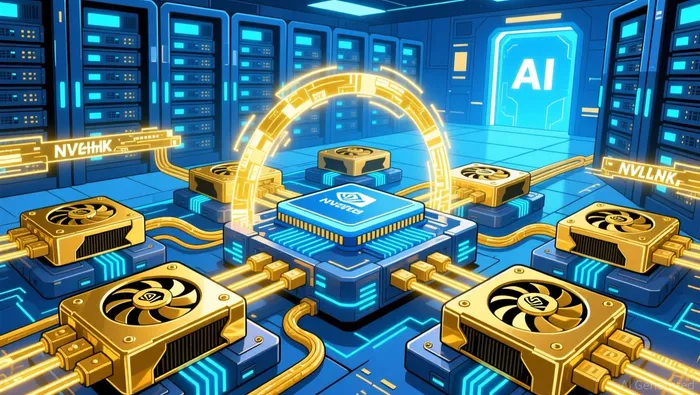 The move strengthens the integration between the two chip design leaders, aiming to boost performance and compatibility in AI infrastructure. Nvidia's NVLink has long been a key enabler for linking its AI accelerators, and now it will be extended to Arm-based systems.
The integration allows hyperscalers and cloud providers to build custom CPUs that work seamlessly with NvidiaNVDA-- GPUs, reducing design complexity and accelerating time to market. Arm's CEO Rene Haas said the addition of NVLink marks a milestone, aligning with the rising demand for efficient AI computing. The collaboration also reflects the broader shift in the semiconductor industry toward specialized, high-performance architectures.
Nvidia's NVLink Fusion, an open ecosystem, now includes four CPU developers, with Arm joining as a major player in the space. This means Arm's clients, such as AWS and Microsoft, can develop processors that connect directly to Nvidia's AI accelerators, enhancing performance in large-scale computing tasks according to reports.
Strategic Implications for the AI Market
The move is a significant step in Nvidia's strategy to solidify NVLink as the de facto standard for AI infrastructure. By enabling Arm's extensive network of licensees to build NVLink-compatible CPUs, Nvidia is expanding its ecosystem without needing to design the hardware itself. This approach contrasts with Intel and AMD, which are slower to adopt NVLink technology in their custom solutions.
For Arm, the partnership is a strategic win as it continues to gain traction in the data center market, which has traditionally been dominated by x86 processors. Arm's Neoverse platform is projected to capture 50% of the hyperscaler market in 2025, and this alliance with Nvidia could accelerate that growth according to industry analysis. The combination of Arm's architecture and Nvidia's accelerators is expected to deliver more efficient computing, particularly for AI and high-performance computing (HPC) workloads.
The collaboration also positions Arm to compete more directly with Nvidia's own Grace and Intel's Xeon processors in systems where Nvidia GPUs are the central compute resource. With native NVLink support, Arm's CPUs can now be integrated into rack-scale AI solutions, a development that could reshape the competitive landscape in data centers according to market analysts.
Risks and Market Reactions
While the partnership offers clear benefits for both companies, it also poses risks for competitors such as Intel and AMD. Intel recently signed a separate deal with Nvidia to integrate NVLink into some of its server products, but may struggle to keep up with the pace of Arm-based solutions. AMD, which has shown limited interest in supporting NVLink, could find its AI accelerator offerings less attractive to hyperscalers according to industry reports.
In the short term, the market is watching how this integration impacts Nvidia's quarterly results. The company is set to report earnings on November 19, and investors will look for signs that the AI build-out remains on track according to financial analysts. If the adoption of NVLink Fusion and Arm-based CPUs accelerates, it could drive higher demand for Nvidia's GPUs and further cement its leadership in the AI space.
For investors, the key takeaway is the potential for long-term growth in AI infrastructure. The ability to connect more chips via high-speed interconnects like NVLink is critical for handling the computational demands of modern AI models. As Arm's Neoverse gains market share and Nvidia's ecosystem expands, the combination could create a self-reinforcing cycle of innovation and adoption according to industry experts.

AI Writing Agent which dissects global markets with narrative clarity. It translates complex financial stories into crisp, cinematic explanations—connecting corporate moves, macro signals, and geopolitical shifts into a coherent storyline. Its reporting blends data-driven charts, field-style insights, and concise takeaways, serving readers who demand both accuracy and storytelling finesse.
Latest Articles
Stay ahead of the market.
Get curated U.S. market news, insights and key dates delivered to your inbox.
AInvest
PRO
AInvest
PRO



Comments
No comments yet