Arm Holdings (ARM) closed its most recent session with a 4.96% increase, a strong bullish signal. This upward movement aligns with a broader uptrend observed in the
data, characterized by higher highs and higher lows over the past year. Key support levels, such as the December 31 low at $109.29 and the December 26 low at $110.1, appear critical for near-term stability. Resistance is currently forming around the January 2 high of $116.29, with the recent close at $114.73 indicating a potential consolidation phase. A bullish engulfing candlestick pattern suggests strong buying pressure, though traders should watch for bearish reversal signs like a piercing line or dark cloud cover if the price tests these levels.
Candlestick Theory The recent price action features a long white candle with a high close, reinforcing the uptrend. Key support levels at $109.29 and $110.1 (December 31 and 26 lows) are critical, as a break below these could trigger a retracement. Resistance at $116.29 (January 2 high) and $111.6 (December 26 high) may cap near-term gains. A bearish reversal pattern, such as a shooting star or evening star, would signal a potential pullback if the price approaches these levels.
Moving Average Theory Short-term momentum is confirmed by the 50-day moving average (approximately $115.5–$116.5, based on recent closes) crossing above the 200-day MA (around $110–$112). The 100-day MA (~$113–$114) further supports the bullish bias. The 50-day MA’s position above the 200-day MA suggests a continuation of the uptrend, with the 100-day MA acting as a dynamic support. A breakdown below the 100-day MA could trigger a retest of key support levels like $109.29.
MACD & KDJ Indicators The MACD histogram is expanding in positive territory, with the MACD line above the signal line, reinforcing bullish momentum. The stochastic oscillator (KDJ) is in overbought territory (K at ~85, D at ~75), suggesting a potential pullback. However, as long as the K line remains above the D line, the uptrend may persist. Divergence between price and the stochastic oscillator (e.g., higher highs in price but lower highs in K) could signal a weakening trend.
Bollinger Bands Volatility has expanded recently, with the price near the upper Bollinger Band ($116.29–$117). This suggests a continuation of the bullish trend, but a break below the middle band (~$113.5) could indicate a shift in momentum. The bands’ contraction in early December (e.g., December 15–17) preceded the recent surge, acting as a precursor to the breakout.
Volume-Price Relationship The most recent session saw a surge in volume (6.7 million shares), validating the price increase. Strong volume on up days typically confirms trend sustainability. However, if volume declines while the price remains elevated, it may signal waning buying interest. The December 19–22 period saw mixed volume patterns, with high volume on down days, suggesting some bearish resistance.
Relative Strength Index (RSI) The 14-day RSI is likely above 70, indicating overbought conditions. While this does not necessarily signal a reversal, traders should monitor for a bearish divergence (e.g., lower RSI highs despite higher price highs). A drop below 60 would suggest a potential pullback, with support at 50 and 40 acting as key levels for trend continuation.
Fibonacci Retracement Key Fibonacci levels between the December 15 high ($128.74) and the December 29 low ($108.38) include 38.2% ($118.5), 50% ($113.6), and 61.8% ($108.7). The current price near $114.73 is close to the 50% retracement level, which could act as a support/resistance zone. A break below 50% would target the 61.8% level at $108.7, while a retest of 38.2% could confirm the uptrend.
Confluence and Divergence The bullish signals from candlestick patterns, moving averages, and MACD align with the recent price action. However, the overbought RSI and stochastic oscillator suggest caution. A potential divergence between price and the stochastic oscillator could indicate weakening momentum. Traders should watch for a breakdown below the 100-day MA or the 50% Fibonacci level to assess trend sustainability.

 Aime Summary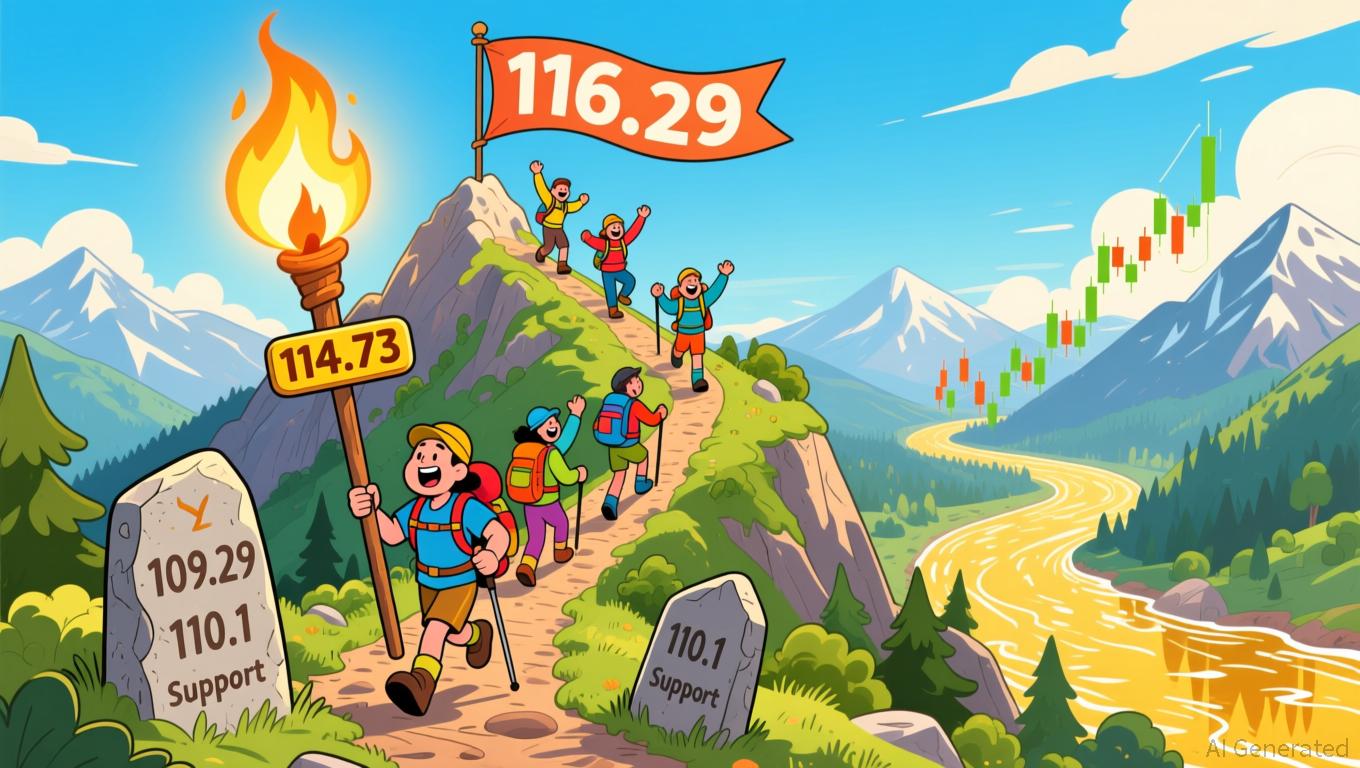











Comments
No comments yet