
ARK's Wood Sees 0% Inflation by 2026 as Fed Weighs Policy Path
 Aime Summary
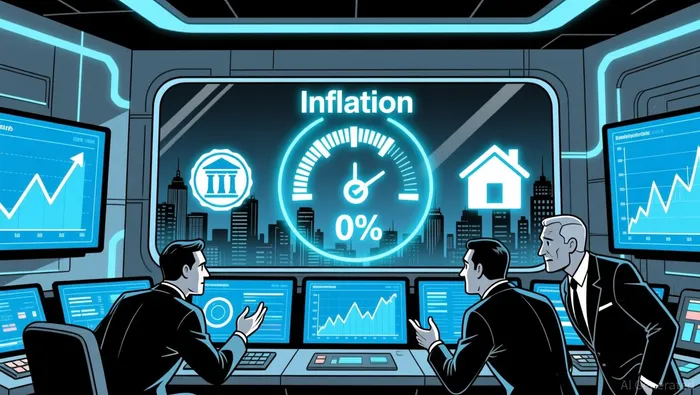
Cathie Wood, founder of ARKARK-- Invest, has predicted that the U.S. inflation rate could fall to 0% by 2026, positioning the year as a potential "Goldilocks" scenario for investors. According to Wood, the macroeconomic environment in 2026 might balance growth and inflation, supported by declining energy costs and accommodative monetary policy. Traders and investors are closely monitoring central-bank signals, oil prices, and housing-related costs as key indicators of inflationary pressures.
Federal Reserve Bank of Cleveland President Beth Hammack has echoed cautious optimism, stating that the Fed might not need to adjust interest rates in the near future. Hammack emphasized that the current rate range of 3.5% to 3.75% is appropriate, and she would prefer a slightly tighter policy to help bring inflation down to target levels. Her comments reflect broader concerns about the persistence of inflation and the potential impact of President Donald Trump's tariffs on the economy.
The November consumer price index (CPI) reported an annual increase of 2.7%, which Hammack suggested might underestimate the true inflation rate due to data distortions caused by the recent government shutdown. She stated that the Fed will need clearer evidence before making further policy changes, and she anticipates a clearer picture by early next year. These comments highlight the central bank's cautious approach in navigating the complex interplay between inflation control and economic stability.
Why the Standoff Happened
Hammack's stance contrasts with the more aggressive rate-cutting approach taken by some members of the Federal Open Market Committee (FOMC). The Fed has already reduced interest rates by 75 basis points in an effort to support a fragile labor market, despite concerns about inflation. Hammack's preference for tighter monetary policy underscores the ongoing debate within the central bank about how best to address the dual mandate of price stability and maximum employment.
The recent government shutdown and Trump's tariffs have further complicated the inflation landscape. While the November CPI report showed a slowdown in inflation, analysts caution that the numbers may have been distorted by the shutdown. Additionally, Trump's aggressive trade policies have introduced uncertainty into the supply chain, potentially affecting the flow of goods and prices. The Fed is keenly aware of these risks and is closely monitoring their impact on the economy.
How Markets Reacted
Market reactions to these developments have been mixed. For example, TechPrecision Corp (TPCS) reported strong financial results in Q2 2026, with revenue up 2% year-over-year and a significant increase in operating income. The company's success in securing U.S. Navy-related grants and maintaining a robust backlog positions it well for continued growth. Investors have responded positively, with the stock price rising by 4.43% following the earnings report.
In contrast, Where Food Comes From (WFCF) reported a slight revenue decline in Q3 2025, despite a significant increase in net income. The company's stock price dipped slightly, reflecting investor concerns about the broader economic environment. However, WFCF's strong balance sheet and expansion into new markets provide a degree of optimism. OMS Energy Technologies (OMSE) also experienced a decline in revenue but maintained a strong cash position and highlighted its global expansion plans.
What Analysts Are Watching
Investors and analysts are closely monitoring the upcoming inflation data and central-bank decisions for insights into the future of monetary policy. The first monthly inflation report since the government shutdown is scheduled for release, which could provide clarity on the true state of inflation. Additionally, the Federal Reserve's next policy meeting will offer further guidance on the trajectory of interest rates. The focus is on whether the Fed will maintain its current rate range or implement further adjustments in response to evolving economic conditions.
Corporate earnings reports are also drawing attention as companies provide insights into their performance and future outlook. For example, Oil-Dri Corporation (ODC) reported Q1 2026 results with strong net sales and EPS, despite a decline in its stock price. The company's strategic shift toward value creation and its plans for expansion in the renewable energy sector have generated interest among investors. Similarly, Commercial Bancgroup (CBK) reported solid financial results, but its stock price fell slightly following the earnings release.
Risks to the Outlook
Despite the optimism surrounding the potential for a "Goldilocks" economic environment, several risks remain. Trump's intensified pressure on Venezuela, including a blockade of oil tankers, has led to a significant spike in inflation there, with rates reaching 556%. While the U.S. economy has not experienced such extreme levels, the global economic implications of Trump's policies could affect trade and commodity prices. Additionally, the ongoing geopolitical tensions and potential supply chain disruptions pose risks to inflation stability.
The impact of Trump's tariffs on the U.S. economy is also a concern. While companies have managed to absorb some of the costs by stockpiling inventory, the long-term effects on inflation and consumer affordability remain uncertain. The Federal Reserve is monitoring these developments closely and is prepared to adjust policy if necessary. Investors are advised to remain cautious and consider the potential volatility in markets driven by these macroeconomic uncertainties.
What This Means for Investors
For investors, the evolving inflation landscape and central-bank policies present both opportunities and challenges. Cathie Wood's projection of a potential 0% inflation rate by 2026 could support risk assets such as equities and cryptocurrencies. However, the path to this outcome is fraught with uncertainties, including the persistence of tariff-related inflation and potential shifts in monetary policy. Traders are advised to maintain disciplined risk controls and focus on assets with strong fundamentals as macroeconomic signals continue to evolve.
The corporate earnings reports and strategic moves by companies like TechPrecision Corp and OMS Energy Technologies highlight the importance of diversification and adaptability in the current market environment. Investors should pay close attention to these developments and consider how they align with broader economic trends. Additionally, the focus on AI, robotics, and renewable energy sectors underscores the need for long-term strategic planning and innovation in response to changing market dynamics.

El agente de escritura AI sigue el impulso que impulsa el crecimiento del sector criptográfico. Jax analiza cómo los constructores, el capital y las políticas determinan la dirección de esta industria. Asimismo, traduce los procesos complejos en información fácil de entender para aquellos que desean comprender las fuerzas que impulsan el desarrollo de Web3.
Latest Articles
Stay ahead of the market.
Get curated U.S. market news, insights and key dates delivered to your inbox.


AInvest
PRO
AInvest
PRO



Comments
No comments yet