
AInvest Newsletter
Daily stocks & crypto headlines, free to your inbox
 Aime Summary
Date of Call: December 2025
Core Business Performance and Strategy:
Bryant Park Litigation Impact:
Meadowlands Casino Opportunity:
Financial Position and Valuation:
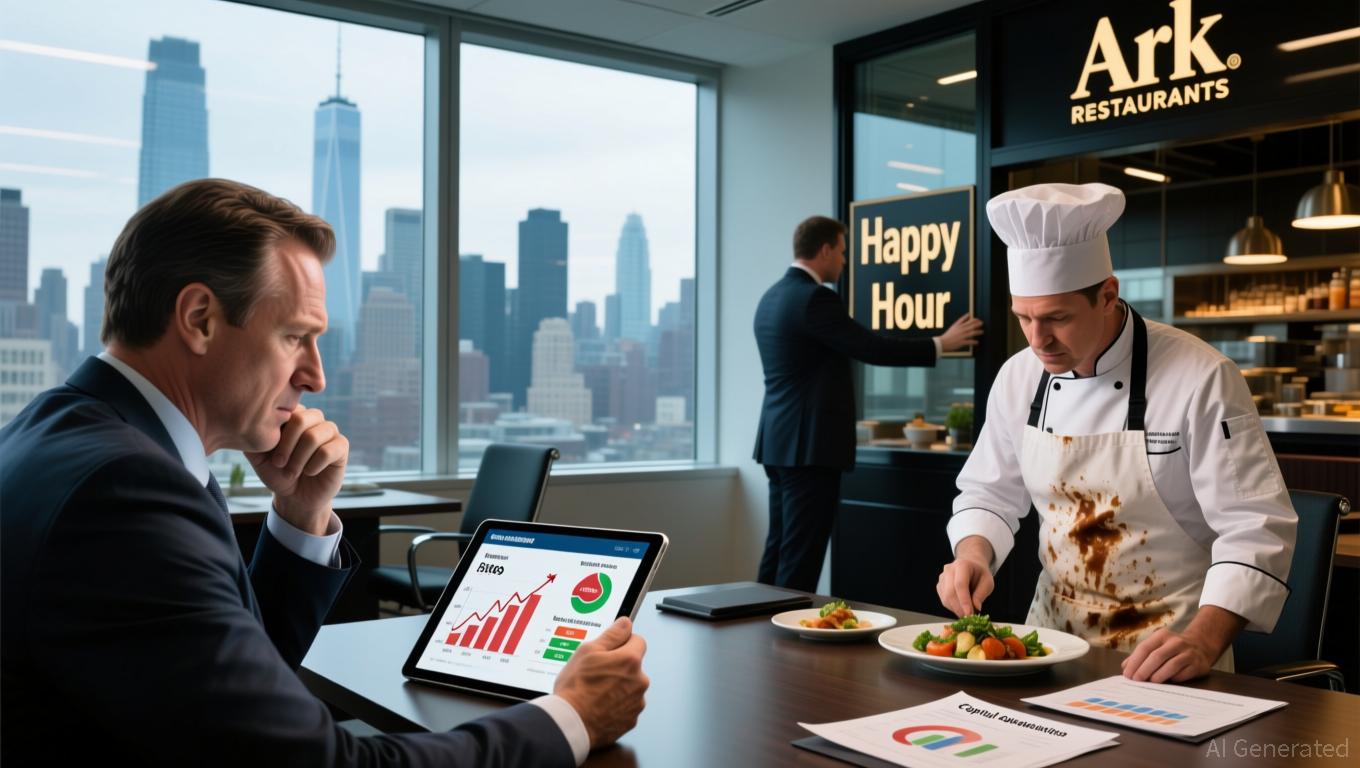
Overall Tone: Neutral
Contradiction Point 1
Cost Management and Pricing Strategy
This represents a significant shift in core operational strategy. The company moved from a patient, customer-focused approach to absorbing cost increases (2023Q4) to an active strategy of selective price hikes to directly offset rising costs (2025Q4). This change impacts near-term margin recovery, brand perception, and revenue forecasts.
What is the strategy to revive the core restaurant business, given reduced footprint, rising costs, and a stock price at multi-year lows? - Jeffrey Kaminsky (JJK Consultants)
20251216-2025 Q4: 1. Improving operational efficiency and selectively raising prices to offset higher labor and input costs. - Michael Weinstein(CEO)
Why is the company reluctant to raise prices amid rising costs, and how does this impact margins? - Other Analyst (Unknown Analyst)
2023Q4: The company...does not want to risk alienating customers with large price hikes...Management believes patience will allow margins to recover without changing the brand’s value proposition. - Michael Weinstein(CEO)
Contradiction Point 2
Capital Deployment Priority: Acquisitions vs. Buybacks
This is a direct contradiction in financial strategy and capital allocation. In 2023Q4, the CEO explicitly ruled out a buyback as a priority, deferring to acquisitions. By 2025Q4, he frames the stock as undervalued due to market inefficiency, implicitly suggesting a buyback could be a viable use of cash. This shift could lead to significant changes in shareholder value and signals conflicting internal priorities.
What is the strategy to turn around the core restaurant business? Why isn't there more insider buying if the company sees value? - Jeffrey Kaminsky (JJK Consultants)
20251216-2025 Q4: he believes the market is inefficient and the company's value is not reflected at current levels... - Michael Weinstein(CEO)
With the company’s significant cash balance, would a small stock buyback be prudent to stabilize the stock price and avoid impairment? - Jeffrey Kaminsky (JJK Consultants)
2023Q4: A buyback would be considered only if no meaningful acquisition targets were available. The stock is also very thinly traded, making a buyback of meaningful impact difficult. - Michael Weinstein(CEO)
Contradiction Point 3
Overall Restaurant Performance Assessment
This involves a material change in the narrative around the health of the core business. In 2025Q3, management described most restaurants as "doing very, very well." In the 2025Q4 call, the strategic question is posed in the context of a "general downturn in demand" and a "shrinking footprint." This contradiction is critical as it directly impacts the perceived quality and growth trajectory of the company's primary operations.
What is the strategy to turn the core restaurant business around? - Jeffrey Kaminsky (JJK Consultants)
20251216-2025 Q4: given shrinking footprint, rising costs, and a stock price at multi-year lows - Michael Weinstein(CEO)
What operational updates and outlook guidance are provided by management? - Michael Weinstein (Chairman and CEO)
2025Q3: The individual restaurants are, for the most part, doing very, very well... Las Vegas has been strong... Robert in New York continues to do above our expectations as does Rustic in Fort Lauderdale. - Michael Weinstein(CEO)
Contradiction Point 4
Meadowlands Casino License Dependency and Timeline
This is a substantial change in the framing of a major strategic opportunity. In 2025Q2, the Meadowlands opportunity was made entirely contingent on a specific, time-bound government action (NYC issuing licenses). In 2025Q4, it is reframed as an immediate, active "compelling demographic play" without that dependency, suggesting a shift from a passive waiting game to an aggressive, independent pursuit. This alters the risk/reward profile of the strategy.
What is the strategy to turn the core restaurant business around? - Jeffrey Kaminsky (JJK Consultants)
20251216-2025 Q4: Defended the Meadowlands opportunity as a compelling demographic play, not a 'Hail Mary,' and stated the company is being aggressive in its search. - Michael Weinstein(CEO)
What is the current status and outlook for Bryant Park and Meadowlands? - Unnamed
2025Q2: The possibility of obtaining a casino license is dependent on New York City issuing casino licenses, expected sometime before the end of the year. - Michael Weinstein(CEO)
Contradiction Point 5
Bryant Park Lease Renewal Outcomes and Financial Impact
This reveals a significant change in the financial narrative regarding a major liability. In 2023Q4, management emphasized a permanent $10 million goodwill impairment tied to the stock price, explicitly stating it could not be reversed even if the Bryant Park lease was renewed favorably. In 2025Q4, the company discusses the Bryant Park lease as a forward-looking strategic opportunity, with no mention of the prior impairment. This contradiction raises questions about the permanent nature of the impairment and the company's financial reporting consistency.
What is the strategy to turn the core restaurant business around? - Jeffrey Kaminsky (JJK Consultants)
20251216-2025 Q4: Defended the Meadowlands opportunity as a compelling demographic play, not a 'Hail Mary,' and stated the company is being aggressive in its search. - Michael Weinstein(CEO)
What triggered the $10M goodwill impairment—stock price volatility or the upcoming Bryant Park lease expiration? Will the impairment reverse if the Bryant Park lease is renewed favorably? - Jeffrey Kaminsky (JJK Consultants)
2023Q4: The impairment was triggered by a significant shortfall in the company’s stock price... Once goodwill is impaired, it cannot be reversed under accounting standards. The Bryant Park lease situation (regardless of outcome) does not affect the permanent write-off. - Anthony Sirica and Michael Weinstein

Discover what executives don't want to reveal in conference calls

Jan.09 2026

Jan.09 2026
Jan.09 2026
Jan.09 2026

Jan.09 2026
Daily stocks & crypto headlines, free to your inbox





Comments
No comments yet