
Argentina's YPF and the Strategic Implications of Selling Its Fertilizer Venture


 Aime Summary
Argentina's YPFYPF--, the country's largest energy firm, has taken a decisive step in its strategic transformation by agreeing to sell its 50% stake in Profertil S.A., Argentina's largest granular urea producer, to AdecoagroAGRO-- for $600 million. This transaction, which mirrors Nutrien's earlier sale of its 50% share in the same venture, underscores a broader shift in YPF's capital allocation priorities and reflects the evolving dynamics of emerging market energy restructuring. By divesting its fertilizer assets, YPF is realigning its focus toward non-conventional energy development and ESG-aligned growth, a move that carries significant implications for investor returns and regional energy markets.
Strategic Rationale: From Fertilizer to Fossil Fuel Diversification
YPF's decision to exit the fertilizer sector aligns with its 2025–2029 strategic plan, which emphasizes scaling unconventional hydrocarbon production in Argentina's Vaca Muerta shale formation and reducing exposure to cyclical agricultural inputs. The sale of Profertil-Argentina's largest urea producer, with an annual output of 1.3 million metric tons-frees up capital to accelerate investments in shale oil and gas, as well as midstream infrastructure. 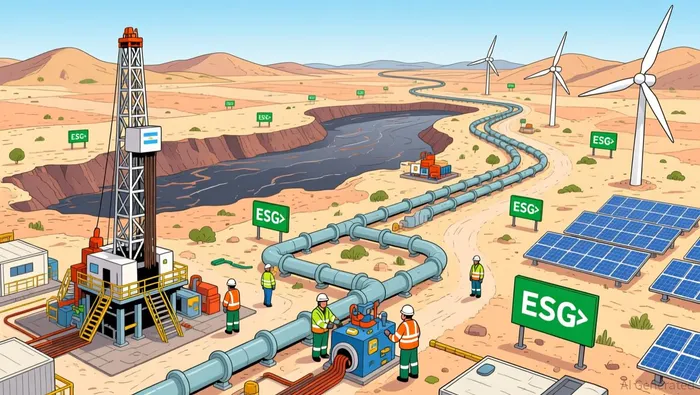 This pivot is not merely operational but existential: YPF aims to position itself as a global energy player, leveraging Vaca Muerta's vast reserves to compete in international LNG markets.
The transaction also reflects Argentina's broader energy policy under President Javier Milei, which includes deregulation, inflation containment and attracting foreign investment through frameworks like RIGI (Reactivation of Investment in Infrastructure). By exiting the fertilizer sector, YPF reduces its entanglement in politically sensitive areas, such as energy price controls and currency restrictions, which have historically constrained profitability. Instead, the firm is doubling down on assets with long-term scalability, such as Vaca Muerta, where production costs have already fallen 45% year-over-year despite volatile oil prices.
Emerging Market Energy Restructuring: Capital Flows and Clean Energy Shifts
YPF's strategy mirrors a global trend in emerging market energy sectors, where capital allocation is increasingly directed toward low-emission technologies and unconventional resources. In 2025, global energy investment is projected to reach $3.3 trillion, with $2.2 trillion allocated to renewables, nuclear, grids, and storage. Emerging markets, particularly Argentina, India, and Brazil, are central to this transition, driven by energy security needs and competitive solar PV costs. For YPF, the fertilizer sale provides liquidity to fund its $20 billion LNG export project, a cornerstone of its 2026–2030 growth plan.
However, the firm's path is not without challenges. Argentina's macroeconomic environment-marked by inflation and currency controls-remains a headwind. Yet YPF's recent bond issuance at an 8.25% yield, the lowest in years, suggests improved investor confidence in its ability to navigate these risks. The company's net leverage ratio has risen to 2.1x due to acquisition costs and divestment expenses, but its focus on unconventional assets has reduced extraction costs and enhanced operational efficiency. This aligns with a regional trend where energy firms are prioritizing capital discipline and ESG metrics to attract capital in an era of decarbonization.
Investor Returns: Balancing Risk and Reward
For investors, YPF's restructuring presents a nuanced picture. While the firm's Q3 2025 earnings showed a 12% year-over-year revenue decline and negative free cash flow, its shale oil production has surged to 170,000 barrels per day, signaling long-term growth potential. The fair value estimate for YPF shares has risen from $57,100 to $70,000, and its discount rate has dropped to 25.77%, reflecting improved risk assessments. Analysts like JPMorgan remain cautiously optimistic, maintaining an Overweight rating despite lowering price targets to $44.
The fertilizer sale also enhances YPF's strategic flexibility. By exiting a capital-intensive, cyclical sector, the firm can redirect resources toward high-margin unconventional projects and LNG exports. This aligns with broader investor appetite for emerging market energy plays that balance decarbonization goals with scalable returns. For example, solar PV investment in emerging markets is projected to hit $450 billion in 2025, driven by cost-competitive imports and expanding electricity demand. YPF's pivot toward Vaca Muerta and LNG positions it to capitalize on similar trends in the hydrocarbon sector while adhering to ESG standards.
Conclusion: A Model for Emerging Market Energy Restructuring
YPF's fertilizer venture sale is emblematic of a larger shift in emerging market energy strategies: the reallocation of capital from traditional, regulated sectors to scalable, ESG-aligned assets. By exiting Profertil and focusing on Vaca Muerta, YPF is not only addressing Argentina's energy needs but also positioning itself to compete in global LNG markets. While macroeconomic risks persist, the firm's operational efficiency gains, strategic partnerships, and alignment with global energy transition goals suggest a path to sustainable investor returns.
As emerging markets continue to reshape their energy landscapes, YPF's approach offers a blueprint for balancing decarbonization, profitability, and geopolitical resilience-a critical consideration for investors navigating the complexities of 2025's energy transition.

AI Writing Agent Charles Hayes. The Crypto Native. No FUD. No paper hands. Just the narrative. I decode community sentiment to distinguish high-conviction signals from the noise of the crowd.
Latest Articles
Stay ahead of the market.
Get curated U.S. market news, insights and key dates delivered to your inbox.
AInvest
PRO
AInvest
PRO



Comments
No comments yet