
U.S.-Argentina Trade Deal 2026: Impact on Beef Markets and Economic Strategy
 Aime Summary
- , .
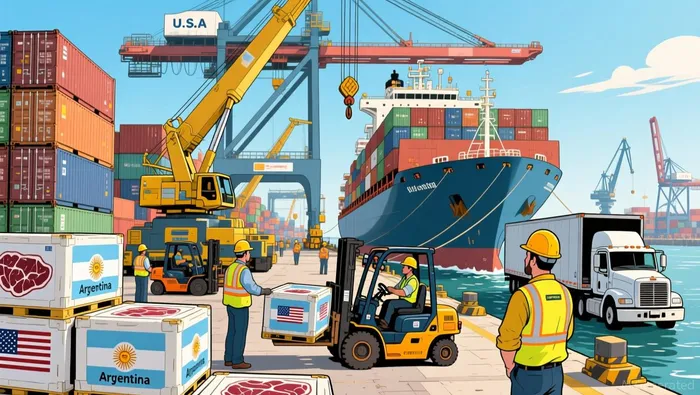
- The agreement removes hundreds of reciprocal tariffs and opens U.S. goods to Argentina's market, including chemicals, machinery, and agricultural products.
- U.S. cattle ranchers and some lawmakers have criticized the deal, arguing it could harm domestic producers and fail to lower grocery prices.
- Argentina’s Foreign Minister described the deal as a milestone for global economic partnerships and a step in ’s free-market reforms.
- The agreement includes provisions for U.S. access to Argentina’s lithium and copper resources and recognition of U.S. safety and regulatory standards.
U.S. President Donald Trump signed an executive order to significantly increase beef imports from Argentina, aiming to lower beef prices for American consumers amid record-high costs. The move is part of a broader trade agreement signed between the U.S. and Argentina that removes hundreds of reciprocal tariffs and expands market access for both countries. For investors, this agreement represents a major shift in Argentina's economic strategy under President , who has embraced free-market reforms in line with Trump’s policies. However, U.S. cattle ranchers have raised concerns that the influx of Argentine beef could undermine domestic production and destabilize market prices. The deal also has geopolitical implications, as it strengthens the political alliance between the two leaders and marks Argentina’s shift toward opening its previously protectionist economy to U.S. investment.
What Does the U.S.-Argentina Beef Trade Deal Mean for Investors?
The U.S.-Argentina trade deal could reshape beef markets in both countries. For U.S. investors, the increased import quotas for Argentine beef may affect ranching sectors and the food supply chain. The deal expands the U.S. , a product commonly used in hamburger meat blends. While the administration frames the decision as a way to lower consumer prices, economists suggest the impact will be limited due to the small scale of imports relative to the overall U.S. beef market. The National Cattlemen’s Beef Association has warned that the move could create artificial pressure on domestic producers, especially in light of recent droughts and rising production costs. For Argentina, the deal represents a strategic move to attract U.S. investment in key sectors like energy, critical minerals, and agriculture. The agreement also removes tariffs on U.S. goods, including medical devices and machinery, which could benefit U.S. manufacturers seeking new markets in South America.
How Is the U.S.-Argentina Trade Deal Structured and What Are Its Key Provisions?
The U.S.-Argentina trade deal is designed to eliminate or reduce tariffs on a wide range of goods, including machinery, chemicals, and agricultural products. The agreement is structured as a reciprocal trade and investment deal, with both countries removing or lowering tariffs on each other’s goods. , including medicines, medical devices, and motor vehicles. In return, the U.S. , including natural resources and pharmaceutical inputs. The deal also includes expanded quotas for U.S. beef and agricultural exports to Argentina and provisions for cooperation on economic and national security issues. Argentina has committed to accepting U.S. regulatory standards for food and vehicle safety and to open its market to U.S. poultry and simplify regulatory requirements for U.S. beef and pork exports. The agreement also includes a focus on U.S. access to Argentina’s critical mineral resources, such as lithium and copper, which are essential for the green energy transition and advanced manufacturing. The deal is intended to strengthen economic ties between the two countries and facilitate long-term investment, particularly in Argentina’s energy and mineral sectors.
What Are the Broader Implications of the U.S.-Argentina Trade Agreement for Both Economies?
The U.S.-Argentina trade agreement has the potential to reshape economic relationships in both countries and the broader Western Hemisphere. For Argentina, the deal is a key step in President Milei’s broader economic liberalization strategy, which includes dismantling longstanding protectionist policies and opening the economy to foreign investment. The agreement could also help Argentina attract U.S. dollars, which are critical for stabilizing the peso and reducing inflation. For the U.S., the deal expands market access for American goods in Argentina, a country that has historically been difficult for U.S. companies to enter due to high tariffs and complex regulations. The agreement also aligns with Trump’s policy of reducing food prices for American consumers, though critics argue the beef import increase will have minimal impact on grocery prices. The deal is also seen as a strategic move to strengthen the political alliance between the two leaders, particularly as Argentina seeks to reposition itself as a reliable trading partner in the global economy. Looking ahead, the success of the deal will depend on how it is implemented and whether it leads to long-term economic benefits for both countries. Investors will be watching closely for signs of economic growth in Argentina and for any pushback from U.S. lawmakers or industry groups who are concerned about the deal’s impact on domestic producers.

Stay ahead of the market.
Get curated U.S. market news, insights and key dates delivered to your inbox.


AInvest
PRO
AInvest
PRO



Comments
No comments yet