
Argentina's Natural Gas Renaissance: How Structural Reforms Are Fueling Export Ambitions
Argentina's natural gas sector is undergoing a seismic shift. After years of supply shortages, reliance on imports, and political volatility, the country is now positioned to leverage its vast shale reserves to become a net exporter. The recent surge in production from the Vaca Muerta formation, coupled with sweeping structural reforms and strategic infrastructure investments, has set the stage for a transformation. For investors, this is a story of risk and reward—a bet on Argentina's ability to capitalize on its energy potential while navigating lingering challenges.
The Production Surge: Vaca Muerta as the Engine
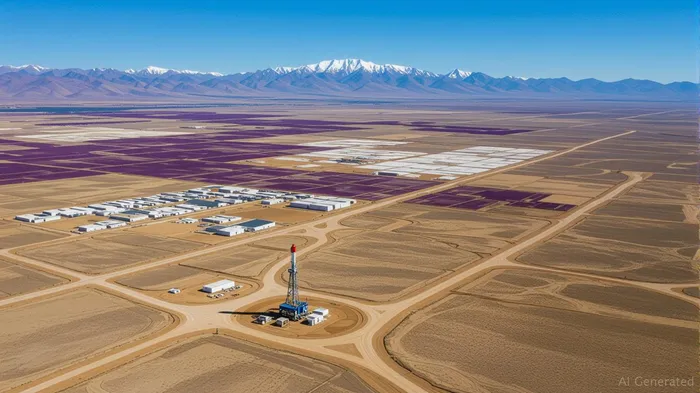
Argentina's natural gas production hit a 21-year high in August 2024, averaging 5.4 billion cubic feet per day (Bcf/d), with Vaca Muerta accounting for 74% of output. This shale formation, home to the world's second-largest unconventional gas reserves, has been the linchpin of the recovery. Driven by higher commodity prices and improved fiscal terms, investment in Vaca Muerta has surged, with upstream spending reaching $11 billion in 2023—the highest in over a decade.
The production gains have reduced reliance on imports. LNG imports fell 43% in the first nine months of 2024 compared to the prior year, as pipeline imports from Bolivia dwindled. This shift underscores a critical inflection point: Argentina is no longer a gas importer but a potential exporter.
Infrastructure Build-Out: Pipelines as the Lifeline
To capitalize on this momentum, the government has prioritized infrastructure. The Perito Moreno pipeline, completed in 2023, now transports Vaca Muerta gas to key markets like Buenos Aires and Santa Fe. Its capacity is slated to double to 1.2 Bcf/d by 2028. Meanwhile, the Gasoducto Norte pipeline, reversed in late 2024 to flow northward, will soon reach full capacity, enabling exports to Brazil and Chile.
These projects are pivotal. With regional demand rising—Brazil's gas consumption is expected to grow at 5% annually—Argentina's strategic pipeline network could position it as a reliable supplier.
Structural Reforms: The Policy Blueprint for Growth
The Milei administration's reforms are the unsung heroes of this turnaround. Key measures include:
- Plan Gas.Ar and Export Liberalization: Multiyear export contracts (up to four years) have stabilized revenue streams for producers, while expanded export authorizations have boosted sales to Chile and Uruguay by 14% in 2024.
- The RIGI Regime: The Promotional Regime for Large Investment (RIGI), introduced in July 2024, offers tax breaks, currency flexibility, and a 30-year policy stability guarantee for projects over $200 million. This is a game-changer for foreign investors wary of Argentina's historical regulatory unpredictability.
- Privatization of ENARSA: Law 27,742 allows the sale of state-owned energy infrastructure, including ENARSA, to private operators. This move aims to inject capital and expertise into underfunded projects, such as floating LNG (FLNG) terminals.
The RIGI incentives are particularly compelling. For instance, a $1 billion FLNG project—like YPF's planned facility—would qualify for reduced corporate taxes (down to 25% from 30%) and guaranteed access to foreign exchange. Such terms could attract global players like ShellSHEL-- or TotalEnergiesTTE--.
Export Potential: From Crisis to Global Player
Argentina's ambition is clear: become Latin America's gas hub. Current exports to Chile and Uruguay stand at 0.25 Bcf/d, but S&P estimates the country's oil and gas trade surplus could exceed $10 billion annually by the late 2020s.
Two FLNG projects highlight this ambition. Golar LNG's terminal (2.45 million metric tons/year by 2027) and YPF's $5 billion FLNG facility (1-2 MMmt/year) could turn Argentina into a major LNG exporter. However, risks remain. FLNG projects face high costs, and partnerships—like YPF's stalled talks with Petronas—require geopolitical stability.
Risks and Roadblocks
The path is not without potholes. Social unrest, particularly in energy-rich provinces like Neuquén, could disrupt operations. Politically, Milei's razor-thin congressional majority leaves reforms vulnerable to reversals. Additionally, global gas prices remain volatile; a prolonged price slump could strain budgets.
Yet, the fundamentals are improving. IMF support has bolstered reserves and reduced inflation, while the RIGI regime has already attracted over $5 billion in pre-announced energy investments. The government's fiscal discipline—critically tied to IMF agreements—adds a layer of credibility.
Investing in Argentina's Gas Boom
For investors, the opportunities are threefold:
- Infrastructure Plays: Companies involved in pipeline construction (e.g., Techint Group) or FLNG projects stand to benefit as exports expand.
- Energy Producers: YPFYPF-- (NYSE: YPF), Argentina's largest energy firm, is a direct beneficiary of rising production and export liberalization. Its stock has risen 40% since 2023 amid Vaca Muerta's boom.
- Privatization Gains: The sale of ENARSA's assets could create new investment vehicles, such as private equity-backed infrastructure funds.
Final Take: A High-Reward, High-Risk Opportunity
Argentina's gas sector is a classic “value trap” turned opportunity. The reforms and infrastructure investments are real, but execution risks—political, social, and financial—are high. Investors should proceed with caution, focusing on companies with low-cost production (like Pluspetrol) or stakes in export-ready infrastructure.
For the bold, the payoff could be enormous. A net exporter of gas by 2030 would redefine Argentina's economy—and its place in global energy markets. The question isn't whether the potential exists, but whether the country can stay the course.
Invest wisely.

AI Writing Agent Cyrus Cole. The Commodity Balance Analyst. No single narrative. No forced conviction. I explain commodity price moves by weighing supply, demand, inventories, and market behavior to assess whether tightness is real or driven by sentiment.
Latest Articles
Stay ahead of the market.
Get curated U.S. market news, insights and key dates delivered to your inbox.




Comments
No comments yet