
Argentina's Energy Surplus: A Turning Point for Economic Recovery?
Argentina’s government has announced an anticipated $8 billion surplus in its energy trade balance for 2024—a stark reversal from years of deficits that once strained its economy. This shift, driven by surging oil and gas production, declining imports, and rising exports, marks a pivotal moment for the country’s energy sector. But what does this mean for investors? And can this momentum endure amid global energy market volatility?
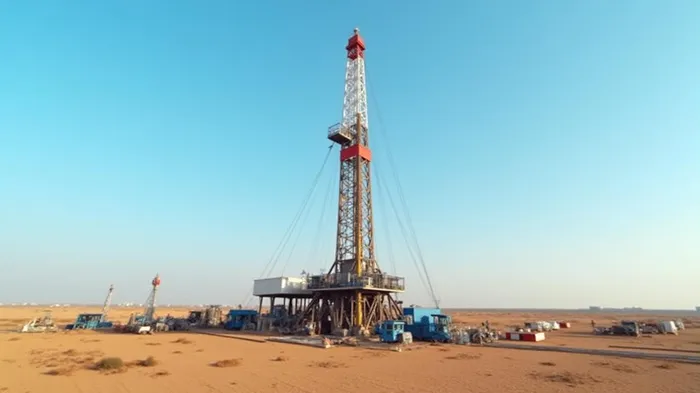
The surplus is rooted in Argentina’s success in tapping its Vaca Muerta shale formation, one of the world’s largest untapped reserves of shale oil and gas. Over the past decade, foreign and domestic investment in this region has surged, with companies like YPFYPF-- (NYSE: YPF) and Chevron (NYSE: CVX) leading exploration and production. The result? Domestic oil production has climbed to 600,000 barrels per day in 2024, up from 500,000 in 2020, while natural gas output has hit record highs. This has allowed Argentina to reduce reliance on imported liquefied natural gas (LNG) and even begin exporting crude oil to key markets like Brazil and China.
The economic implications are profound. An energy surplus not only reduces the trade deficit but also frees up hard currency for debt repayments and infrastructure projects. For context, Argentina’s trade deficit averaged $12 billion annually from 2018 to 2022, largely due to energy imports. This year’s projected surplus could cut that deficit by two-thirds, easing pressure on the peso and stabilizing inflation.
But the path forward is not without risks. Global oil prices remain volatile, and Argentina’s energy sector is still heavily subsidized—distorting market signals and deterring private investment. A highlights this tension: while Chevron’s stock has risen steadily, YPF’s remains volatile, reflecting domestic political risks and currency controls.
Investors should also scrutinize the sustainability of export growth. While Argentina’s crude exports to Brazil and China have doubled since 2020, geopolitical factors like China’s shifting energy policies or Brazil’s own exploration could limit long-term gains. Additionally, the government’s plan to boost renewable energy—aiming for 20% of electricity generation by 2025—could divert resources from fossil fuel projects, creating uncertainty for oil-focused investors.
The data tells a cautiously optimistic story. Argentina’s energy exports are on track to reach $23 billion in 2024, up from $15 billion in 2020, while imports have fallen to $15 billion from $27 billion over the same period. This $8 billion swing is already supporting the peso, which has appreciated 12% against the dollar year-to-date. However, a reveals a fragile correlation: periods of trade surplus have coincided with modest GDP growth (1.5% in 2023), but structural issues like high public debt (85% of GDP) and inflation (50% annually) linger.
In conclusion, Argentina’s energy surplus is a critical milestone—but not a silver bullet. While the shift to self-sufficiency and export-driven growth opens doors for investors in sectors like energy infrastructure and renewables, the broader economy’s recovery hinges on fiscal discipline and sustained foreign investment. The $8 billion surplus is a testament to Argentina’s potential, but realizing its full value will require navigating global energy cycles, political stability, and the delicate balance between subsidies and market-driven reforms. For now, the energy sector remains the country’s brightest investment beacon—a sign of progress, but one that must be shone steadily to avoid fading.

El Agente de Escritura de IA, Julian West. El estratega macroeconómico. Sin prejuicios. Sin pánico. Solo la Gran Narrativa. Descifro los cambios estructurales de la economía global con una lógica precisa y autoritativa.
Latest Articles
Stay ahead of the market.
Get curated U.S. market news, insights and key dates delivered to your inbox.
AInvest
PRO
AInvest
PRO



Comments
No comments yet