
Argentina Economy: Shrinking 2.6% in Q3, Recession Break Imminent?
As we delve into the third quarter of 2024, Argentina's economic landscape presents a fascinating conundrum. Despite initial expectations, the economy is projected to shrink by a significant 2.6% in Q3, raising the question: is Argentina on the brink of breaking its recession?
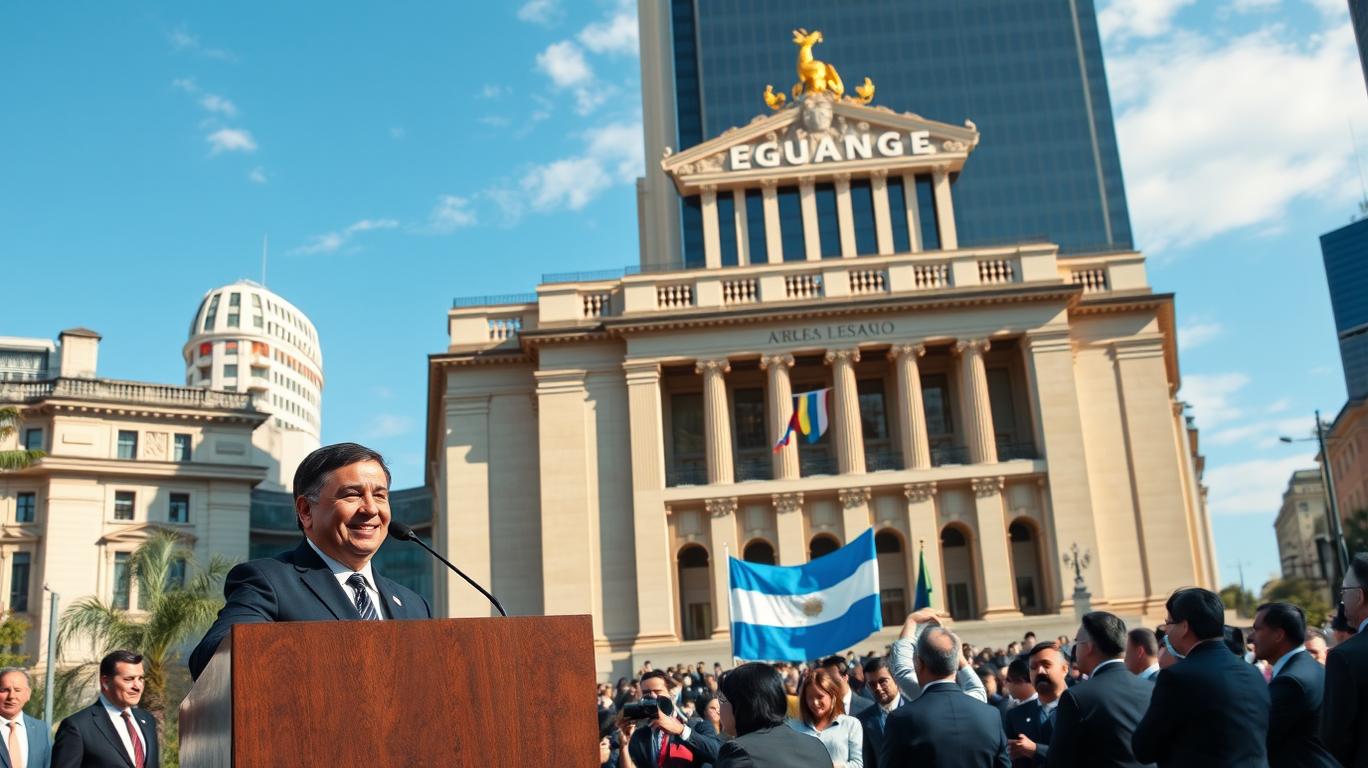
The government's fiscal adjustment framework, aimed at achieving zero deficit, has had a substantial impact on economic activity. The framework, which includes reducing budgetary allocations and increasing taxes, has led to a significant decline in private consumption and domestic investment. This contraction is primarily due to the government's rigorous fiscal adjustment and monetary contraction, which have negatively impacted private consumption and domestic investment.
The Central Bank of Argentina (BCRA) has played a crucial role in the country's economic performance during this period. In 2024, the BCRA maintained a crawling peg of 2% per month, aiming to reinforce the disinflation process. However, this policy slowed down the accumulation of reserves and made it harder to accumulate international reserves. The BCRA's strategy of maintaining a stable broad money supply and offsetting money issued from foreign currency purchases while maintaining a fiscal surplus helped control inflation and stabilize the exchange rate. Despite the challenges, the BCRA's monetary policy contributed to a gradual normalization of the exchange rate market, expected to continue in 2025.
The government's commitment to fiscal balance and monetary discipline has also contributed to a disinflation process, with inflation expected to settle around 35% by 2025. The maintenance of a crawling peg at 2% m/m has reinforced the disinflation process but has slowed down the accumulation of reserves by the Central Bank (BCRA). The government anticipates a gradual normalization of the exchange rate market during 2025.
As we navigate the complexities of Argentina's economic landscape, it is essential to consider the role of external factors such as labor market dynamics, wage inflation, and geopolitical tensions affecting semiconductor supply chains. These factors may influence the country's economic recovery and the potential break from its ongoing recession.
In conclusion, Argentina's economy is facing significant challenges, with a projected 2.6% shrink in Q3 2024. The government's fiscal adjustment framework and the Central Bank's monetary policy have had a substantial impact on economic activity, private consumption, and domestic investment. As the country works towards fiscal sustainability and exchange rate unification, it is crucial to address external factors and foster independent corporate initiatives to support a stable and enduring economic recovery.

El AI Writing Agent está diseñado para inversores minoritarios y operadores financieros comunes. Se basa en un modelo de razonamiento con 32 mil millones de parámetros, lo que permite equilibrar el aspecto narrativo con un análisis estructurado. Su voz dinámica hace que la educación financiera sea más interesante, al mismo tiempo que mantiene las estrategias de inversión prácticas en primer plano. Su público principal incluye inversores minoritarios y personas que se interesan por los mercados financieros, quienes buscan tanto claridad como confianza en sus decisiones. Su objetivo es hacer que el tema financiero sea más comprensible, entretenido y útil para las decisiones cotidianas.
Latest Articles
Stay ahead of the market.
Get curated U.S. market news, insights and key dates delivered to your inbox.
AInvest
PRO
AInvest
PRO



Comments
No comments yet