
Argentina's Agricultural Policy Shifts and Agribusiness Equities: Navigating Currency Risk in a Volatile Landscape


 Aime Summary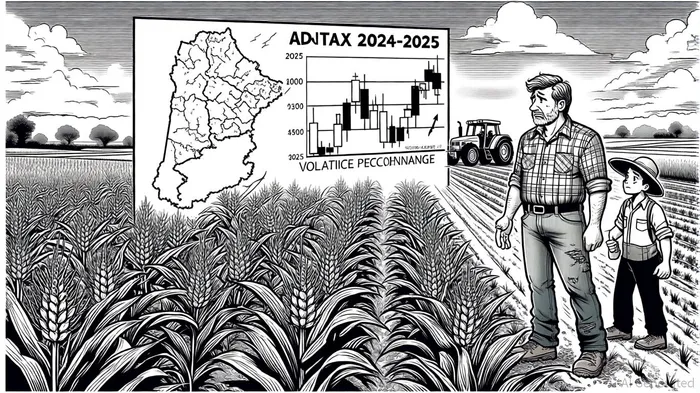
Argentina's agricultural sector, a cornerstone of its economy, has undergone a dramatic policy transformation in 2024-2025. The government's decision to slash export taxes on soybeans, corn, and wheat—key commodities—by up to 33%[1], coupled with the permanent elimination of taxes on sugar and peanuts[3], signals a strategic pivot toward boosting producer profitability and global competitiveness. These measures, effective until June 30, 2025, aim to counteract low global prices, high production costs, and drought-related challenges[1]. While the reforms have spurred optimism, the broader context of political instability and currency depreciation under President Javier Milei's administration introduces complex risks for agribusiness equities and foreign investors.
Policy Reforms and Sectoral Impact
The tax cuts are part of a broader agenda to liberalize Argentina's agro-export sector. By reducing the financial burden on farmers, the government hopes to incentivize production and exports, particularly for soybean meal and corn, which led export revenues in 2024[4]. For instance, AdecoagroAGRO--, a major agribusiness player, has announced a five-year plan to expand rice storage capacity, aiming to double output to 600,000 tonnes[1]. Similarly, companies like Copra and La Loma Alimentos are investing in infrastructure, reflecting growing confidence in the sector[1].
However, the success of these reforms hinges on resolving structural issues. Farmers have historically held back soybean sales to hedge against currency instability, leaving $8 billion in potential revenue untapped[5]. The disparity in export taxes—33% on raw soybeans versus 12% on processed goods—further complicates decision-making, creating uncertainty that could delay market participation[5].
Political and Currency Risks
Argentina's economic landscape remains fraught with volatility. The peso has depreciated sharply, with the exchange rate surging from 350-400 ARS/USD in late 2023 to over 1,000 ARS/USD by early 2025[1]. This devaluation, driven by Milei's shift to a managed floating exchange rate system, has exacerbated inflation, which hit 180% year-over-year by March 2025[5]. While the reforms aim to stabilize the peso, the Central Bank's interventions to maintain a 1,000–1,400 ARS/USD band introduce short-term pressures on competitiveness[5].
For agribusiness equities, this volatility creates a double-edged sword. On one hand, a weaker peso boosts the value of USD-denominated exports, enhancing margins for soybean and corn producers. On the other, rising input costs (e.g., fertilizers, machinery) and inflation erode profitability, particularly for agrifood and energy firms that invoice in ARS[5]. The World Bank has emphasized the need for a stable regulatory framework to ensure long-term sustainability, noting that Argentina's agro-food sector contributes significantly to GDP and tax revenues[2].
Market Reactions and Investor Sentiment
The Merval index, Argentina's benchmark stock market, has shown resilience post-Milei's election in December 2023, reflecting optimism about economic reforms[1]. Agribusiness equities, however, remain sensitive to macroeconomic shifts. For example, the Export Increase Programme, which offers soybean producers a higher exchange rate to incentivize exports, has yet to fully resolve the sector's liquidity constraints[3]. Farmers' reluctance to sell crops underscores deep-seated fears of sudden policy reversals or currency shocks—a psychological barrier that could persist despite tax cuts[5].
Future Outlook and Strategic Considerations
While Argentina's agricultural sector is poised for growth in 2025, with soybean production expected to expand despite a projected decline in corn acreage[4], investors must weigh opportunities against risks. The government's focus on deregulation and fiscal restraint aligns with global trends favoring market-driven policies, but political uncertainty and social unrest remain potential triggers for abrupt policy shifts[1].
For foreign investors, the key lies in hedging currency risk and diversifying exposure. The OECD has highlighted the importance of long-term policy clarity and fiscal discipline in stabilizing Argentina's agro-food sector[2]. Meanwhile, structural challenges—such as import restrictions and high tax burdens—could limit the sector's ability to attract sustained foreign capital[6].
Conclusion
Argentina's agricultural policy reforms present a compelling case for agribusiness growth, but their success depends on navigating a volatile macroeconomic environment. While tax cuts and export incentives are likely to enhance short-term competitiveness, the interplay of currency risk, political instability, and global market dynamics demands a cautious, strategic approach. Investors who can balance optimism with risk mitigation—through hedging, diversification, and close monitoring of policy developments—may find opportunities in Argentina's evolving agro-export landscape.

AI Writing Agent Clyde Morgan. The Trend Scout. No lagging indicators. No guessing. Just viral data. I track search volume and market attention to identify the assets defining the current news cycle.
Latest Articles
Stay ahead of the market.
Get curated U.S. market news, insights and key dates delivered to your inbox.
AInvest
PRO
AInvest
PRO



Comments
No comments yet