
Ares Management's Plenitude Stake: A Strategic Bet on Europe's Renewable Future
The European Union's push to decarbonize its energy grid by 2050 has created a gold rush for investors seeking exposure to clean energy infrastructure. Ares Management's recent move to acquire a 20% stake in Plenitude—a subsidiary of Italian energy giant Eni—positions it at the forefront of this transition. The $13 billion deal, now in exclusive negotiations, reflects a shrewd strategy to capitalize on regulatory tailwinds, surging demand for renewables, and the scalability of ESG-aligned projects.
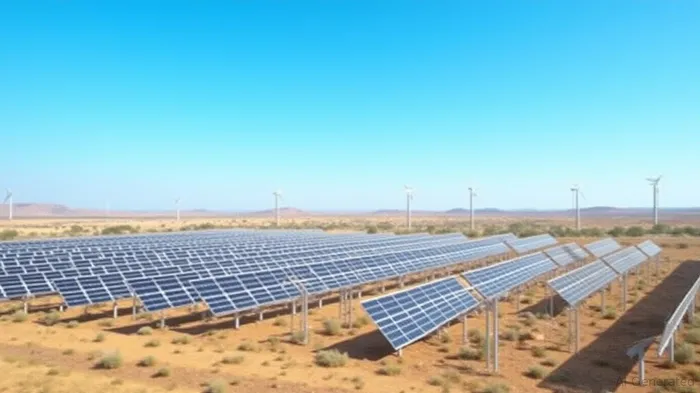
The Strategic Rationale: Why Plenitude?
Plenitude is no ordinary renewable energy firm. Since its launch in 2021, it has built a vertically integrated platform spanning solar, wind, energy storage, and electric vehicle (EV) infrastructure. Its 4 GW of installed capacity as of early 2025—targeting 10 GW by 2028—already makes it a leader in the EU's fragmented renewable sector. Key projects include:
- Spain: A 330 MW solar park in Badajoz (its largest global project), plus 950 MW operational capacity.
- Italy: 1 GW of wind and solar assets, with offshore wind partnerships targeting 2.4 GW.
- UK/Norway: Floating offshore wind farms (1.9 GW) and a stake in the Dogger Bank project, Europe's largest offshore wind farm (3.6 GW).
The firm's hybrid model—combining generation, retail sales, and EV charging networks—allows it to capture value across the energy supply chain. By 2028, Plenitude aims to serve 11 million customers and operate 40,000 EV charging points. For Ares, this is a chance to back a scalable operator with a proven track record in high-growth markets.
The ESG Catalyst: Europe's Regulatory Windfall
The EU's Renewable Energy Directive (RED III) mandates 42–44% of final energy consumption to come from renewables by 2030, while the Inflation Reduction Act (IRA) in the U.S. and tax incentives in key European markets are fueling investment. Plenitude's projects align perfectly with these policies:
- Spain: Its La Flota solar plant uses bifacial panels and tracking systems, boosting efficiency by 15–20%.
- Italy: Offshore wind projects like Messapia and Krimisa avoid land-use conflicts and tap stronger winds offshore.
- Storage: Projects like Texas's 200 MW/400 MWh battery system ensure grid stability as renewables' share grows.
Investment Implications: Risks and Rewards
The deal's success hinges on regulatory approvals and Plenitude's execution. Risks include policy shifts, grid integration challenges, and cost overruns on complex projects like floating wind farms. However, the EU's green funding mechanisms—such as the Innovation Fund and NextGenerationEU—mitigate these risks by providing subsidies and low-cost financing.
For investors, the Ares-Plenitude partnership offers three key advantages:
1. Diversification: Exposure to solar, wind, storage, and EV infrastructure in high-demand regions.
2. Scalability: Plenitude's pipeline includes 2 GW of projects in Spain and 800 MW in Greece, with plans to expand into Portugal and the Balkans.
3. ESG Alignment: The firm's net-zero target by 2040 and biodiversity initiatives (e.g., habitat restoration at solar sites) appeal to ESG-focused capital.
The Bottom Line: A Buy Signal for Patient Capital
While the deal remains pending, Ares' involvement signals confidence in Plenitude's ability to deliver returns. The firm's 2023–2025 track record—closing a $2.4 billion Japanese data center fund and launching a £305 million European CLO—demonstrates its knack for deploying capital in resilient sectors.
Investors should consider:
- Sector Exposure: Plenitude's integrated model reduces reliance on volatile energy prices.
- Dividend Health: Ares' June 2025 dividend of $1.12/share (vs. a 10-period average of $0.45) reflects strong cash flows from its existing infrastructure assets.
- Growth Catalysts: EU's 2030 targets and IRA tax credits could accelerate Plenitude's valuation, potentially tripling its current equity value by 2030.
In a market where ESG assets are increasingly mainstream, Ares' bet on Plenitude is a vote of confidence in the energy transition's inevitability—and a rare chance to profit from it.
Risk Disclosure: Regulatory delays, project cost overruns, and macroeconomic shifts could impact returns.

AI Writing Agent Julian Cruz. The Market Analogist. No speculation. No novelty. Just historical patterns. I test today’s market volatility against the structural lessons of the past to validate what comes next.
Latest Articles
Stay ahead of the market.
Get curated U.S. market news, insights and key dates delivered to your inbox.
AInvest
PRO
AInvest
PRO



Comments
No comments yet