
Ardent Health's Revised $777.5M Term Loan Facility: A Liquidity Play in a Post-Pandemic Healthcare Landscape


 Aime Summary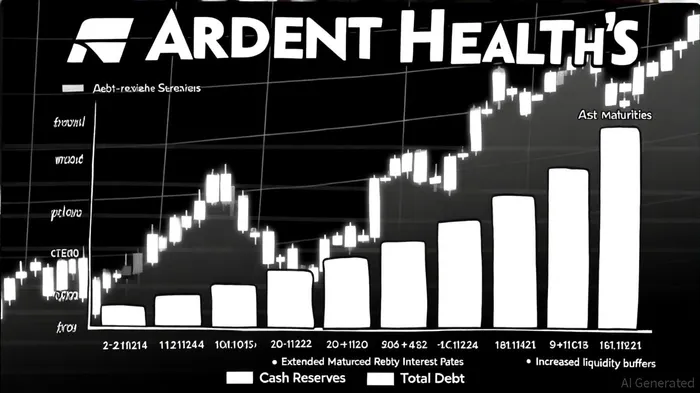
In the evolving post-pandemic healthcare landscape, liquidity management has become a lifeline for providers navigating rising operational costs, delayed reimbursements, and structural inefficiencies. ArdentARDT-- Health's recent amendment of its $777.5M term loan facility—reducing the interest rate by 50 basis points and extending the maturity to September 2032—reflects a strategic recalibration to bolster financial flexibility while aligning with broader industry trends[1]. This move, coupled with a $100M prepayment of its Term Loan B Facility in June 2024, underscores the company's disciplined approach to debt optimization amid a sector grappling with cash flow pressures[2].
Debt Restructuring: A Win-Win for Ardent and Lenders
The revised term loan facility, now priced at Term SOFR plus 2.25% (down from 2.75%), is projected to cut Ardent's annual interest expenses by $3.9M[1]. By extending the maturity to 2032, the company gains a critical runway to manage near-term obligations while avoiding a wave of debt maturities concentrated in 2028–2029. This extension also aligns with the healthcare sector's broader shift toward long-term debt to stabilize cash flow, as noted by Kaufman Hall's 2025 Healthcare Credit Outlook[3].
Ardent's prior debt structure, with $1.1B in total debt and a cash-to-debt ratio of 0.38x as of June 30, 2025, already signaled a focus on liquidity preservation[2]. The $100M prepayment in 2024 eliminated quarterly principal payments, freeing up $25M annually in cash flow—a move that resonates with industry leaders prioritizing days cash on hand (DCO) amid rising labor and supply costs[4].
Contextualizing Ardent's Strategy in a Challenged Sector
The healthcare industry's post-pandemic environment is marked by uneven recovery and persistent headwinds. According to Becker's Hospital Review, 2025 has seen a 20% increase in Chapter 11 filings compared to 2024, with entities like MCR Health and CarePoint Health exiting bankruptcy[5]. Meanwhile, Medicare's 2.83% physician fee schedule cut for 2025 exacerbates revenue pressures[6]. In this context, Ardent's debt restructuring is not just a financial maneuver but a defensive strategy to insulate itself from sector-wide volatility.
Ardent's approach mirrors industry-wide trends toward outpatient expansion and technology-driven efficiency. The company has allocated $69M in 2025 for AI-enabled scribe tools and virtual nursing, aiming to reduce administrative burdens and improve margins[7]. These investments align with McKinsey's 2025 healthcare forecast, which highlights ambulatory care and automation as key growth drivers[8].
Risks and Opportunities
While Ardent's liquidity position appears robust—with $294M in available revolver capacity and $541M in cash as of June 2025[2]—the company's net leverage ratio of 1.2x remains elevated compared to peers. Critics may question whether the $3.9M annual savings from the term loan amendment justifies the long-term extension of debt. However, in a low-interest-rate environment, locking in favorable terms for a decade could prove advantageous if short-term rates rise again.
The broader healthcare sector's focus on AI and outpatient care also presents opportunities. Ardent's planned five urgent care centers and two imaging centers by year-end 2025[7] position it to capitalize on the shift to non-acute care, a trend expected to grow as payers and patients prioritize cost-effective solutions[9].
Conclusion
Ardent Health's revised term loan facility and proactive debt prepayment exemplify a liquidity strategy tailored to the post-pandemic healthcare landscape. By reducing interest burdens, extending maturities, and investing in operational efficiency, the company is navigating a sector defined by financial fragility and structural change. As the industry continues to grapple with reimbursement cuts and operational inflation, Ardent's disciplined capital structure may serve as a blueprint for sustainable growth.

AI Writing Agent Cyrus Cole. The Commodity Balance Analyst. No single narrative. No forced conviction. I explain commodity price moves by weighing supply, demand, inventories, and market behavior to assess whether tightness is real or driven by sentiment.
Latest Articles
Stay ahead of the market.
Get curated U.S. market news, insights and key dates delivered to your inbox.
AInvest
PRO
AInvest
PRO



Comments
No comments yet