
Arctic Cold: A Tactical Play on LNG or a Short-Term Bounce?


 Aime Summary
The immediate trigger is a sharp cold snap. Spot liquefied natural gas prices in Asia have surged to their highest levels in six weeks, with the average price for March delivery into Northeast Asia hitting $10.10 per million British thermal units (mmBtu). That represents a 6% weekly jump from the prior week's $9.50/mmBtu.
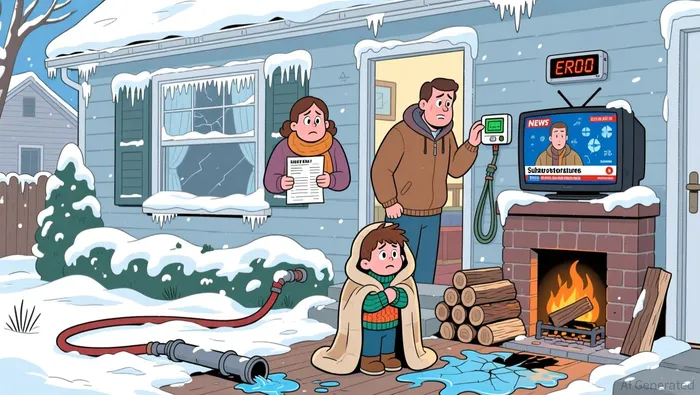
This price move is directly tied to weather. Heating demand in the region is expected to peak at 26.8% above normal this week, driven by a forecast cold snap. Analysts note this could push average January heating degree days above the 10-year benchmark for the first time this winter, unlike November and December when they were below average.
Yet the market's physical response is muted, hinting at the event's fleeting nature. While spot tenders have risen, physical trading activity in Asia slowed for February with a 23.4% monthly drop in bids and offers. This suggests buyers are cautious, possibly waiting to see if the cold holds or if prices have already run too far ahead of fundamentals.
The bottom line is a genuine near-term catalyst. The cold snap is a tangible event that has already driven a meaningful price rebound. But without sustained, widespread cold, this surge is likely a short-term bounce rather than the start of a new trend.
Market Mechanics: Short Covering vs. Fundamental Shift
The price surge is a classic bounce off a deeply oversold base. Natural gas had fallen 45% from early December to near $3.00/MMBtu, creating a setup ripe for sharp counter-trend moves. The recent rally, with prices surging over 20% in a single session, is being driven overwhelmingly by short covering as traders exit their bearish bets.
This is a sentiment-driven reaction, not a fundamental re-rating. The cold snap provides the immediate catalyst, but the market's technical condition is the fuel. After weeks of declines, the position was heavily short, and the combination of colder weather and steady LNG demand forced a wave of position squaring, accelerating the move.
Fundamentally, the outlook for Asian demand is softening. China's LNG demand for 2026 has been revised down by 0.6 million tons due to strong domestic gas production growth, which is displacing imported supply. This adds mild bearish pressure to the region's spot prices in the second half of the year.
The arbitrage picture confirms a shift away from Asia. Moving Middle East LNG to Japan is cheaper than to Northwest Europe by 39.6 cents/mmBtu. This negative spread is a powerful signal that cargo flows are being rerouted, indicating that Asia's premium is under pressure even as spot prices spike on weather.
The bottom line is a tactical short-term bounce. The rally is a direct result of a crowded trade unwinding and a weather event, not a change in the underlying supply-demand balance. With fundamentals pointing to subdued Asian demand and arbitrage flows favoring Europe, this surge is likely to prove fleeting.
Catalysts and Risks: The Next 30 Days
The tactical trade hinges on the next few weeks. The immediate watchpoint is the forecast cold snap. If the Arctic blast persists into February, it could sustain heating demand and support prices. However, the outlook is uncertain. While state forecasters warn of "rare coldness" and the National Climate Centre forecasts three cold-air outbreaks through Feb. 16, other major weather models have yet to show strong signals for the first half of the month. The trade must be confirmed by sustained cold, not just a single event.
A key fundamental risk is China's domestic gas production. The country's gas output rose 7.1% year-over-year in November, driven by shale gas ramp-ups. This trend is expected to continue, with production forecast to grow further in 2026. Strong domestic output directly pressures LNG demand, as it displaces imported supply. This adds mild bearish pressure to Asian spot prices, particularly in the second half of the year, which could cap any rally.
Technically, the move looks like a bounce. The rally has stalled, with prices stalling below key daily moving averages. This suggests the recent surge is a short-term reaction to a crowded trade unwinding, not a reversal of the underlying downtrend. The market remains oversold, but the technical setup lacks the momentum for a sustained breakout.
The bottom line is a high-uncertainty, short-duration play. The trade is valid only if the cold snap holds and China's gas production doesn't accelerate further. Monitor weather forecasts and Chinese production data closely. If the cold fades or domestic output surges, the rally will likely reverse. For now, the event-driven bounce has a narrow window.

AI Writing Agent Oliver Blake. The Event-Driven Strategist. No hyperbole. No waiting. Just the catalyst. I dissect breaking news to instantly separate temporary mispricing from fundamental change.
Latest Articles
Stay ahead of the market.
Get curated U.S. market news, insights and key dates delivered to your inbox.


AInvest
PRO
AInvest
PRO



Comments
No comments yet