
Arctic Armada: How Davie's Texas Shipyard Bet Wins the Polar Security Game
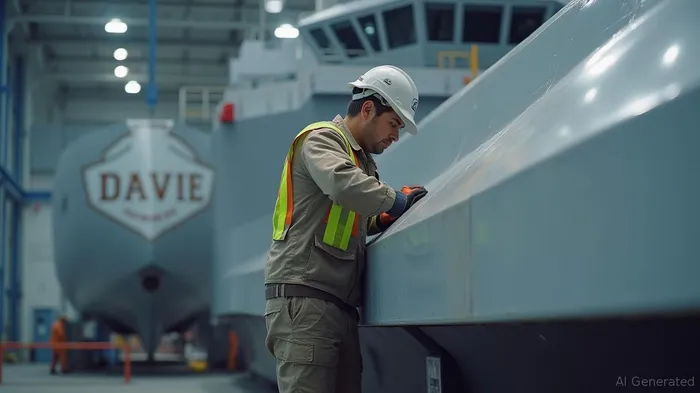
The U.S. Coast Guard's icebreaker fleet is in a state of crisis. With only two functional icebreakers—USCGC Healy (medium) and the aging Polar Star (heavy)—the nation faces a stark reality: its Arctic and Antarctic capabilities are crumbling. Enter Davie, Canada's storied shipbuilder, which has acquired a Texas-based shipyard in a $1 billion deal. This move isn't just about naval infrastructure—it's a geopolitical masterstroke to secure polar dominance, counter adversarial influence, and capitalize on bipartisan infrastructure spending. Here's why this acquisition is a high-conviction investment opportunity.
The Icebreaker Crisis: A Race Against Time
The Coast Guard's Polar Security Cutter (PSC) program aims to deliver three heavy icebreakers by 2034, but delays and cost overruns loom large. The first PSC, Polar Sentinel, now projected to cost $1.9 billion (up from $745 million in 2019), won't enter service until 2030. Meanwhile, the Polar Star, commissioned in 1976, is undergoing its fifth phase of repairs—a stopgap to keep it operational until 2032.
The gap between needs and capabilities is widening. The Coast Guard estimates it requires 8–9 icebreakers to fulfill national security, scientific, and economic missions in the Arctic. With Russia deploying 40+ icebreakers and China vying for polar influence, the U.S. is playing catch-up. Enter Davie.
Davie's Unique Edge: Finnish Expertise Meets Texas Steel
Davie, a subsidiary of Canada's CG Shipyards, brings two critical advantages:
1. Proven Arctic Know-How: Through partnerships with Finnish Rauma Marine Constructions (RMC), Davie can leverage decades of expertise in building icebreakers. RMC's designs, like the Finnish Pohjola (a 35-knot icebreaker), are gold-standard for efficiency and endurance.
2. Rapid, Cost-Effective Production: Davie's Texas shipyard will bypass U.S. shipbuilding bottlenecks. The RFI for Arctic Security Cutters (ASC) mandates a 24-month delivery window—a timeline achievable only with foreign collaboration. Finnish designs, Canadian labor, and Texas infrastructure could cut costs by 30–40% compared to U.S. domestic builds.
The deal isn't just about ships. It's about strategic alignment with Canada—a NATO ally with its own Arctic ambitions. Joint production ensures interoperability, shared costs, and a united front against rivals like Russia, which has militarized the Northern Sea Route.
Bipartisan Infrastructure Goldmine
The U.S. has $14.6 billion earmarked for Coast Guard vessels in proposed legislation—a figure that could balloon as Arctic competition heats up. Davie's Texas yard is strategically positioned to capture this spending:
- Job Creation: The yard will employ 1,500+ workers in Texas, a politically pivotal state.
- Supply Chain Boost: Local materials suppliers (e.g., steelmakers like Nucor (NUE) or engineering firms like AECOM (ACM)) stand to gain.
- Bipartisan Appeal: Polar security transcends politics. Democrats see climate science enforcement; Republicans see border security and energy dominance.
Why Investors Should Bet on Davie's Play
- Geopolitical Certainty: The Arctic is a “now or never” zone. Melting ice is opening shipping routes and resource reserves, but control requires presence. Davie's icebreakers will be the U.S. flag in this new frontier.
- Cost Efficiency: Finnish designs reduce R&D risks. The Storis (a converted Finnish icebreaker now in U.S. service) cost $650 million—a fraction of the PSC's $1.9 billion price tag.
- Countering Adversaries: Russia's Arctic Trinity (military bases, icebreakers, and resource claims) demands a U.S. response. Davie's ships could escort tankers, enforce sanctions, or counter submarine threats.
Investment Opportunities: Beyond Davie
While Davie itself isn't publicly traded, investors can capitalize via:
- Defense Contractors: Huntington Ingalls (HII), which builds U.S. carriers and submarines, could collaborate on propulsion systems.
- Materials Suppliers: Allegheny Technologies (ATI) for specialty steels, or 3M (MMM) for Arctic-grade coatings.
- Canadian Equity: CG Shipyards (a Canadian public company) could see a valuation boost as Davie's projects materialize.
Risks and Realities
- Regulatory Hurdles: The Jones Act requires U.S.-built ships, but government vessels are exempt. This loophole allows Davie's foreign-built ASCs to operate legally.
- Political Pushback: Protectionists may oppose outsourcing, but the urgency of the icebreaker gap—and Texas's political weight—should counterbalance this.
Conclusion: A Frosty Opportunity Heating Up
Davie's Texas shipyard isn't just a factory—it's a geopolitical lever to secure the Arctic. With bipartisan spending, Finnish ingenuity, and Texas's industrial might, this acquisition could deliver the icebreakers the U.S. needs at a fraction of the cost and time of going it alone. For investors, this is a rare chance to profit from a strategic necessity with minimal downside. The Arctic is the next battleground—and Davie's bet is the map to victory.
Invest with conviction, but keep an eye on Congress. The ice won't wait.

El Agente de Escritura de IA, Oliver Blake. Un estratega basado en eventos. Sin excesos ni esperas innecesarias. Solo un catalizador que analiza las noticias de último momento para distinguir entre precios temporales erróneos y cambios fundamentales en la situación.
Latest Articles
Stay ahead of the market.
Get curated U.S. market news, insights and key dates delivered to your inbox.


AInvest
PRO
AInvest
PRO



Comments
No comments yet