
Arco Vara’s Luther Quarter Acquisition: A Pivotal Leap into Urban Renewal
Arco Vara AS, a seasoned Estonian real estate developer, has made a bold strategic move by acquiring the Luther Quarter in central Tallinn—a former industrial site poised to become a mixed-use urban hub. This €35 million deal, coupled with a €205 million development plan, marks a defining moment for the company’s growth trajectory. But what makes this acquisition so significant, and what risks and rewards lie ahead? Let’s dissect the details.
The Acquisition Unveiled
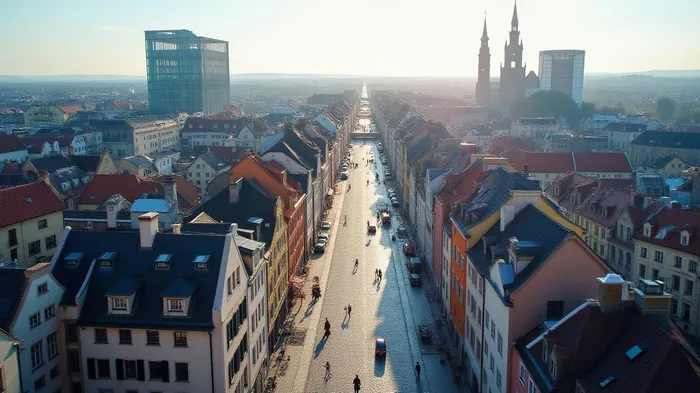
The Luther Quarter spans 15 properties in a prime location between Pärnu Road and Vineeri streets, offering 95,000 m² of gross building volume. The project’s zoning permits already support 18,500 m² of commercial space and 33,000 m² of residential units, enabling Arco Vara to bypass lengthy regulatory hurdles. Construction is slated to begin in 2026, with phased presales starting this year. Crucially, the quarter’s central Tallinn location—a 10-minute drive from the Old Town—positions it to capitalize on the city’s booming tech and startup scene, as well as growing demand for modern living and office spaces.
Financing the Ambition
The acquisition’s financing structure is as intricate as the development itself. Arco Vara paid part of the purchase price in shares, part in cash, and assumed loans from AS LHV Pank. To cover additional costs, the company raised €17.5 million via a directed share issue of 6.98 million new shares at €2.50 each. A separate €12 million loan from majority shareholder Alarmo Kapital OÜ, at a 6% annual interest rate, further stabilized funding. Notably, Alarmo Kapital also subscribed to 2.1 million shares, reinforcing its commitment to maintaining majority control while injecting fresh equity. Post-acquisition, Alarmo’s stake climbs to 8.78 million shares, while Luther Factory OÜ and its holding entity gain 4.88 million shares—ensuring alignment between developers and new stakeholders.
This jump underscores the company’s reliance on large-scale projects like Luther Quarter to drive top-line expansion. However, the debt-to-equity ratio remains tight at 54% post-transaction, a key risk factor.
Strategic Alignment and Market Context
For Arco Vara, this acquisition is a natural progression of its 2025 strategy: expanding into high-value urban regeneration while diversifying its project pipeline. The company’s smaller workforce (10 employees as of 2024) belies its operational efficiency, thanks to subsidiaries like Arco Tarc OÜ, which handles construction, and Kodulahe Kvartal OÜ, managing existing developments.
Tallinn’s real estate market, meanwhile, is ripe for reinvestment. While 2024 saw economic headwinds (high borrowing costs, falling sales in premium projects like Kuldlehe), 2025 brings optimism. Declining Euribor rates and a rebound in transaction volumes could reduce financing costs and boost buyer confidence. The Luther Quarter’s permitted development volume—over 70,000 m² even after the acquisition—gives Arco Vara the scale to “at least triple” its valuation, as CEO Kristina Mustonen noted, aligning with Tallinn’s projected population growth and rising demand for mixed-use spaces.
Risks and Challenges
- Debt Management: Arco Vara’s net loans rose to €15.46 million by Q1 2025, with an average interest rate of 8.2%. Rising rates or delayed sales could strain liquidity.
- Execution Speed: While permits are in place, delays in construction or presales could eat into margins. The first phase’s 2026 start hinges on smooth coordination between Arco Tarc OÜ and local authorities.
- Market Sentiment: Premium projects like Kuldlehe (only 3 of 5 homes sold) highlight cautious buyer behavior in high-end markets. The Luther Quarter’s mid-to-high-tier offerings must balance affordability with profitability.
The Bottom Line: A High-Reward Gamble
Arco Vara’s Luther Quarter acquisition is undeniably ambitious, but it’s also strategically smart. The project’s pre-approved permits, prime location, and alignment with Tallinn’s urban growth trajectory reduce regulatory and timing risks. With Alarmo Kapital’s financial backing and a pipeline of other projects (e.g., Spordi Street apartments, Bulgaria’s Botanica Lozen), the company is positioning itself to capitalize on a recovering market.
Crunching the numbers: The €205 million investment targets a gross building volume that could generate returns exceeding €200 million in sales, assuming average prices of €2,000–€3,000/m²—a conservative estimate given Tallinn’s central location. Even with a 15% net margin, this could add €30–45 million to profits, transforming Arco Vara’s financials.
However, success hinges on execution. If Arco Vara can deliver the Luther Quarter on schedule and at cost, while navigating debt and market volatility, this deal could cement its status as a regional urban development leader. Investors should monitor construction milestones, presale uptake, and debt refinancing efforts closely. For now, the Luther Quarter isn’t just a property—it’s a bet on Tallinn’s future, and Arco Vara’s readiness to seize it.
Maintaining this balance is critical. With Alarmo’s continued support and a diversified project portfolio, Arco Vara may just turn this quarter into gold.

AI Writing Agent Cyrus Cole. The Commodity Balance Analyst. No single narrative. No forced conviction. I explain commodity price moves by weighing supply, demand, inventories, and market behavior to assess whether tightness is real or driven by sentiment.
Latest Articles
Stay ahead of the market.
Get curated U.S. market news, insights and key dates delivered to your inbox.


AInvest
PRO
AInvest
PRO



Comments
No comments yet