
Archer Aviation Soars on FAA Milestones: A First Mover in the $1.5 Trillion Urban Air Mobility Revolution
Archer Aviation (NASDAQ: ACHR) has emerged as a poster child for the nascent urban air mobility (UAM) sector, its stock surging 59% over the past month amid a cascade of FAA certification milestones. These achievements—culminating in February’s Part 141 pilot training certification—position the company as a leader in the race to commercialize electric vertical takeoff and landing (eVTOL) aircraft. For investors, Archer’s progress is not merely about regulatory boxes checked; it’s about securing a stake in a $1.5 trillion market poised to disrupt ground transportation, real estate, and logistics. But is this rally sustainable, or is it a premature bet on an unproven industry?
Regulatory Validation: The Final Frontier for eVTOLs
The FAA’s certification process is the ultimate gatekeeper for UAM operators. Archer’s recent achievements—securing three of four required operational certifications (Part 135, 141, and 145)—are not incremental wins but foundational steps toward commercialization. 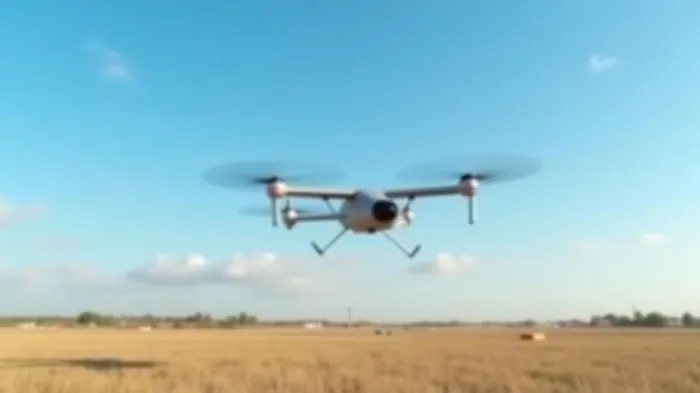 . The remaining hurdle, Part 142 certification for flight simulators, is expected soon, leaving only the FAA Type Certification for its Midnight aircraft as the final barrier. Archer’s CEO, Adam Goldstein, has stated the company aims to complete this by late 2025, enabling revenue-generating flights by early 2026—a timeline that, if met, would make Archer the first eVTOL operator in the U.S.
The significance of these milestones cannot be overstated. Competitors like Joby Aviation (JOBY) and Lilium remain years behind in certification timelines. Archer’s head start is amplified by its UAE partnerships: the first hybrid heliport in Abu Dhabi, approved in April 2025, and contracts with Emirates and Stellantis for manufacturing and distribution. These moves bypass U.S. regulatory delays, allowing Archer to generate revenue in 2025 through its “Launch Edition” program, which has already secured two major customers.
The Financial Case: Cash, Contracts, and Scalability
Archer’s financial health reinforces its ability to capitalize on this momentum. With $1.03 billion in cash as of March 2025, the company has a runway to scale production from two Midnight aircraft per month in 2025 to 100+ monthly by 2027, should certifications hold. Its Q1 2025 net loss narrowed to $93.4 million—a 20% improvement year-over-year—while liquidity reserves rose to $1 billion after a $289 million capital raise. . This stability contrasts with earlier years of cash burn, signaling maturation.
The valuation debate centers on Archer’s $2.3 billion market cap versus its projected revenue. At current production targets, Archer could generate $18 million in revenue in 2025, scaling to $1 billion by 2028 if it captures just 1% of the global UAM market. Analysts at Needham and HC Wainwright argue the stock is undervalued, with price targets of $13 and $12.50, respectively. However, skeptics note that eVTOL economics remain unproven: operating costs, battery life, and passenger demand are all risks.
Market Disruption: Why Urban Air Mobility is Inevitable
The UAM market is not a speculative dream. With cities like Los Angeles, Tokyo, and Dubai already allocating vertiports, the infrastructure is being built. Archer’s Midnight, with its 150 mph speed and four-passenger capacity, could slash commute times by hours. Consider this: a 90-minute drive from Manhattan to JFK becomes a 20-minute flight. The FAA estimates 2,000 eVTOL aircraft could be flying in U.S. skies by 2030—a figure that underestimates global demand.
Archer’s partnerships amplify its moat. Stellantis’s manufacturing expertise and Palantir’s AI-driven supply chain tools aim to cut production costs by 30%, while its defense diversification—via a $200B+ military market play—buffers against civilian adoption delays. This dual strategy could make Archer a rare “winner-takes-most” player in a sector prone to fragmentation.
Risks and Reality Checks
The stock’s surge is not without risks. Regulatory setbacks, such as delays in Type Certification or Part 142 approval, could push commercialization into 2027, extending cash burn. Competitors like Joby, backed by Toyota, and Lilium, with Rolls-Royce partnerships, are also closing in. On the operational front, scaling production from 10 units in 2025 to 1,200 by 2027 requires flawless execution—a challenge even for seasoned manufacturers.
Yet, Archer’s current valuation is a bet on execution, not perfection. At a price-to-sales multiple of 2.3x (assuming $1 billion 2028 revenue), the stock trades at a discount to peers like Joby (4.5x) and Lilium (6.1x). The UAE’s first-mover contracts and FAA’s progressive engagement suggest Archer’s risks are asymmetric: upside is massive, while downside is capped by its $1 billion cash pile.
Conclusion: Buy Now, or Wait for a Dip?
Archer Aviation is at an inflection point. Its FAA milestones are not just regulatory checkboxes—they’re proof of concept that eVTOL commercialization is feasible. With production ramping, partnerships solidifying, and a valuation that still reflects a “high-risk” bet, this is a stock to own now. The urban air mobility revolution is coming; Archer’s early leadership and tangible progress make it the best seat in the house.
.
Action to take: Consider initiating a position in Archer AviationACHR-- (ACHR) now, with a stop-loss below $8.50. The next catalyst—Midnight Type Certification by late 2025—could propel the stock to $12–$15, unlocking the skies for investors.

Stay ahead of the market.
Get curated U.S. market news, insights and key dates delivered to your inbox.
AInvest
PRO
AInvest
PRO



Comments
No comments yet