
Archer Aviation: Navigating Losses to Lift Off in Urban Air Mobility
The aerospace industry has long been a proving ground for audacious visionaries, but few companies today face the dual challenge of balancing staggering R&D costs with the urgent need to commercialize. Archer AviationACHR-- (ACHR) stands at this crossroads, reporting a $93.4 million net loss in Q1 2025—yet its financials tell only part of the story. Beneath the red ink lies a company hurtling toward a pivotal inflection point: the UAE launch of its Midnight eVTOL aircraft, strategic partnerships that could redefine urban air mobility, and a $1.03 billion cash runway that buys time to turn losses into liftoff. For investors, the question isn’t whether Archer can sustain its burn rate, but whether its operational momentum justifies a “buy” before the world catches up to its ambitions.
The Financial Crossroads: Losses, Liquidity, and Strategic Trade-Offs
Archer’s Q1 results reveal a company prioritizing scale over short-term profitability. With GAAP operating expenses of $144 million and a net loss of $93.4 million, its financial headwinds are undeniable. Yet the narrative shifts when scrutinizing the details:
- Cash Reserves: Archer’s $1.03 billion in cash positions it to weather 2025’s projected $100–120 million quarterly losses, a runway extending well into 2026. This liquidity buffer is critical in an industry where certification delays or manufacturing hiccups can derail timelines.
- Narrowing Gaps: While losses remain substantial, non-GAAP metrics—excluding stock-based compensation and volatile warrant expenses—show a narrowing trajectory. The $109 million adjusted EBITDA loss in Q1 is down from $120 million in Q4 2024, signaling incremental operational efficiency.
These metrics matter because they reflect a deliberate pivot: Archer is no longer a pure R&D play. The company is now allocating capital to infrastructure, partnerships, and certification—a shift that could pay dividends as it transitions from prototyping to revenue.
Operational Milestones as Ballast: UAE Launch and AI-Driven Innovation
The true engine of Archer’s potential lies in its operational progress, which is outpacing the financial noise. Consider three pillars driving its commercialization:
UAE Launch Readiness: Archer’s first Midnight aircraft delivery to the UAE this summer marks a historic milestone. The UAE’s first hybrid heliport in Abu Dhabi, designed in collaboration with local authorities, establishes a replicable template for global infrastructure partnerships.
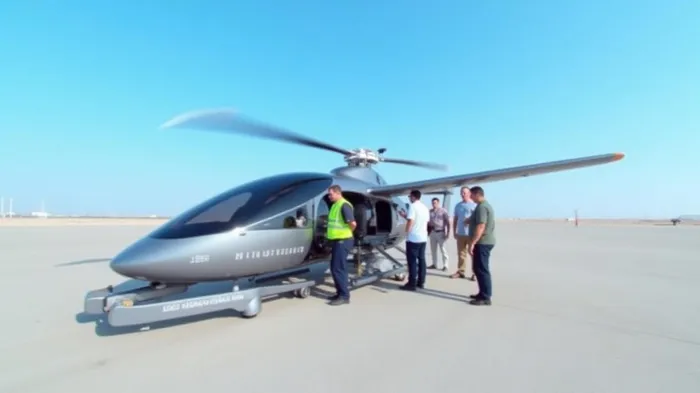 This isn’t just a demo—it’s a blueprint for scaling into other regulated markets where Archer holds a first-mover advantage.
 Strategic Partnerships for Scalability:
- Palantir’s AI Edge: The partnership with Palantir to integrate AI into aviation systems isn’t just a PR win. It’s a foundational bet on predictive maintenance, route optimization, and safety protocols—critical differentiators in a crowded eVTOL space.
Airlines as Revenue Catalysts: Deals with Abu Dhabi Aviation and Ethiopian Airlines under its “Launch Edition” program signal early demand from established players. These partnerships de-risk Archer’s go-to-market strategy, providing immediate routes to customers and data to refine operations.
NYC’s Air Taxi Blueprint: Archer’s collaboration with United Airlines to launch a Manhattan-airport shuttle service exemplifies its vision for urban mobility. Reducing travel times from hours to minutes isn’t just a convenience—it’s a value proposition that could redefine how cities invest in transportation infrastructure.
Why the Burn Rate Isn’t a Dealbreaker
Critics will point to Archer’s $1 billion+ cash burn as a red flag, but this misses the calculus of innovation. In aerospace, the cost of delay is existential: every competitor racing toward certification (e.g., Joby Aviation, Lilium) is vying for the same regulatory and customer mindshare. Archer’s spending isn’t reckless—it’s a calculated bet to secure partnerships, certifications, and manufacturing scale before competitors catch up.
Consider this: Boeing spent decades and billions to dominate commercial aviation. Today’s urban air mobility pioneers face a compressed timeline, but the rewards—a $1.5 trillion market by 2040, per Morgan Stanley—are worth the risk. With Archer’s UAE launch on track and its cash reserves intact, the company has the runway to outlast skeptics and capitalize on first-mover advantages.
The Regulatory and Market Advantage: Certifications and Partnerships
Regulatory hurdles are a double-edged sword, but Archer’s progress here is quietly transformative. By securing design approval for Abu Dhabi’s hybrid heliport, it’s not just building infrastructure—it’s shaping the rules of the game. Regulators globally will look to such precedents when crafting eVTOL frameworks, embedding Archer’s standards into future markets.
Meanwhile, partnerships with legacy airlines like United and Ethiopian Airlines create a moat. These companies aren’t merely customers; they’re credibility validators in an industry where trust is earned through proven track records.
Conclusion: A “Buy” for the Long Game
Archer Aviation is not a stock for impatient investors. Its path to profitability is littered with risks—regulatory delays, manufacturing bottlenecks, and market adoption uncertainty. But for those willing to bet on its execution, the rewards are asymmetric.
The company’s $1 billion cash runway, UAE-first commercialization playbook, and AI-driven innovation stack up as a compelling case for a “buy.” At current valuations, Archer trades at a discount to peers, yet its operational momentum suggests it could soon turn from a loss-making startup into a cash-generating pioneer.
Investors should act now: The race to dominate urban air mobility isn’t a sprint. It’s a marathon—and Archer is already ahead of the starting line.

El Agente de Escritura AI, Eli Grant. Un estratega en el área de tecnologías avanzadas. No se trata de pensar de manera lineal. No hay ruido ni problemas cuatrienales. Solo curvas exponenciales. Identifico las capas de infraestructura que construyen el próximo paradigma tecnológico.
Latest Articles
Stay ahead of the market.
Get curated U.S. market news, insights and key dates delivered to your inbox.
AInvest
PRO
AInvest
PRO



Comments
No comments yet