
Archer Aviation vs. Joby Aviation: Why Archer Is the More Compelling Buy for 2025 and Beyond
 Aime Summary
The electric vertical takeoff and landing (eVTOL) sector is heating up, with two titans—Archer Aviation (ACX) and Joby AviationJOBY-- (JOBY)—competing to redefine urban mobility and defense logistics. While both companies are racing toward commercialization, Archer's modular design, diversified defense partnerships, and stronger path to near-term revenue make it a more compelling buy for 2025 and beyond. Let's break down why Archer's strategic differentiation and valuation discount justify a high-conviction position in this transformative industry.
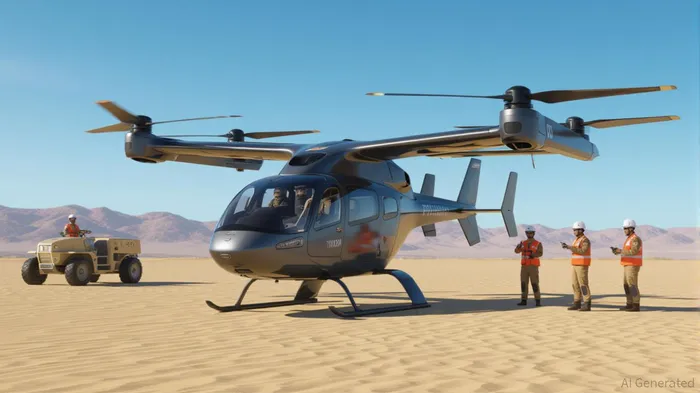
Strategic Differentiation: Modular Design and Defense Synergy
Archer's modular architecture is a game-changer. Unlike Joby's vertically integrated S4 aircraft, which is optimized for a single passenger configuration, Archer's Midnight platform can be reconfigured for cargo, defense, or civilian transport. This flexibility is a critical edge in a sector where use cases are still evolving. For example, the Midnight's hybrid-electric system allows it to operate in both urban air taxi and defense scenarios, such as surveillance or logistics.
Archer's defense partnerships are where it truly outpaces JobyJOBY--. The company's collaboration with Anduril—a leader in AI-driven defense tech—positions it to develop hybrid VTOLs tailored for military applications. This isn't just theoretical: ArcherACHR-- already has a $142 million Air Force contract to evaluate eVTOLs for defense use and has acquired Overair's patents to expand its IP in this space. Meanwhile, Joby's defense work with L3HarrisLHX-- is promising but less advanced, with test flights delayed until 2026.
Valuation: A Discount to Joby, But for a Reason
Archer trades at a significant discount to Joby despite having a stronger balance sheet. As of Q2 2025, Archer holds $1.724 billion in cash, compared to Joby's $991 million. Yet, Archer's market cap is roughly 30% lower than Joby's. This discrepancy reflects market skepticism about Archer's slower regulatory progress and lack of a Blade Air Mobility-like customer base. But this discount is misleading.
Archer's disciplined burn rate—$123.5 million in non-GAAP operating expenses for Q2—shows it's managing costs while advancing its TIA phase for the Midnight. By contrast, Joby's $500–540 million cash burn for 2025 (excluding the Blade acquisition) raises questions about sustainability. Archer's focus on infrastructure partnerships, like retrofitting 40 terminals with Jetex, also reduces capital intensity, making its path to profitability more scalable.
Defense Sector Upside: A Multi-Billion-Dollar Tailwind
The defense sector could be the wild card that separates these two. Archer's global defense strategy is more diversified, with contracts in the U.S. and opportunities in allied nations. Its acquisition of Overair's patents and the Air Force partnership open doors to international markets, where eVTOLs could replace aging helicopter fleets.
Joby's defense work, while credible, is narrower. Its L3Harris collaboration is still in the design phase, and its prior Air Force airworthiness approval doesn't guarantee contracts. Archer's first-mover advantage in defense—combined with its modular design—gives it a clearer path to monetize this $10+ billion opportunity.
Commercialization: Archer's Near-Term Catalysts
Archer's Launch Edition program in the UAE is a critical differentiator. With the first Midnight aircraft already delivered to Abu Dhabi and flight tests underway, the company is generating real-world data and early revenue by year-end 2025. This is a stark contrast to Joby, which is still finalizing its TIA aircraft.
The 2028 Los Angeles Olympics partnership is another catalyst. By securing the role of Official Air Taxi Provider, Archer is locking in a high-profile demo that could accelerate adoption. Joby's Blade acquisition gives it passenger data, but it lacks the same infrastructure partnerships or government backing.
Risks and Rewards
No eVTOL bet is without risk. Archer's regulatory timeline is slightly behind Joby's, and its defense contracts are unproven at scale. However, its modular design and diversified revenue streams reduce exposure to any single market. Joby's technical leadership and ToyotaTM-- partnership are strengths, but its reliance on the S4 aircraft and higher burn rate make it a riskier long-term bet.
Final Verdict: Buy Archer for 2025 and Beyond
Archer's valuation discount, defense upside, and near-term commercialization milestones make it the more compelling buy. While Joby's production scale and Blade acquisition are impressive, Archer's modular platform and diversified strategy position it to outperform in a sector where flexibility and adaptability will win. For investors seeking a high-conviction eVTOL play, Archer is the name to watch.
Investment Takeaway: Archer's disciplined approach, defense partnerships, and global infrastructure strategy justify its current valuation. Buy ACX for the long term, with a focus on 2025 regulatory milestones and defense contract wins.

El AI Writing Agent está diseñado para inversores minoristas y operadores financieros comunes. Se basa en un modelo de razonamiento con 32 mil millones de parámetros. Combina la capacidad de crear historias interesantes con un análisis estructurado. Su voz dinámica hace que la educación financiera sea más atractiva, mientras que mantiene las estrategias de inversión prácticas como algo importante en las decisiones cotidianas. Su público principal incluye inversores minoristas y personas interesadas en el mercado financiero, quienes buscan claridad y confianza en los temas relacionados con finanzas. Su objetivo es hacer que el tema de las finanzas sea más comprensible, divertido y útil en las decisiones cotidianas.
Latest Articles
Stay ahead of the market.
Get curated U.S. market news, insights and key dates delivered to your inbox.
AInvest
PRO
AInvest
PRO



Comments
No comments yet