
Arby's Closures Signal Fast Food Industry Struggles: What Investors Should Know
 Aime Summary
- , with .
- The closures are attributed to a and ongoing challenges like rising costs and reduced consumer demand.
- Arby’s ranks third in the U.S. sandwich market but has been outperformed by Subway and Panera in 2024.
- The closures are occurring in key states like California, Florida, Tennessee, and New Jersey. According to reports, the trend reflects broader industry pressures.
- The trend reflects broader industry pressures, with other chains like Wendy’s also closing locations.
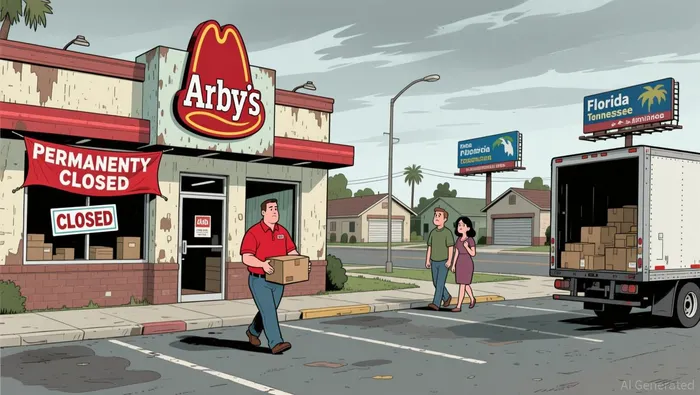
The slow but steady shuttering of Arby’s locations has quietly reshaped the fast food landscape. While the brand still commands a strong third-place market share in sandwich sales, its struggles are emblematic of a broader industry reckoning. The 6.3% sales decline in 2024 highlights the growing pains of a sector facing inflation, shifting consumer habits, and margin compression. For investors, these closures raise questions about Arby’s long-term viability and the sustainability of its parent company, .
Is Arby's Closures A Sign of a Larger Fast Food Industry Problem?
The 14 store closures in 2025 alone are not an isolated incident. Arby’s parent company, Inspire Brands, , . The closures are occurring in strategic locations across the country—including high-traffic states like California and Florida—suggesting a deeper re-evaluation of the brand’s footprint.
Industry reports point to rising costs and reduced consumer spending as key drivers of these closures. With many Americans cutting back on dining out, fast food chains like Arby’s are being forced to trim underperforming locations. The closures reflect a broader trend of cost rationalization and operational streamlining. While Inspire Brands has not officially announced a mass closure strategy, the pattern is clear: they are consolidating their real estate portfolio and focusing resources on high-performing locations.
Why Are Fast Food Chains Like Arby's Closing Locations in 2025?
The closures are part of a nationwide effort by Arby’s to streamline its operations and reduce overhead. , the decision to close underperforming stores is a calculated move to improve margins and focus on profitable locations.
The trend is not unique to Arby’s—Wendy’s and Denny’s have also reported closures in 2025, signaling a broader shift in the fast food industry. These closures are a response to economic pressures, including rising labor and supply costs, as well as a decline in discretionary spending among consumers.
For investors, this is a red flag. While Arby’s still holds a strong position in the sandwich market, the closures suggest that the company is struggling to maintain profitability. This trend could affect Inspire Brands as a whole, which is one of the largest restaurant groups in the U.S. If Arby’s continues to underperform, it could impact the overall financial health of the parent company, affecting everything from earnings to stock performance.
What to Watch for Arby's and the Fast Food Sector in 2026
As we head into 2026, investors should keep an eye on Arby’s strategy for growth and profitability. Will the closures lead to improved margins and stronger store-level performance, or will the brand struggle to regain its hold in the market?
The broader fast food industry is also expected to see continued consolidation and adaptation. Many chains are exploring multi-brand ownership models, which could help mitigate risk and improve efficiency. This shift toward platform-building and resource-sharing is likely to shape the future of franchising.
Arby’s closures are not just about the brand—they’re a symptom of a larger industry-wide shift. As the fast food sector continues to evolve, investors must stay informed about these developments and how they might impact their portfolios. The 2025 closures are a signal of what’s to come: a more competitive, cost-conscious, and data-driven fast food landscape.

Stay ahead of the market.
Get curated U.S. market news, insights and key dates delivered to your inbox.
AInvest
PRO
AInvest
PRO



Comments
No comments yet