
ARBITRUM Fuels Agentic Commerce as Tempo Mainnet Launches Machine Payments Protocol
 Aime Summary
Tempo's mainnet is built to support agentic commerce and machine-to-machine (M2M) payments via the Machine Payments Protocol (MPP) according to Bankless.
The protocol allows AI agents to perform transactions autonomously, such as paying for content or services, reducing human intervention.
MPP is open-sourced and aims to be more flexible and general than other standards like X402, with early adoption by companies like VisaV-- according to Bankless.
The Tempo blockchain is designed to create a world where AI agents can seamlessly interact with the web by handling payments autonomously according to Bankless. The Machine Payments Protocol (MPP) acts as a payment method- and currency-agnostic interface for these transactions. This protocol is expected to streamline how agents operate online by removing the friction typically associated with payment processes according to Bankless.
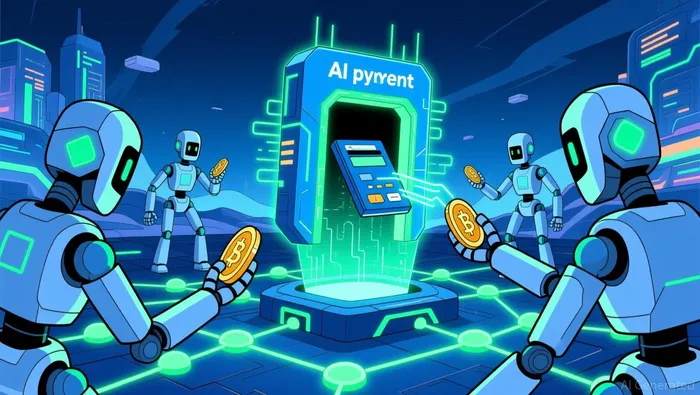
Tempo's launch aligns with the broader trend of AI adoption, where users and developers rely increasingly on agents to handle complex tasks. The focus on MPP includes support for stablecoins, cross-chain compatibility, and efficient validation with 11 active validators. Looking ahead, Tempo plans to expand its validator set and explore decentralized discovery mechanisms for services.
How Does MPP Differ From Existing Standards Like X402?
Machine Payments Protocol (MPP) is designed to be more general and flexible than other standards like X402 according to Bankless. It supports multiple payment methods and is not tied to a single payment mechanism, making it adaptable for a variety of use cases. The protocol is being submitted to IETF to become the standard for 402, signaling its potential to gain broader acceptance according to Bankless.
Tempo's approach emphasizes interoperability and open-source development, allowing other developers and standards to integrate MPP easily according to Bankless. This is a departure from closed or proprietary payment systems and aims to promote a more open internet economy.
What Are the Potential Economic Implications of Agentic Commerce?
The rise of agentic commerce could lead to a shift in how services and content are monetized according to Bankless. Instead of relying on ad-based revenue models, Tempo envisions a system where users and services are directly compensated through autonomous transactions. This could lead to more equitable and transparent economic models for creators and service providers according to Bankless.
AI agents could handle tasks like browsing, purchasing content, or even negotiating prices on behalf of users, reducing the need for manual intervention. This has the potential to redefine how digital services are consumed and paid for, especially in an increasingly AI-driven internet.
What Limitations or Risks Come With Agentic Commerce?
While Tempo's MPP is promising, it faces challenges such as adoption and scalability. The success of agentic commerce depends on widespread implementation and acceptance of the protocol by developers and service providers according to Bankless. Additionally, maintaining security and privacy while enabling autonomous payments is a critical concern.
The Tempo chain is still in its early stages, with only 11 validators active. Expanding the validator set is a future goal, but it remains to be seen how quickly this can be achieved. Decentralized discovery mechanisms and cross-chain capabilities are also under development, which could introduce new risks or complexities according to Bankless.

Blending traditional trading wisdom with cutting-edge cryptocurrency insights.
Latest Articles
Stay ahead of the market.
Get curated U.S. market news, insights and key dates delivered to your inbox.
AInvest
PRO
AInvest
PRO



Comments
No comments yet